
Siem Reap Quick Guide: Everything You Need to Know

Key Facts
Why Siem Reap Matters Beyond Angkor
Siem Reap is often treated as a brief stop—a box to tick before moving on from Cambodia. This is a profound mistake. Yes, the Angkor temples are extraordinary, but the city itself has matured into a destination where the temple visit becomes one part of a much richer narrative. The riverbend town of roughly 250,000 residents has developed into a place with genuine hospitality culture, a strong culinary voice, and the kind of human-scale exploration that moves a trip from checklist to memory.
Understanding the Town's Geography and Seasons
Siem Reap sits on the northwestern shore of Tonlé Sap Lake, Southeast Asia's largest freshwater body and a UNESCO biosphere reserve. The town itself divides loosely into the Old French Quarter (colonnaded colonial streets, dense with guesthouses and restaurants), the riverside area (where newer hospitality clusters), and Pub Street (the backpacker epicenter—avoid it if you're seeking quiet).
Spring in Cambodia runs from late February through May. Temperatures climb sharply—expect highs around 32–38°C (90–100°F) with occasional pre-monsoon rain in late April and May. This is low season for tourism. Accommodation rates drop 20–40% compared to peak months, but the midday heat can make temple touring uncomfortable, and the air quality in March deteriorates as agricultural burning spreads across the region. Early mornings at Angkor become essential; many travelers rise at 4:30 or 5:00 AM to catch sunrise and depart temples by noon.
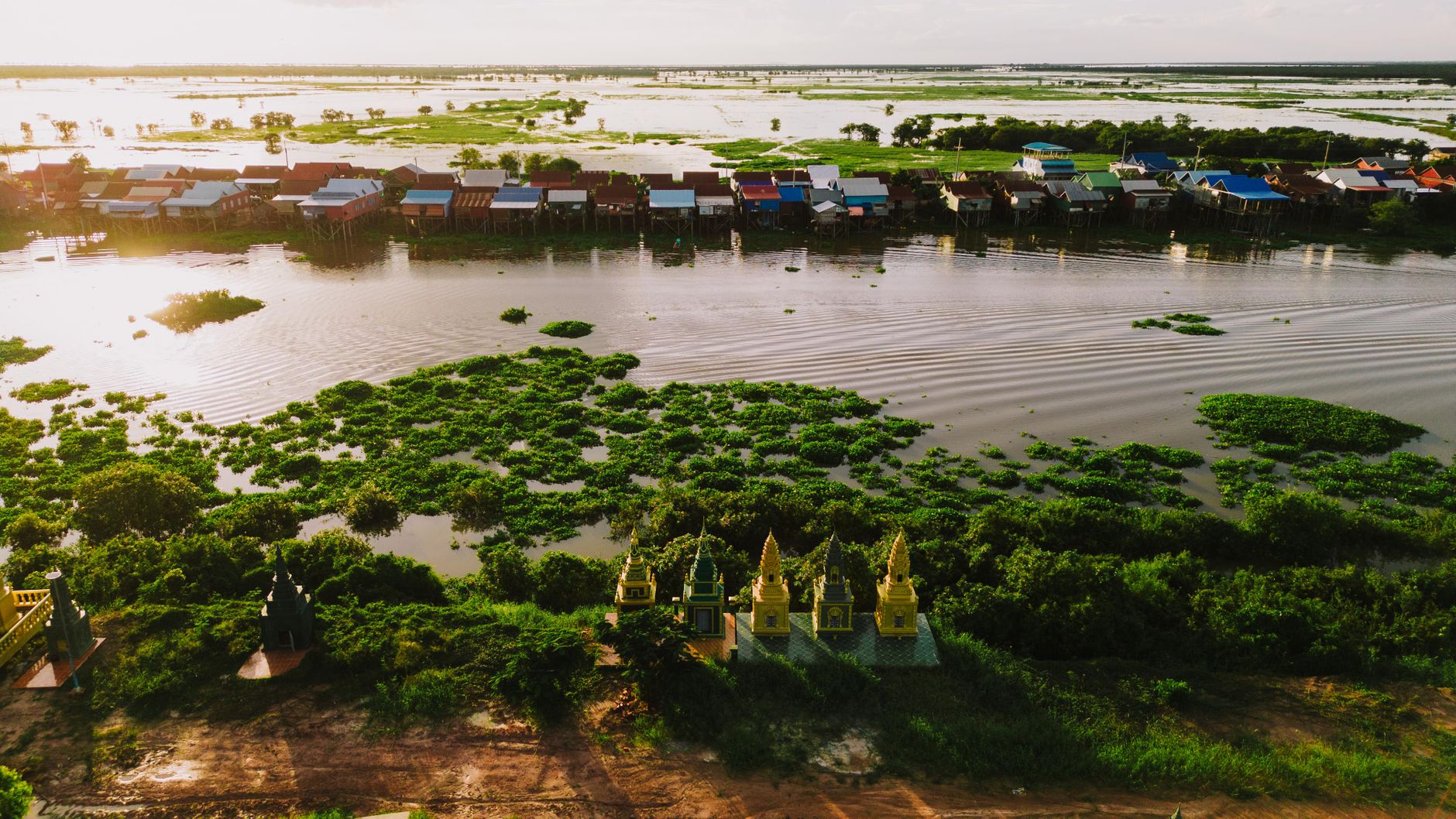
The Tonlé Sap itself transforms seasonally. During the dry season (November through May), water levels drop substantially, exposing mud flats and receding shorelines. Floating villages remain accessible but become more visibly precarious—a trade-off between accessibility and authenticity. The wet season (June to October) reverses this, swelling the lake to three or four times its dry-season volume and transforming the landscape into something approaching monsoon jungle.
Tonlé Sap Lake is the largest freshwater lake in Southeast Asia and the world's most dynamic seasonal wetland. During monsoon months, its surface area expands from roughly 2,500 square kilometers to 16,000 square kilometers—a sixfold increase that reshapes the landscape and the lives of nearly a million people who live on or beside it.
What You Should Arrange Before You Arrive
Your visa. Cambodia issues tourist e-visas online through the official e-visa portal for US $30, typically processed in about 3 business days, and also issues tourist visas on arrival at international airports for about US $30, with the online e-visa mainly reducing queuing and paperwork at the airport. Apply online before you leave home. Siem Reap International Airport receives regular service from Bangkok, Kuala Lumpur, Hanoi, and Ho Chi Minh City, as well as from regional hubs like Singapore and Chiang Mai.
Your temple pass. The Angkor Archaeological Park operates on a separate ticketing system: day passes run about 37–42 USD (late 2025); three-day passes, roughly 62 USD. You can purchase these on site, but queues grow long in peak morning hours. Book ahead through the Angkor Enterprise website to skip the line, or arrange it through your hotel—most will handle this for a small fee. The three-day pass gives you flexibility to explore at slower pace and revisit your favorite sites; the one-day pass works if you're time-pressed, though it forces early mornings and late afternoons in full sun.
Your accommodations and dining reservations. The better small hotels and guesthouses in Siem Reap fill quickly, especially during cooler months (October through February). Email or contact properties directly rather than booking blind through aggregator sites—you'll often get better information about room quality, courtyard quiet, and whether the property is managing its guest experience or simply filling beds. For fine dining, places like Malraux (housed in a restored 1930s villa with French-Cambodian cuisine) and Khmer Surin (refined rural Cambodian cooking) deserve reservations at least a week in advance during peak season.
Your guide. Temple tourism is dramatically better with a knowledgeable guide than without one. The physical act of walking Angkor Wat requires no escort, but understanding what you're seeing—the dynasties that built it, the spiritual logic behind its layout, the specific stones that reveal one builder's hand over another's—requires education. Hire through your hotel or book with an established outfit like Osmose or Tara Boat, where guides are trained and vetted. Rates run 50–80 USD for a full day (late 2025), split among your group.
Spring Travel Realities and How to Handle Them
Heat is the defining challenge. High temperatures in March and April—sometimes touching 40°C (104°F) or beyond—transform a temple visit into an endurance test. This is not hyperbole: heat illness is a genuine risk. Bring two liters of water minimum per person and refill regularly (vendors post themselves at every major temple). Wear lightweight, loose clothing in light colors, a wide-brimmed hat, and sunscreen. Start your temple day at sunrise (gates open at 6:00 AM) and plan to be mostly finished by noon. The quality of light at dawn is extraordinary anyway—the temples emerge from mist in soft gold, with virtually no crowds.
Air pollution from seasonal agricultural burning can reduce visibility and aggravate respiratory issues, particularly in March. If you have breathing concerns, check air quality indexes before traveling or consider shifting your visit forward into February. Masks are widely available but rarely improve the situation substantially.
Reduced water volume in Tonlé Sap means floating villages become muddier, less photographically appealing, and sometimes less accessible. Tour operators adapt their routes seasonally, but the magic of seeing a landscape of water is genuinely diminished. If this matters to you aesthetically, ask your operator specifically about current conditions before booking; some villages remain accessible by boat even at low water, while others require more driving on land.
Tourism is sparse, which carries both advantages and costs. Hotels discount aggressively, restaurants are less crowded, and you won't queue for hours at temples. But some smaller establishments close during low season, opening hours become irregular, and you may find fewer dining options in certain neighborhoods. Confirm opening times before planning your day.
Spring's brutal midday heat makes sunrise your secret weapon. Temple gates open at 6:00 AM. Arrive by 5:45 AM to catch the light breaking across Angkor Wat's western wall before crowds arrive. You'll finish primary temples by 11:00 AM, leaving afternoons for your hotel pool, markets, or restaurants—where you genuinely want to be during peak heat anyway. This rhythm transforms a day that could feel like survival into something actually enjoyable.
Beyond the Temples: Where Siem Reap Reveals Itself
The city deserves at least a full day outside Angkor. The Old Market (Psar Chas) remains the best window into daily Cambodian commerce—narrow aisles dense with textiles, spices, fresh herbs, and live animals, with a scale that rewards meandering rather than rushing. Go early (before 8:00 AM) to avoid crowds and heat. Bring small bills; haggling is expected for textiles and souvenirs, though prices at food stalls are fixed.
The National Museum of Cambodia offers context for what you'll see at Angkor—sculpture galleries trace the evolution of Khmer artistic language across centuries. Plan roughly 90 minutes. The museum sits in a brick pavilion near the Royal Palace; the combination walk between the two (roughly 1 kilometer through French Quarter streets) teaches you the colonial town's spine.
Artisan workshops scatter throughout town. The Osmose collective, housed in a restored wooden house on the riverside, supports rural craftspeople; you can watch weaving, dyeing, and jewelry work, then buy directly from makers. Artisans Angkor, with workshops at multiple locations, trains and employs young Cambodians in silk-weaving and stone-carving—visiting feels less like shopping and more like witnessing genuine skill transfer. Both enterprises operate on transparent business models where your money funds education, not just commerce.
Culinary exploration matters here. Siem Reap has developed a serious restaurant culture. Mahob is considered the best address for modern Khmer cooking—expect dishes that honor traditional flavors while introducing technique and plating that reads as refined rather than rustic. Dinner runs 25–40 USD per person (late 2025), without alcohol. For something less formal, Chanrey Tree serves rural Cambodian food in a garden setting; a full meal with soft drinks costs 8–15 USD. Both places reward eating early—queue by 6:00 PM to avoid crowds.
Consider Tonlé Sap boat tours that focus on ecosystem and community rather than photography. Tara Boat and Osmose both operate multi-hour excursions that visit fishing villages, floating farms, and bird sanctuaries. You'll see less dramatic water in spring, but the communities remain authentic and often less overwhelmed than during peak tourism. Tours run 60–100 USD per person for half-day experiences (late 2025).
Logistics That Matter
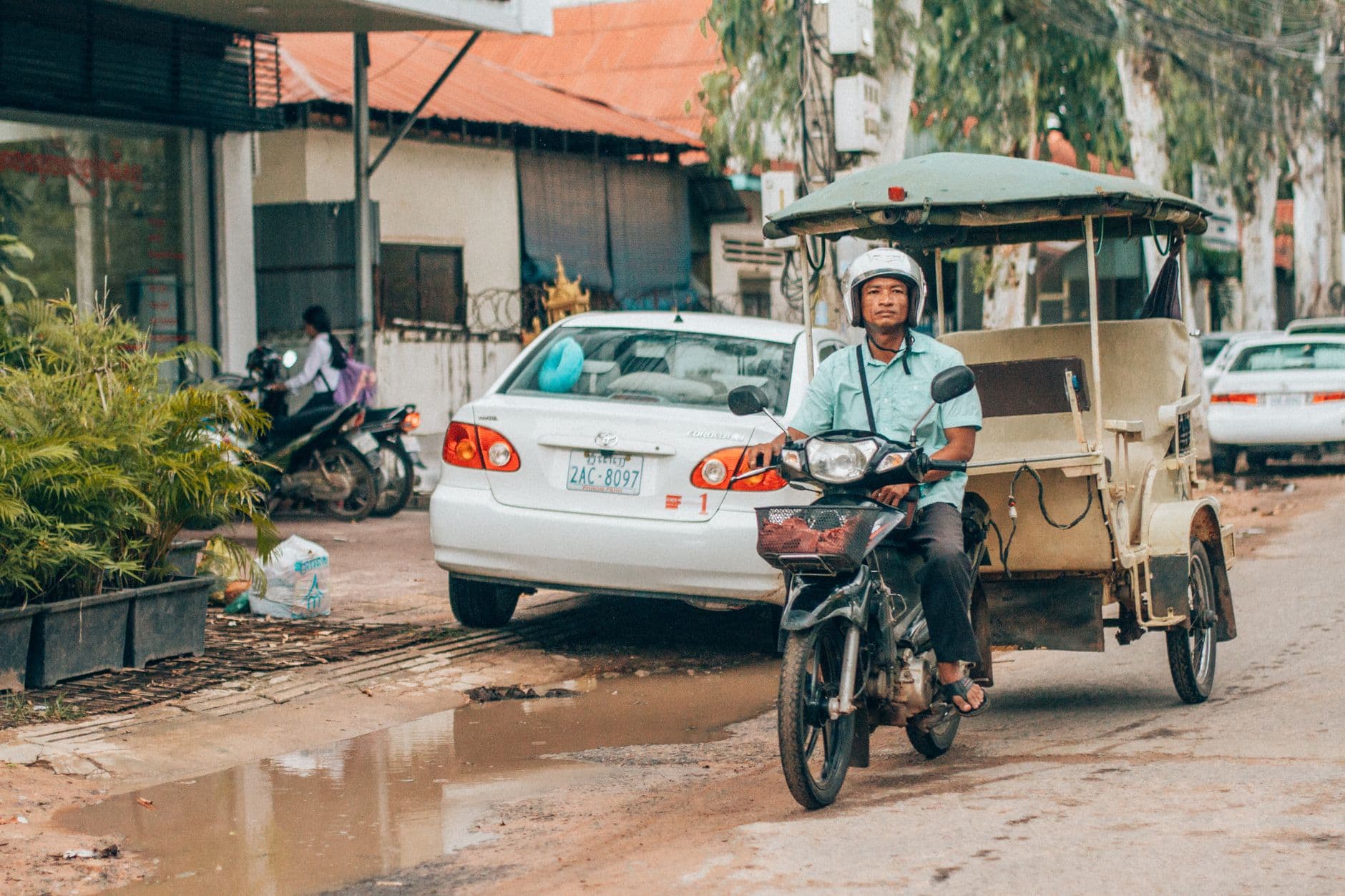
Getting around: Taxis are meter-based or negotiated; a ride across town costs 3–6 USD. Tuk-tuks (three-wheeled motorized carts) are iconic but negotiate prices beforehand—they're comfortable for short distances but exhausting in full-day heat. Most hotels arrange car and driver for temple visits; expect 40–50 USD for a full day that starts at sunrise (late 2025). Motorcycles are available for rent (5–10 USD daily) if you're comfortable riding in Southeast Asia traffic; helmet use is now enforced, and driving on the right side of the road requires adjustment.
Money and costs: The riel trades at roughly 4,000–4,100 per USD (late 2025), though exact rates vary. Most establishments accept USD without issue, often offering better rates than currency exchanges. ATMs are abundant in the city center. Meals at local restaurants cost 2–8 USD; mid-range guesthouses run 25–60 USD nightly; better hotels range from 80–250 USD. Street food costs under 2 USD per item.
Water and food safety: Tap water is not potable; drink bottled water (widely available for under 1 USD). Street food is generally safe if prepared in front of you; eat where locals eat. Cooked dishes pose far less risk than raw vegetables; restaurants aimed at tourists practice better food hygiene than cheap local spots, but the reverse is also sometimes true—local restaurants with high volume and turnover often maintain higher standards simply from necessity.
Connectivity: SIM cards from local providers (Metfone, Smart, Cellcard) cost 5–10 USD with 4G data packages for 10–15 USD monthly. Buy at the airport or any convenience store. WiFi is standard in hotels and restaurants; speeds are acceptable for streaming but not always stable.
Spring is genuinely difficult to navigate alone—the heat creates time pressure that truncates decision-making, and the temptation to overpack your days to justify enduring the temperature is almost irresistible. Let a Cordelie advisor design a spring itinerary built around early mornings and afternoon rest, with guides who understand how to pace temple exploration in serious heat. They'll arrange your Angkor pass in advance, book your driver, and know which restaurants take reservations and which are first-come-first-served. Most importantly, they'll build in the kind of downtime that transforms a hot trip into a properly enjoyable one rather than a survival story you recount later.
Last checked for accuracy: . How we check

Emma Blackwood has reviewed hotels for eighteen years and can tell within an hour of arrival whether a property means it. She writes about the difference between expensive and excellent, which is not the same thing, and about the handful of places that are both.
Related Articles
My Spring in Siem Reap: A Travel Story
A first-person account of five days in Siem Reap during the hot, dry heart of spring — sunrise temple runs, a shrinking Tonlé Sap, and a schedule built entirely around the heat.

Essential Tips for Traveling to Siem Reap
Beat the Angkor heat and skip the rookie mistakes: real prices, airport logistics and temple etiquette for a smoother Siem Reap trip this spring.
Why Siem Reap Belongs on Every Family's Southeast Asia Itinerary
Siem Reap works with kids if you pace it right. Here's the ranked, practical rundown of temples, boat trips, and hotels that actually fit a family's rhythm.