
Why Madikwe Should Be Your Family's First African Safari

Why Madikwe Game Reserve Is the Safari Every First-Time Family Should Book
Most families planning a first African safari default to Kruger National Park. Then the second-guessing starts: malaria tablets for a toddler, long transfers between camps, and open vehicles with minimum-age rules nobody mentioned until check-in. Madikwe Game Reserve, tucked into South Africa's North West Province near the Botswana border, sidesteps most of that.
It sits about 280km from Johannesburg — a 3.5 to 4-hour drive, or a short charter flight — and it was designed from the outset around low visitor numbers rather than volume tourism. For a family testing the waters on their first safari, that difference matters more than any single animal sighting.
Madikwe Game Reserve covers roughly 75,000 hectares (about 185,000 acres) of North West Province bushveld, with no day-visitor access and no self-driving — every game drive runs through one of its lodges. Between 1991 and 1997, a translocation project called Operation Phoenix moved more than 8,000 animals into the reserve, from elephant and giraffe to founding packs of African wild dog, rebuilding an ecosystem that had spent decades as cattle farmland.
Six Reasons Madikwe Game Reserve Wins Over First-Time Safari Families
None of this happens by accident. Madikwe's rules, geography and lodge culture were built around a specific kind of visitor, and families happen to benefit most. Here's what to look for when you compare it to Kruger or the Eastern Cape's malaria-free reserves like Kariega and Amakhala.
1. No Malaria Tablets, No Anxious Nights
Madikwe is officially malaria-free, which matters enormously if you're travelling with a child under five, an age group for whom several antimalarial drugs aren't recommended at all. You skip the tablets, the insect-repellent battles at bedtime, and the post-trip blood tests some parents schedule out of caution. Compare that to Kruger, where the low-risk winter months (roughly May to September) still carry some risk, and prophylaxis is generally advised year-round for young children. It's one less variable in a first-safari itinerary that already has enough moving parts.
2. A Reserve Built for Fewer Vehicles, Not More
Madikwe caps its lodges deliberately — there are roughly 25 to 30 properties spread across those 75,000 hectares, and the reserve enforces a rule limiting sightings to no more than three vehicles at a time. That means your children see a leopard without craning past four other Land Cruisers, and your guide can actually stop, cut the engine, and talk them through what they're watching. In Kruger's public sections, a good sighting can draw a dozen cars within minutes.
3. Lodges That Actually Plan for Kids
Jaci's Safari Lodge and its sister property Jaci's Tree Lodge run a Rangers in Training program for children aged 6 to 12, covering animal tracking and bush survival basics while parents take a spa treatment. Morukuru Family's Farmhouse takes a different approach, with a private guide and vehicle so families with younger children aren't tied to a group's pace. Buffalo Ridge Safari Lodge offers family-friendly suites with private viewing decks and access to a shared pool, useful on warmer winter afternoons when the 4pm game drive still feels a long way off.
4. Two Ways In, Both Under Four Hours
You can self-drive from Johannesburg via the N4 to Zeerust, a trip of about 280km that takes 3.5 to 4 hours depending on traffic around Groot Marico. Or you can fly: charter flights from Johannesburg (Lanseria or O.R. Tambo) land on one of Madikwe's private airstrips in around 55 to 70 minutes, typically costing $250 to $350 per person one-way in 2025. For families with small children who don't do well on long car journeys, that flight is often worth the extra spend.
5. Winter Is When Madikwe Shows Its Hand
Visit in June, July or August and the bush thins out, temperatures stay dry, and animals cluster around a shrinking number of waterholes — all of which makes game viewing dramatically easier for restless kids who need results within the first hour of a drive. Mornings are genuinely cold, often 4 to 8°C at a 6am departure, so pack proper layers even though days warm to a pleasant 20 to 24°C by early afternoon. The trade-off is a later golden hour, since winter sunrise doesn't arrive until around 6:45am.
6. Wild Dogs, Both Rhino Species, and a Real Big Five Shot
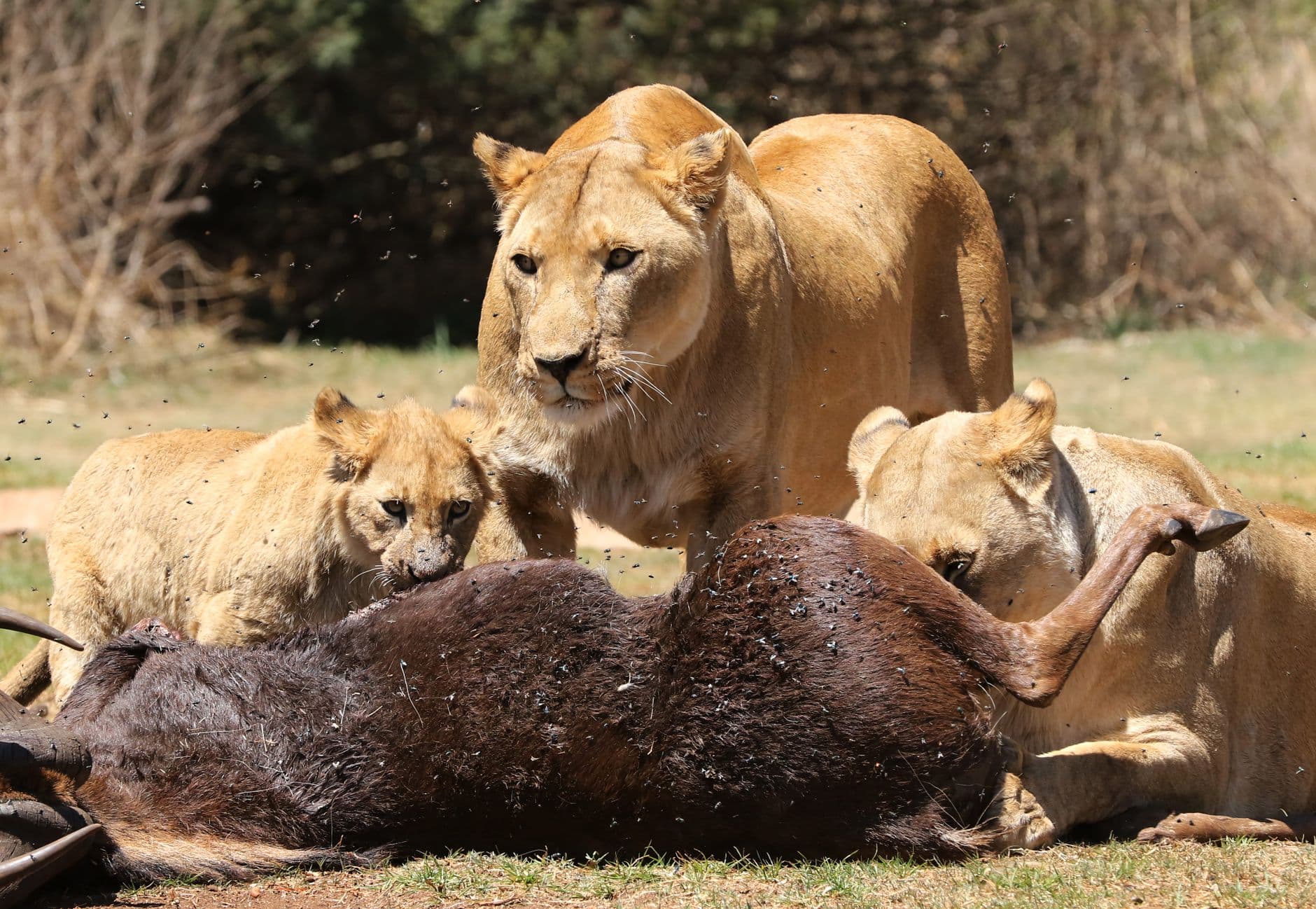
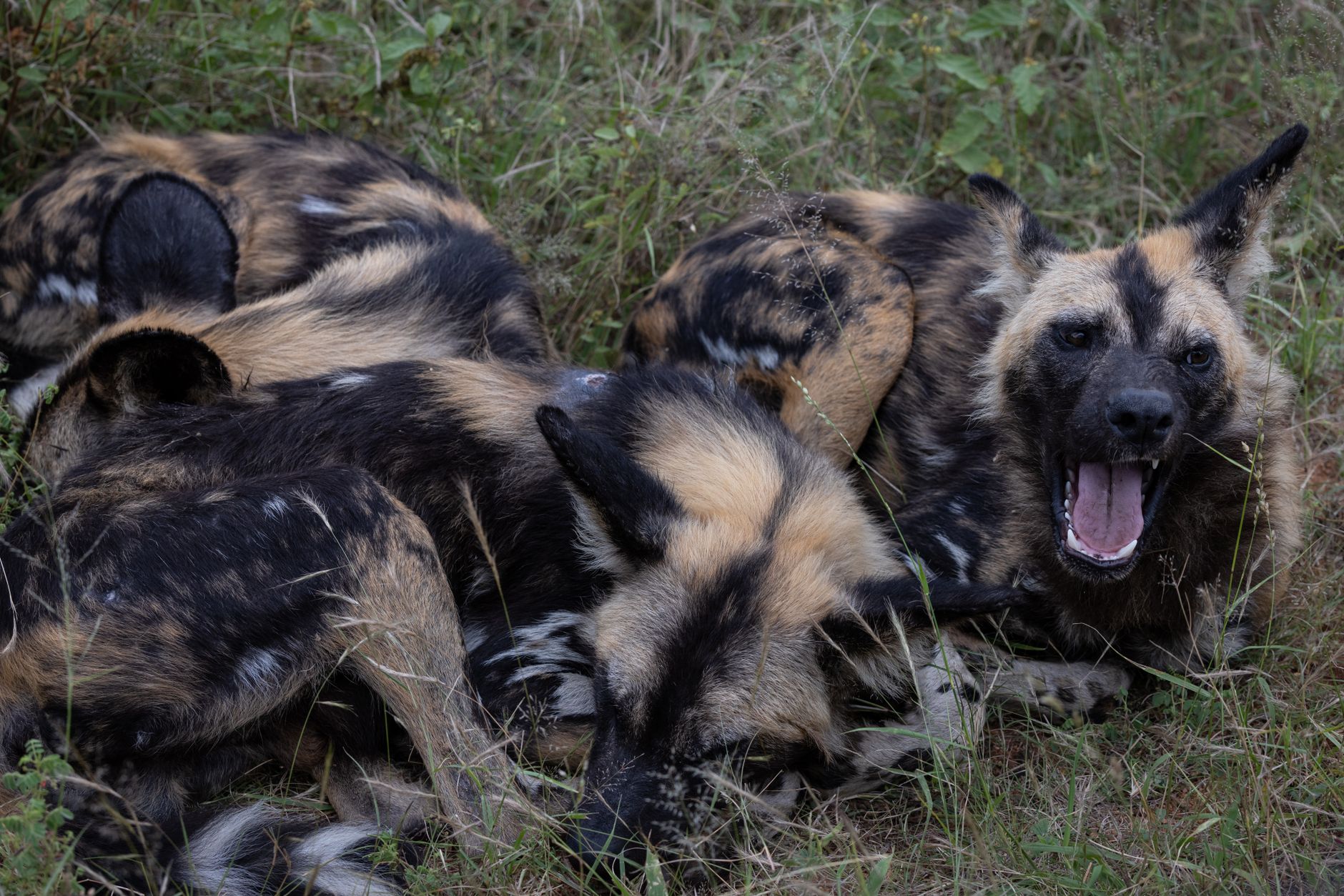
Thanks to Operation Phoenix, Madikwe holds the full Big Five plus a healthy population of African wild dog, one of the continent's most endangered predators and genuinely thrilling for children to watch hunting as a pack. It's also one of the few reserves where you have a realistic chance of seeing both black and white rhino on the same trip. Nothing in the wild is guaranteed on any single drive, but the density of species per hectare gives a first-time family a strong shot at most of the list within two or three days.
Cordelie travel advisors
Planning Madikwe Game Reserve? Go with someone who knows
The right suite, the right season, the reservations that never appear online — your Cordelie advisor knows them, and holds them for you.
Plan with a Cordelie advisorFree to ask. Cordelie Travel Services · IATA/ARC 06649064
The Booking Mistakes That Undo a Madikwe Family Trip
Even a reserve this well-suited to families can go wrong with the wrong booking choices. Most of the mistakes below aren't about the wildlife — they're about mismatching a lodge's style to your children's ages, or underestimating how different Madikwe's access rules are from a self-drive Kruger trip.
Madikwe Family Safari: Do This, Skip That
Pros
- ✓Confirm the lodge's minimum age for open-vehicle game drives before booking — many set it at 6, and a handful, including some Morukuru suites, will arrange private drives for younger children.
- ✓Pack for a genuine winter morning: fleece layers, a beanie, and gloves for a 6am departure when it's 4 to 8°C, even though the afternoon drive back around 5:30pm can still feel mild.
- ✓Add a third night if your budget allows — Madikwe's three-vehicle sighting rule rewards patience, and a second or third morning often produces the sighting the first one didn't.
- ✓Book the charter flight if you're travelling with children under six — 55 to 70 minutes in the air beats roughly 4 hours of car seats on the N4.
Cons
- ✗Don't assume every camp is family-friendly — Mosetlha Bush Camp's no-electricity, shared-bathroom setup suits adventurous teens far better than toddlers.
- ✗Don't plan a self-drive day trip into the reserve — Madikwe has no day-visitor access, and every game drive must run through a registered lodge.
- ✗Don't stack more than two game drives a day — at roughly 3 hours each, a third drive usually just produces an overtired, overstimulated child.
- ✗Don't book without checking levy inclusions — Madikwe's conservation fee, often around R250 to R450 per person per night in 2025, is sometimes quoted separately from the lodge rate.
What Seasoned Guides Tell Families Before Their First Madikwe Drive
Ask any Madikwe ranger what surprises first-time parents, and most say the same thing: how quickly children stop fidgeting once the vehicle actually stops moving. A three-hour drive sounds long on paper, but broken into a slow cruise, a 20-minute stationary sighting, and a tea-and-rusk stop halfway through, it rarely feels that way even to a seven-year-old.
The bigger challenge is usually the parents — deciding between the polish of Madikwe Safari Lodge or Tuningi Safari Lodge and the wilder, off-grid feel of Thakadu River Camp, or working out whether to split a five- or six-night stay across two lodges for variety. That's the kind of decision that benefits from someone who has actually stayed at each one recently, rather than working from a brochure. Families weighing this against a Kruger family safari, or against the Eastern Cape's malaria-free reserves like Kariega and Amakhala, usually find the comparison sharpens once they see the lodge details side by side.
A Cordelie advisor can match your children's ages and your appetite for adventure to the right combination of Madikwe lodges — perhaps a few nights at Jaci's Safari Lodge for its Rangers in Training program, followed by a private-guide stay at Morukuru Family Farmhouse for younger siblings who need a slower pace. They'll know which properties are currently offering family-suite upgrades or eased minimum-age policies for the winter season, and can time your charter flight to land exactly when a lodge's afternoon drive departs. It's the difference between a trip you researched and one that was crafted for your family.
Your Madikwe Game Reserve Family Safari Checklist
Print this before you book, and run through it again the week you pack.
Madikwe Family Safari Checklist
Last checked for accuracy: . How we check

Priya Raman has spent eleven years testing whether a destination works with a four-year-old, a teenager and a grandparent in the same party. She writes the version of the guide that accounts for nap times and still gets you to the good stuff, and travels from Toronto with a carry-on she can pack in nine minutes.