
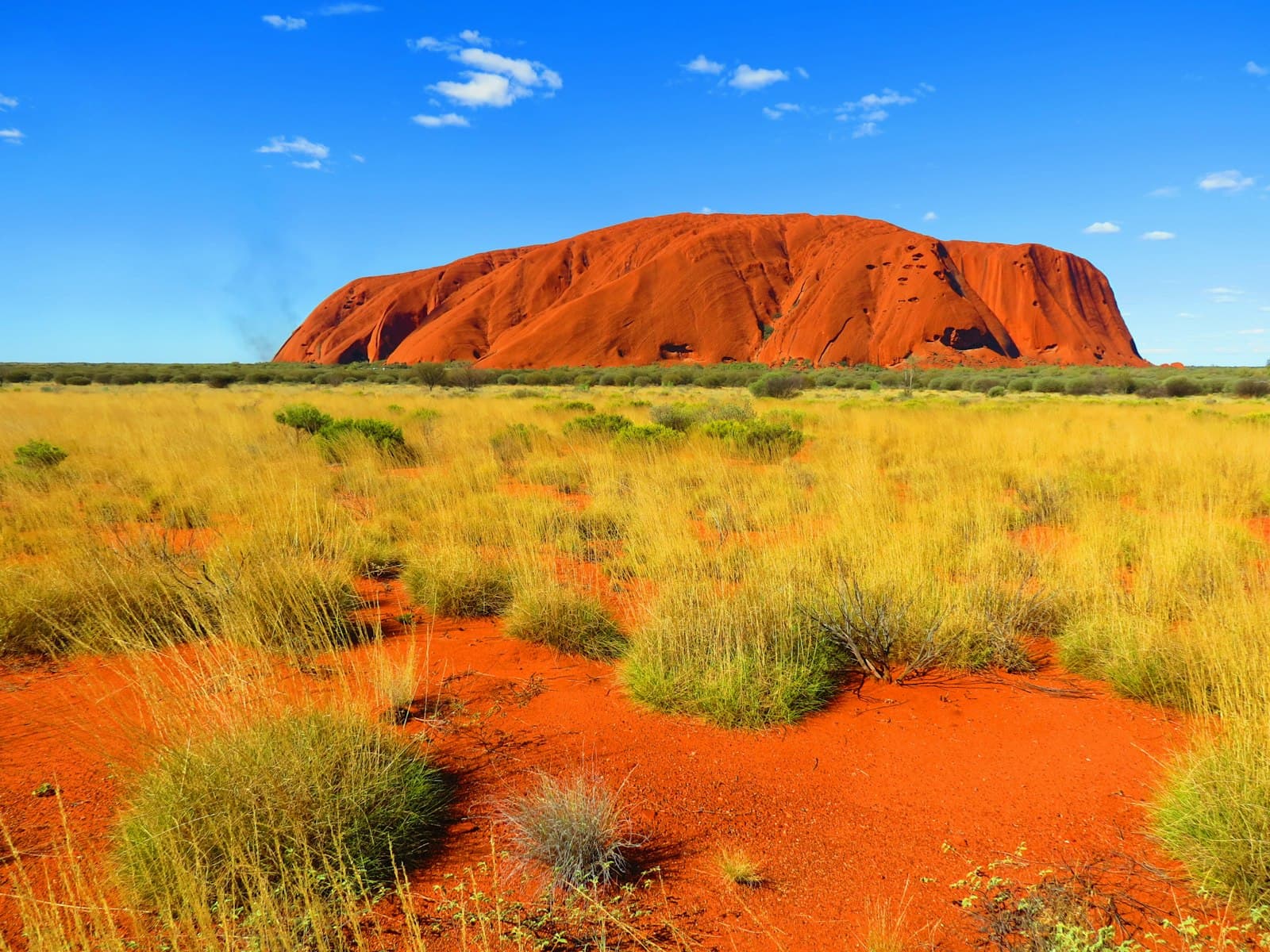
Walking with the Anangu: How to Visit Uluru the Right Way

Why Uluru-Kata Tjuta National Park Asks You to Walk, Not Climb
For decades, a visit to Uluru meant a chain bolted into red sandstone and a queue of people hauling themselves up a rock face the Anangu had asked, politely and repeatedly, not to be climbed. Signs at the base said so plainly since the 1985 handback of the land to its Traditional Owners. Most visitors climbed anyway. That changed on 26 October 2019, when the climb closed for good, and it changed the whole shape of what a good visit here looks like now.
Without that context, Uluru becomes a drive-by: a rock you photograph from a car park, tick off, and leave. With it, the park opens up into something else entirely — a place you walk around rather than up, guided by the people whose creation law explains why every crack and waterhole here has a name and a story. The difference isn't subtle, and it's the whole point of coming.
The Uluru-Kata Tjuta National Park board, majority Anangu, voted unanimously to close the climb permanently, and 26 October 2019 was chosen deliberately: it was the 34th anniversary of the day the land was formally handed back to Traditional Owners in 1985. Anangu had asked visitors not to climb since that handback. The closure was about honouring that request, not about liability.
Six Ways to See Uluru and Kata Tjuta Through Anangu Eyes
None of this requires special access or advance planning most travellers wouldn't think to do. It just means choosing the ranger-led walk over the self-guided sprint, the Anangu-owned tour over the generic coach, and two nights over a rushed afternoon. Here's how that plays out on the ground.
1. Start at the Cultural Centre Before You've Even Seen the Rock
The Uluru-Kata Tjuta Cultural Centre sits about a kilometre before Uluru itself, just off the loop road, and it's the reason everything afterward makes sense. The park is open year-round with seasonal hours ranging from about 5am to 9pm depending on the month, and you should check the current hours posted by Parks Australia before your visit. Entry is free once you've bought your park pass, which runs around AUD 38 per adult for a three-day period as of recent seasons — check the current rate when you book, since these figures move.
Inside, exhibits explain Tjukurpa, the Anangu law and creation narrative that underpins the whole landscape, and two galleries — Maruku Arts and Walkatjara Art — sell dot paintings, woodburned punu carvings, and prints made by Anangu artists, with proceeds returning directly to them. Give it 45 minutes to an hour before you drive any further. It reframes every rock face you'll see for the rest of the day.
2. Join the Free Ranger-Led Mala Walk Each Morning
The Mala Walk departs from the Mala car park most mornings, usually around 8am in cooler months and earlier, closer to 7am or 7:30am, once spring pushes temperatures up — the exact time is posted at the Cultural Centre the day before, so check rather than guess. It's a 2km return walk, taking about an hour and a half, led by a Parks Australia ranger, often alongside an Anangu guide who tells the story of the Mala, the hare-wallaby people, at the exact rock formations tied to that story. It's free, no booking required — just turn up.
3. Walk the Full Base Loop With an Anangu-Guided Operator
The full base walk is a flat 10.6km loop around Uluru's circumference, and allowing 3 to 3.5 hours lets you actually stop rather than march. You can do it unguided, but the version worth booking is with an operator that partners directly with Traditional Owners — SEIT Outback Australia runs an Anangu-guided cultural tour developed with Traditional Owners, with a share of the fee returning to the Mutitjulu community, and it typically runs somewhere around AUD 140-180 per adult depending on season and inclusions. Book directly with the operator or through an advisor who knows current departure times.
Along the way, the Kuniya Walk branches off to Mutitjulu Waterhole, a short 1km return detour to a permanent spring that's home, in Tjukurpa, to the ancestral python woman Kuniya. It's one of the most quietly powerful stops on the loop, and a guide will tell you why the sign there asks for silence rather than chatter.
4. Learn the Photography Rules Before You Lift Your Camera
Certain sections of Uluru, including areas near Kantju Gorge and parts of the Mutitjulu Waterhole precinct, are restricted from photography, filming, and even sketching, because they hold secret or sacred Tjukurpa specific to Anangu men's or women's business. These sites are marked with a crossed-out camera icon on the official park map, available at the entry gate and Cultural Centre. Follow the signage exactly — that includes not zooming in from a distance to capture what you can't photograph up close. Drones are prohibited across the whole park without a specific permit, which independent travellers won't be issued.
5. Give Kata Tjuta Its Own Half-Day, Not a Drive-By
Kata Tjuta sits about 40km, roughly 30 to 40 minutes' drive, west of Uluru, and it gets a fraction of the attention despite being just as significant to Anangu law. The Valley of the Winds walk is a 7.4km loop through the 36 domes, allow around 3 hours, and Parks Australia closes the full loop by 11am if the forecast tops 36°C — a real possibility on a warm spring afternoon, so an early start matters more here than at Uluru. Walpa Gorge, a gentler 2.6km return walk taking about an hour, works better later in the day if the heat's already climbed.
6. Stay Two or Three Nights at Yulara, Not One
The only accommodation base near the park is Ayers Rock Resort in Yulara, about 20km from Uluru, with options ranging from the Outback Pioneer Hotel to the Emu Walk Apartments to Sails in the Desert at the top end. Flying in from Sydney, Melbourne, or Cairns and flying out again the same day, or driving the 450km, roughly five-hour route from Alice Springs and turning straight around, means choosing between sunrise, sunset, and the base walk — you won't get all three done properly. Two nights lets you catch a sunrise at Talinguru Nyakunytjaku, walk the base in the cool of one morning, spend an afternoon at Kata Tjuta, and still have a sunset left over.
Cordelie travel advisors
Go with someone who knows
The right suite, the right season, the reservations that never appear online — your Cordelie advisor knows them, and holds them for you.
Plan with a Cordelie advisorFree to ask. Cordelie Travel Services · IATA/ARC 06649064
The Missteps That Turn a Sacred Site Into Just a Photo Op
Most of the ways people get Uluru wrong aren't malicious — they're just habits carried over from other national parks, where the main risk is sunstroke rather than stepping on something sacred without realising it. Here's the shorthand version of what separates a respectful visit from an accidentally clumsy one.
Uluru Etiquette: What Respectful Visitors Do Differently
Pros
- ✓Book the ranger-led Mala Walk first thing and let it set the pace for the rest of the day
- ✓Choose operators that state plainly how they work with Traditional Owners, like SEIT Outback Australia's Anangu-guided tours
- ✓Check the photography map at the Cultural Centre before unpacking a camera anywhere near the base
- ✓Stay two or three nights at Yulara so sunrise, sunset, and the base walk aren't crammed into one exhausting day
- ✓Buy art and craft from Maruku Arts or Walkatjara Art inside the Cultural Centre, where proceeds return to Anangu makers
Cons
- ✗Photographing the rock faces marked with a crossed-out camera icon, even from a distance or with a zoom lens
- ✗Treating the base walk as a fitness challenge to knock out in under two hours rather than a place with a story attached
- ✗Flying into Ayers Rock Airport and straight back out the same day
- ✗Buying "Aboriginal-style" souvenirs from resort gift shops without checking where the profit actually goes
- ✗Assuming the 2019 climbing closure was purely a safety measure rather than a matter of respecting Anangu law
What a Repeat Visitor Notices That First-Timers Miss
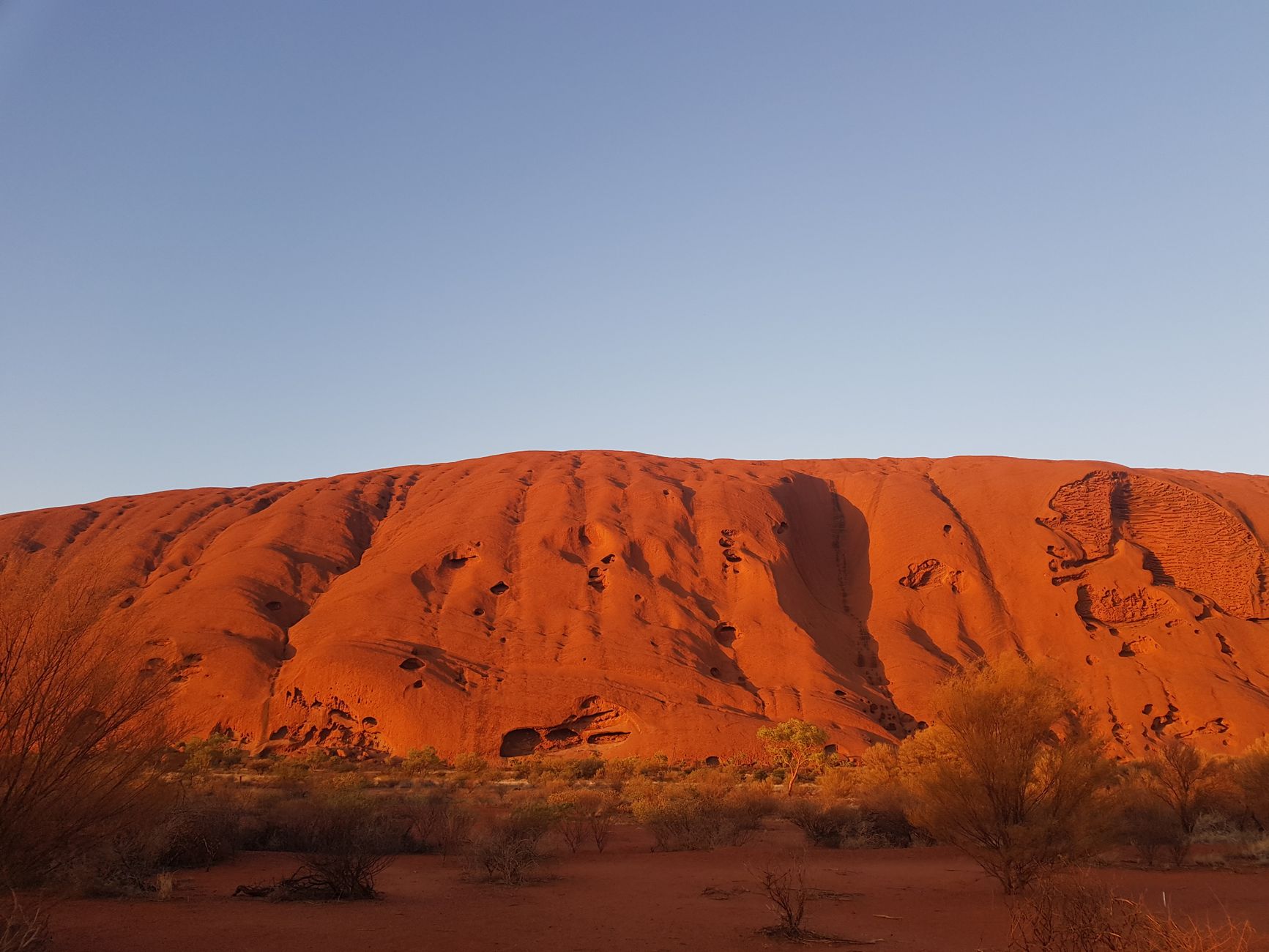
Come back a second time and the details change. You notice the rock's colour genuinely does shift through the day — not the postcard cliché people expect, but a real, gradual deepening from ochre to a saturated red as the sun drops toward Kata Tjuta on the horizon. You notice the resort's own night sky program and the Field of Light installation are worth an evening, but they're not a substitute for the walks themselves. And you start timing things around the ranger, not the tour bus.
A Cordelie advisor can build your Uluru days around the moments that matter most — an early Anangu-guided base walk timed to catch first light before the heat sets in, a private table for dinner beneath the desert sky, and a room at Sails in the Desert with a balcony that faces the rock rather than the car park. Spring in the Red Centre rewards precise timing: cool mornings, warm afternoons, and a narrow window each day where the light and the temperature align. Let a Cordelie advisor craft that itinerary for you, so the trip feels considered rather than assembled.
Everything to Book and Pack Before You Land at Ayers Rock Airport
Print this, screenshot it, or hand it to whoever's planning the trip. It's the short version of everything above, in the order you'll actually need it.
Uluru-Kata Tjuta Quick-Reference Checklist
Last checked for accuracy: . How we check

Alex Moreau writes about going slowly. Nine years of reporting from trains, river boats and towns nobody has a hashtag for, mostly across Europe and North Africa. They live in Lisbon, keep a running list of the continent's best two-hour lunches, and believe most itineraries would improve if you deleted a city.