
The Great Migration and Beyond: Kenya's Maasai Mara for Serious Adventure Travelers
Why the Maasai Mara Belongs on Every Serious Adventure Traveler's Kenya Itinerary
Most people picture the Maasai Mara as a wildlife documentary they can drive through, camera out the window, guide doing the work. That's a fine trip. It is not the trip this list is about. This is a ranking of the experiences that put you in the current — a balloon basket lifting off the plains at dawn, boots on the ground with an armed ranger and a Maasai tracker reading buffalo prints, a vehicle parked for four hours at a river crossing waiting for the herd to commit. Each entry below is ranked on how much it demands of you physically and how much adrenaline it hands back.
Every entry had to clear three bars: it has to put the traveler in genuine physical contact with the landscape (on foot, on horseback, in a basket, or holding a position for hours in the field), it has to be bookable through a camp or conservancy operator that's currently running trips, and it has to happen somewhere the vehicle count stays low enough that you're not queueing for a sighting.
That last point pushed several conservancies above spots inside the national reserve proper. Naboisho, Mara North, and Ol Kinyei all cap bed numbers and restrict off-road driving in ways the busier Talek and Sekenani gate corridors of the reserve don't always manage in peak season.
The Ranked List: Seven Adrenaline-Driven Ways to Experience the Mara
The Wildebeest River Crossing Vigil
The main event of the Great Migration, if you time it right
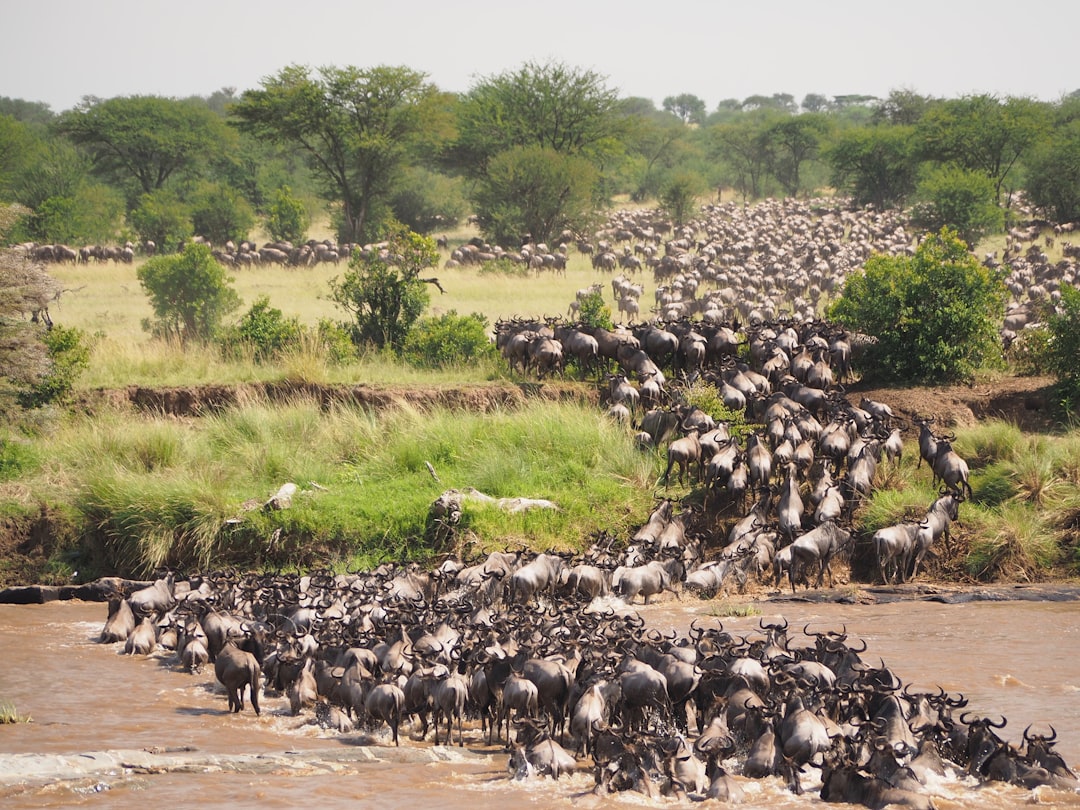
Nothing else on this list rewards patience like a crossing point. Guides position vehicles at Lookout Hill, Paradise Plain, or near the Purungat area of the Mara River — the boundary line between the Mara Triangle and the main reserve — and then you wait. Sometimes twenty minutes. Sometimes four hours, engine off, everyone silent, watching a front line of wildebeest bunch up on the bank and lose their nerve three times before a single animal breaks and the whole mass follows into water that's holding some of the Mara's largest Nile crocodiles.
The Mara Conservancy, which runs the Triangle side, is stricter about limiting vehicles bunched at any one crossing than the main reserve tends to be during the rush of the season. That matters more than it sounds: fewer engines idling means the herd settles faster and the whole thing plays out closer to how it would with nobody watching. Peak crossings run late July through October, with the heaviest concentrations typically in August and September — plan for that window specifically if this is your priority, since spring herds are still well south, closer to the Serengeti's Ndutu plains.
Dawn Balloon Safari Over the Plains
Sunrise from a basket, breakfast in the grass afterward
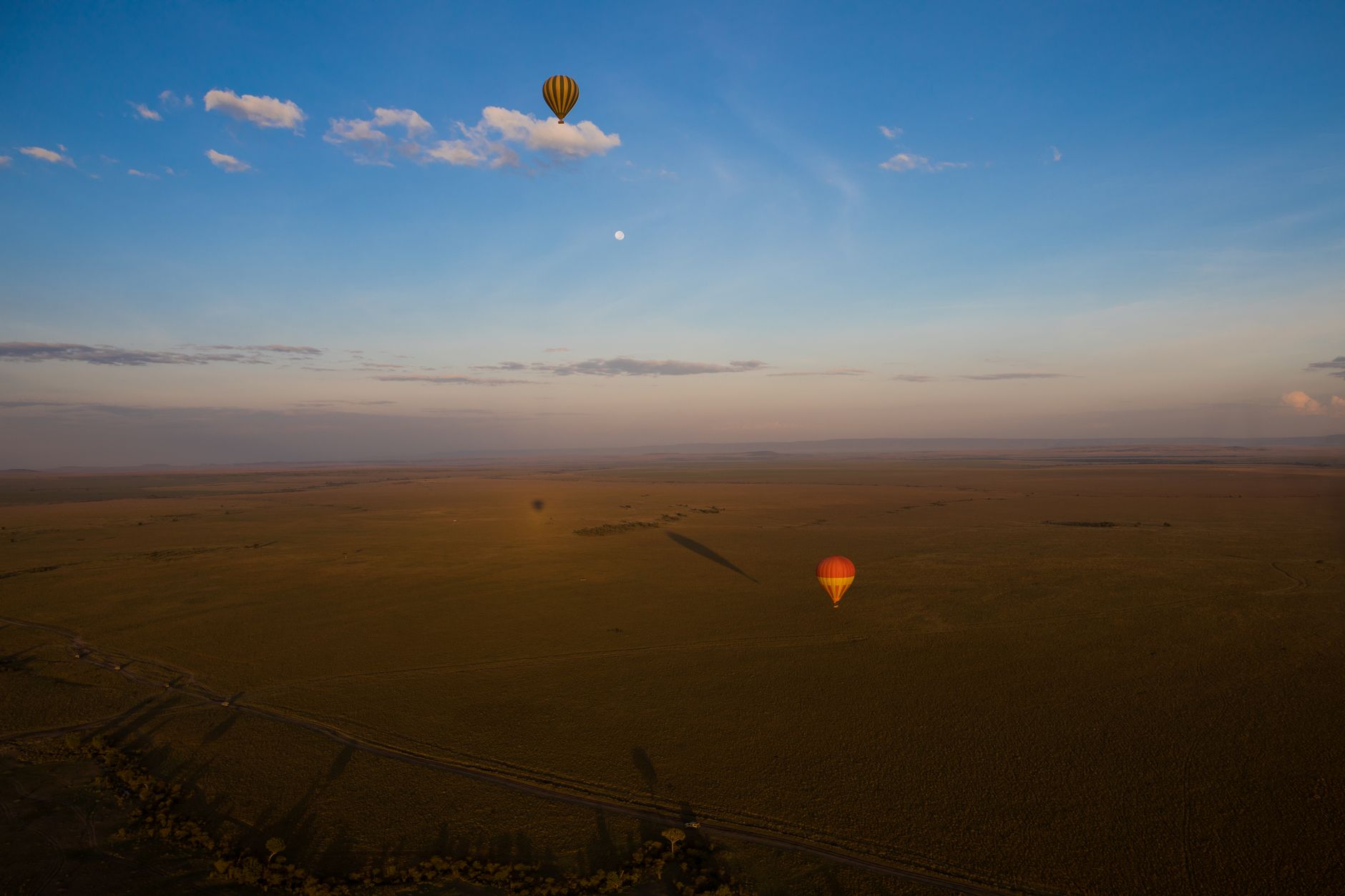
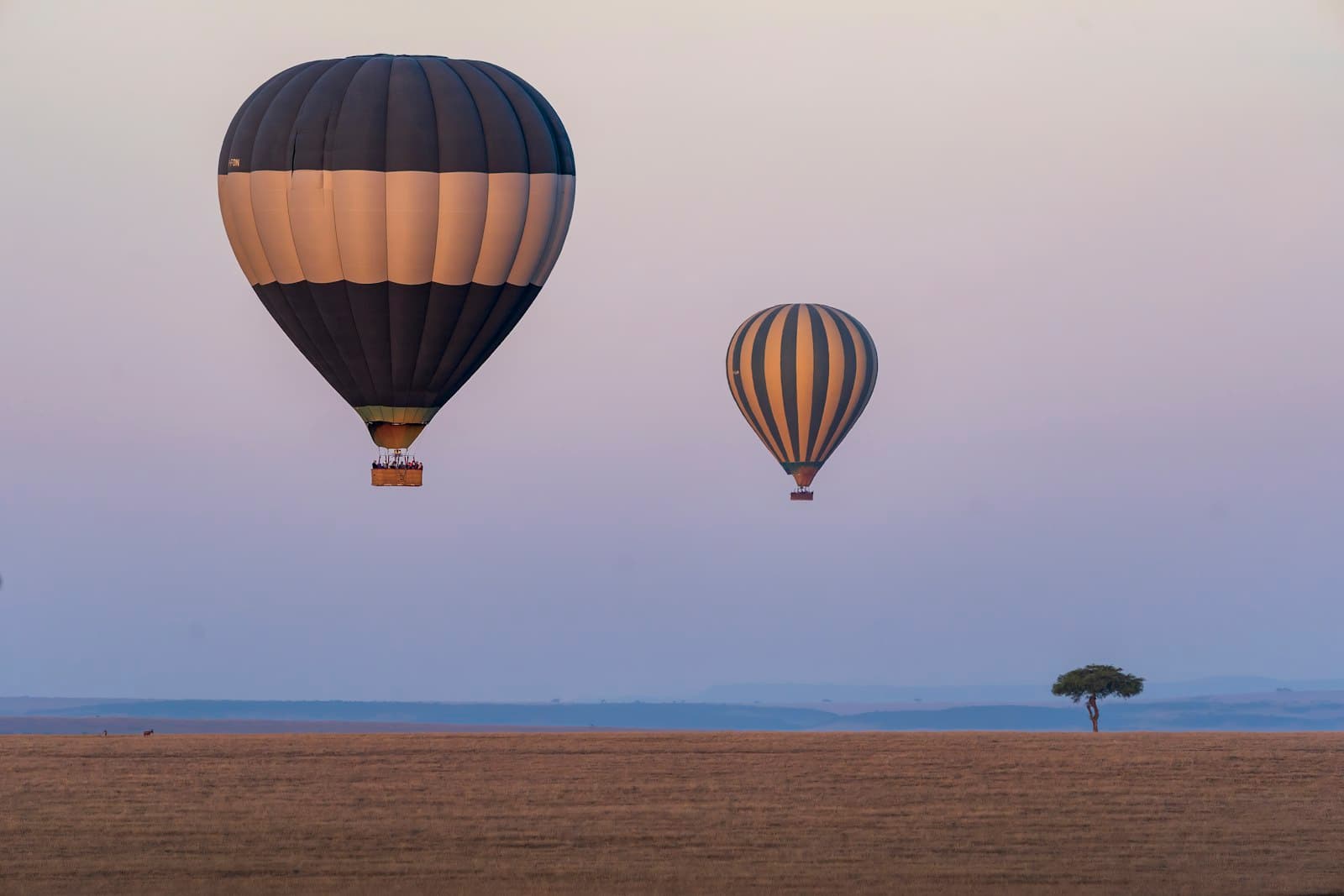
Governors' Balloon Safaris and a handful of other licensed operators launch from strips near the Mara River in the Musiara area, a short drive from Governors' Camp. Pickup is around 5:30am, the burners are roaring by roughly 6:15-6:30am as the sky goes orange, and the flight itself runs 45 to 60 minutes drifting silently — engines off between burns — over herds, hippo pods in the river bends, and sometimes a lone elephant bull crossing open ground below.
Expect to pay in the range of $450-600 per person at 2025 rates, with the price covering a champagne bush breakfast that ground crews set up wherever the basket happens to land. Landings aren't always gentle — count on a bump and a drag depending on wind, and be ready for the crew to ask everyone to brace and stay seated until the basket stops. Spring's afternoon storms can push wind and cancel a launch entirely, so build a flexible morning into your schedule rather than a single non-negotiable slot.
Bush Walks with Maasai Warriors in Naboisho Conservancy
The only way to actually feel the size of a buffalo track
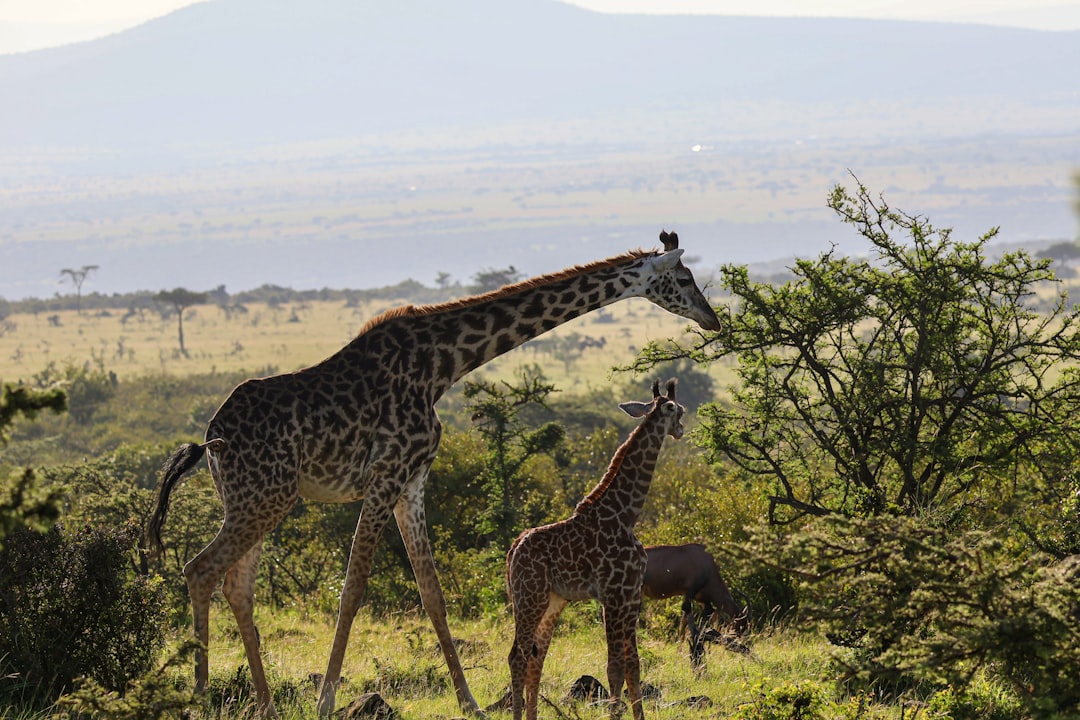
Naboisho Conservancy sits northeast of the main reserve and bans vehicles from driving off the existing track network, which keeps game viewing here genuinely uncrowded compared with the reserve's busier gates. Camps including Naboisho Camp and Kicheche Valley Camp run walks led by an armed ranger paired with a Maasai guide who reads dung age, wind direction, and hoofprint depth the way you'd read a map.
Be honest with yourself about the difficulty here: walks typically run two to four hours over uneven ground, and by mid-morning there's little shade. This isn't a stroll — it's a genuine hike with real wildlife risk managed by a professional, and you'll feel it in your legs and your attention span both. What you get in return is scale you can't get from a vehicle: a giraffe seen at eye level from 40 meters is a completely different animal than one glimpsed through a windshield.
Night Game Drives in Mara North Conservancy
Predators after dark, without another vehicle's headlights on the horizon
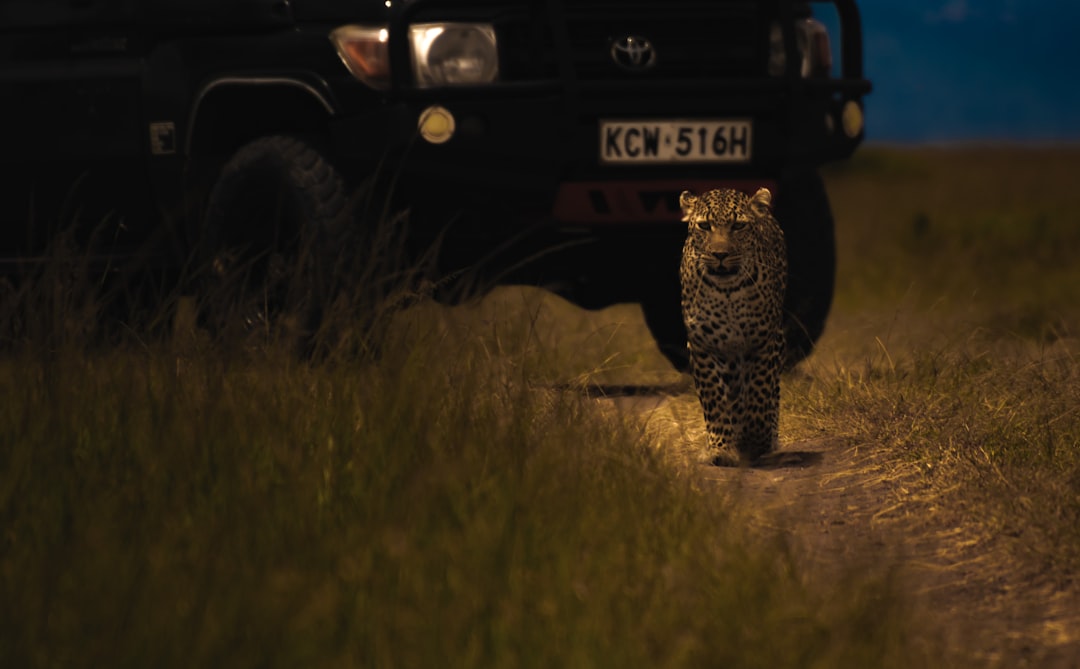
Mara North Conservancy sits roughly 30 minutes by vehicle from the Talek Gate area, and it's one of the few places near the reserve where night drives are actually permitted — they're banned inside the national reserve itself. Kicheche Mara Camp and Offbeat Mara Camp both run after-dark drives using red-filtered spotlights that don't spook the animals the way white light does.
This is where you'll find leopards on a kill they'd have abandoned by the time a morning drive found them, and hyena clans moving in numbers you rarely see at midday. Physically it's easy — you're sitting in a vehicle — but pack a proper fleece or down layer, since conservancy nights in spring can drop to around 12-15C once the sun's fully down and the open-sided vehicle starts to feel it.
Horseback Safari in Ol Kinyei Conservancy
Cantering alongside zebra at eye level with the grass
Ol Kinyei Conservancy, roughly 45-60 minutes southeast of the main reserve's gates, was one of the first conservancies established in the Mara ecosystem, and it works with local outfitters offering horseback safaris for confident riders. Porini Mara Camp sits inside the conservancy and can arrange rides with guides who know exactly which herds tolerate a horse's silhouette and which ones don't.
Don't sign up for this expecting a gentle trail ride. A spooked horse anywhere near buffalo or a startled elephant is a genuine hazard, not a scenic thrill, and reputable outfitters will assess your riding ability — seat, steering, how you handle a sudden canter — before letting you off the lead rope. Rides typically run two to three hours, occasionally a full day with a picnic lunch, and they're built for intermediate-to-advanced riders, not first-timers.
Cordelie travel advisors
Go with someone who knows
The right suite, the right season, the reservations that never appear online — your Cordelie advisor knows them, and holds them for you.
Plan with a Cordelie advisorFree to ask. Cordelie Travel Services · IATA/ARC 06649064
Predator Tracking in the Mara Triangle
Lion prides near Musiara Marsh, under a stricter rulebook
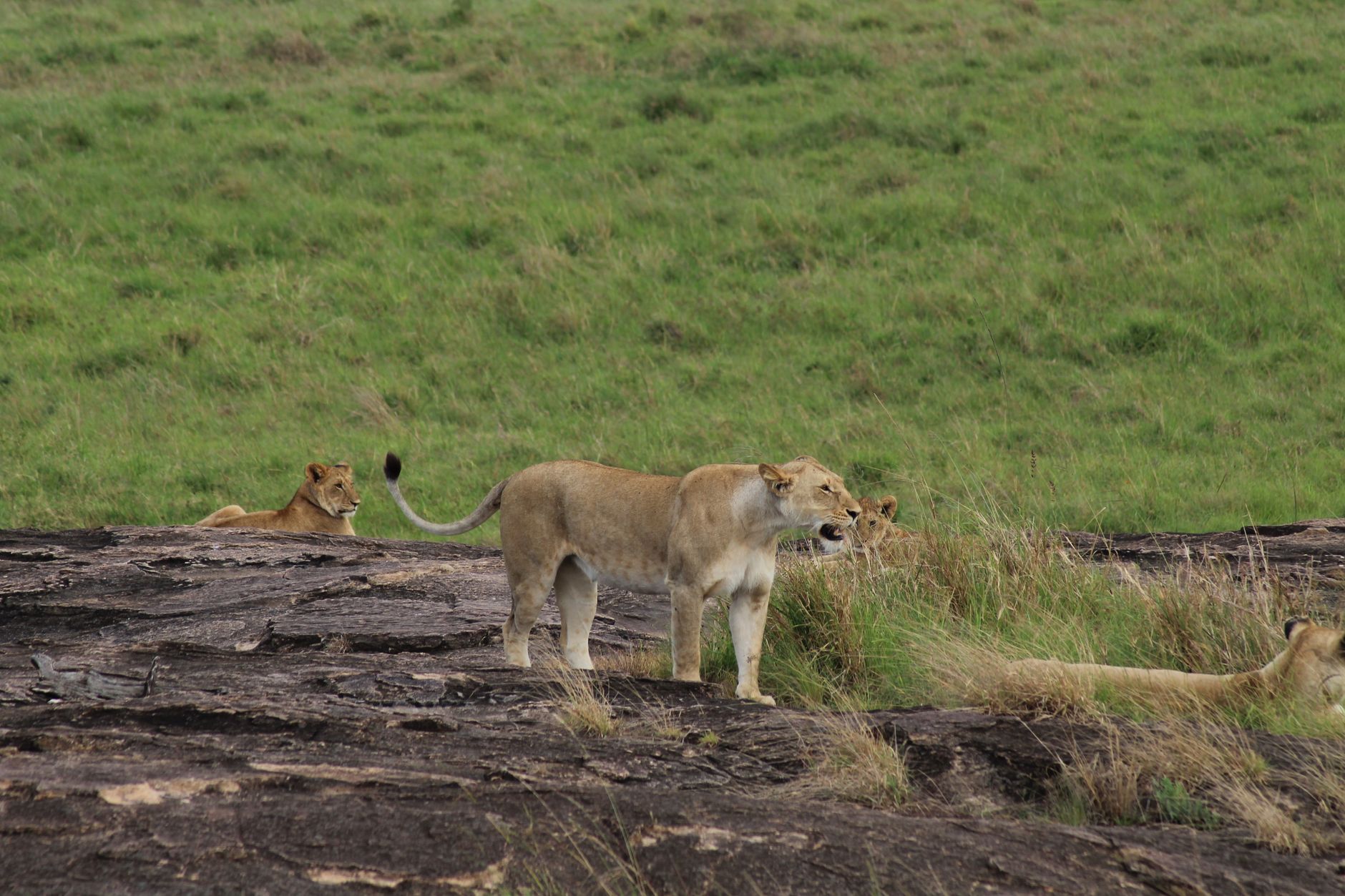
The Mara Triangle is the wedge of reserve west of the Mara River, managed separately by the Mara Conservancy, and it enforces its own vehicle limits more actively than the eastern side does during peak months. Mara Serena Safari Lodge sits on a hilltop overlooking the plain, giving guides a genuine head start each morning tracking the Marsh Pride and other resident lion groups rather than radio-chasing whichever vehicle found them first.
Off-road driving toward sightings is more tightly policed here, so a guide's tracking skill actually matters — reading a fresh drag mark or a circle of vultures instead of just following a convoy. Cheetah sightings around Paradise Plain and Topi Plains are common in this open, dry terrain, particularly in the cooler hours right after sunrise.
Sundowner Hike up the Oloololo Escarpment
A short, steep climb for the best sunset view in the Mara
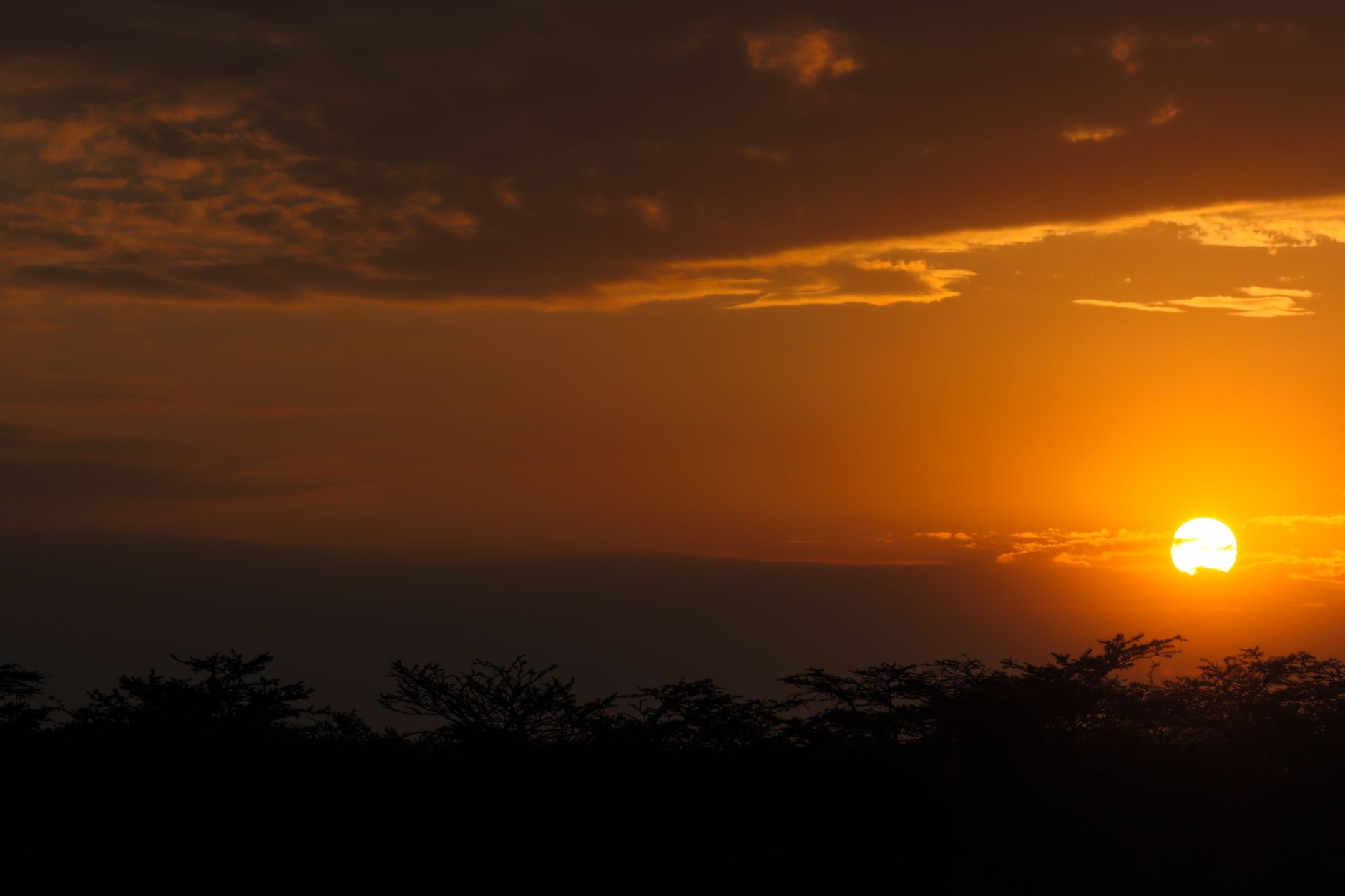
The Oloololo Escarpment, also called the Siria Escarpment, rises along the Mara Triangle's western edge. Camps near its base arrange short guided hikes with an armed ranger up rocky switchbacks, ending at a viewpoint that takes in the entire Triangle and, on a clear evening, the distant glint of the Mara River curling through it.
The climb itself is genuinely short — typically 30 to 45 minutes each way — but the footing is loose scree in stretches, and the elevation gain of roughly 200 to 300 meters is enough to leave most people breathing hard by the top. Do it as an evening sundowner hike rather than a sunrise scramble; the light works better on the way down, and you'll want a headlamp for the last stretch regardless.
Three More Adrenaline Detours Worth Booking If You Have the Days
Fly-camping in the conservancies is the honorable mention that comes up most often once travelers hear about it. Mobile operators working out of camps in Mara North and the Olare Motorogi Conservancy will set up a minimal tented camp — no fixed structure, sometimes no perimeter fence — for a night or two, so you fall asleep to a soundtrack of actual hyena and hippo rather than a recording. Cheetah tracking alongside conservancy research teams in Naboisho and Olare Motorogi is another strong option; some camps can arrange a morning with a guide who's monitoring collared cats for a conservation project, which turns a sighting into something closer to fieldwork. And a visit to a working manyatta near Talek or Sekenani Gate, where young Maasai men demonstrate spear-throwing and the adumu jumping dance, won't get your heart rate up the way a river crossing does, but it's the piece of context that makes everything else on this list mean more.
The best balloon launches and the best-positioned camps near the Mara River crossing points book out for the September window a year ahead, and the camps with genuinely low vehicle density — Naboisho, Mara North, Ol Kinyei — carry a small number of tents each, not the room count of a lodge.
A Cordelie advisor builds your Mara trip around the exact dates that matter to you, securing the balloon flight for the right morning, a camp inside the conservancy that suits your appetite for adrenaline, and the connections that get you there without a wasted day in Nairobi. Reach out at cordelie.com/contact and start with the trip you actually want, not the one that happened to have availability.
Top Pick: The Wildebeest River Crossing Vigil
The single most electric hour you'll spend on safari, if you time it for late August or September
Everything else on this list is genuinely worth doing, but nothing matches the tension of a crossing point — the false starts, the sudden commitment, the crocodile that surfaces at exactly the wrong moment for exactly the wrong wildebeest. It rewards the traveler willing to sit still for hours, which is its own kind of adventure discipline.
Time your trip for late July through October, position with a camp that has relationships along the Mara River such as Governors' Camp or Kicheche Mara Camp, and let a Cordelie advisor lock in the dates and the conservancy access before the peak weeks fill up.
Last checked for accuracy: . How we check

Marcus Rivera has spent fifteen years writing about places you have to walk into. He has guided in Patagonia, reported from Kilimanjaro's quieter routes, and has strong opinions about which of them are worth the airfare. He is based in Boulder, mostly so he can leave it.