
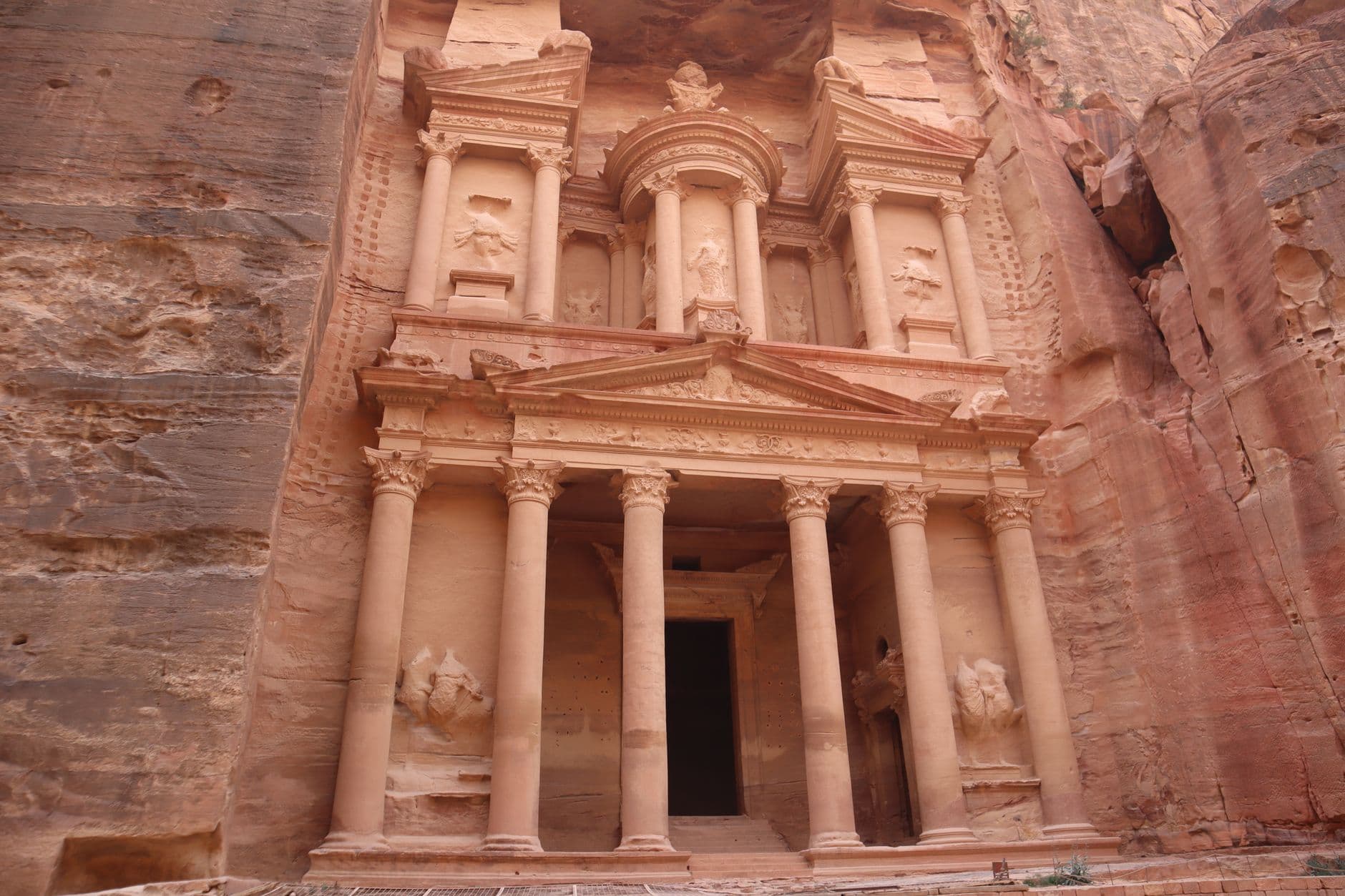
The Best Things to Do in Petra

Petra in Winter: The Rose-Red City's Essential Sites, Ranked
Petra rewards patience more than any other ruin I know. Most visitors give it a single rushed morning between the Siq and the Treasury, then wonder why the photographs never quite match the feeling of being there. Winter changes the calculation. Between December and February the crowds thin out, the temperatures sit in the comfortable mid-teens Celsius by day, and the low sun rakes across the sandstone in a way that makes the whole valley look lit from within. This list ranks the sites worth building a two- or three-day stay around, not the ones you tick off on a single frantic loop.
Petra is not one monument. It is a Nabataean city carved into a network of gorges and hillsides covering several kilometres, and a UNESCO World Heritage Site since 1985. Some of what follows takes twenty minutes to reach. Some takes the better part of a morning and a change of shoes. I have ranked them by how much they reward the effort, not by how easy they are to photograph.
Each entry was judged against three things: historical weight, how the site performs specifically in winter light and weather, and whether the climb, walk or wait genuinely pays off once you arrive. Petra's standalone entrance ticket costs 50 JOD for one day, 55 JOD for two days, or 60 JOD for three days; the Jordan Pass, which bundles Petra entry with a visa fee waiver for stays of at least two or three nights, costs 70–80 JOD depending on the number of days and typically offers better value than purchasing a separate visa plus Petra tickets for travelers staying at least 2–3 nights in the country. Winter opening hours generally run from about 6:00 to 16:00, an hour or two shorter than the summer schedule, so plan your climbs accordingly and confirm the current hours at the visitor centre when you arrive.
Al-Khazneh (The Treasury) via the Siq
The reveal that still works, even when you know it's coming
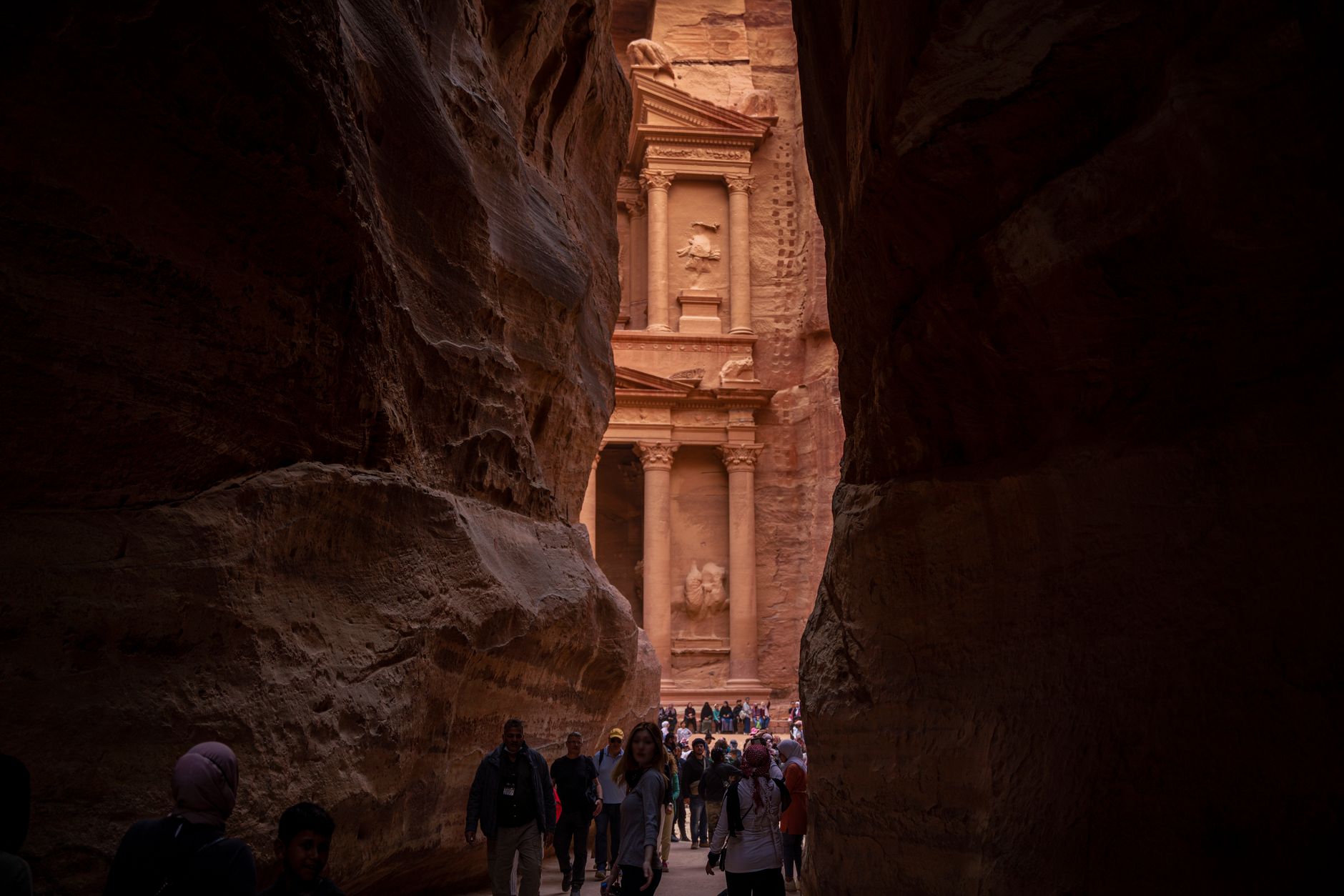
You walk the Siq before you see anything. It is a natural fissure in the rock roughly 1.2km long and, in places, barely wide enough for two camels to pass, its walls rising 80 metres or more overhead. The floor is cool even at midday, and in winter the stone holds a chill through the morning that makes the walk genuinely pleasant rather than something to endure before the good part starts.
Then the gorge narrows, bends, and opens onto the Treasury's facade in a single frame that no photograph quite prepares you for. It was carved in the 1st century BC, most likely as a tomb for the Nabataean king Aretas IV, and the pink-gold sandstone changes tone through the morning as the sun climbs over the eastern cliffs. Arrive by 7:30 if the site is open and you want the square in front of it to yourself; by mid-morning it fills with tour groups and camel handlers offering rides for a few dinars.
Budget 20-30 minutes for the Siq walk itself, plus however long you can bear to sit across from the facade afterward. I'd argue that's the real Petra experience — not the walking past, but the sitting still.
Ad-Deir, the Monastery
800 rock-cut steps to Petra's largest facade
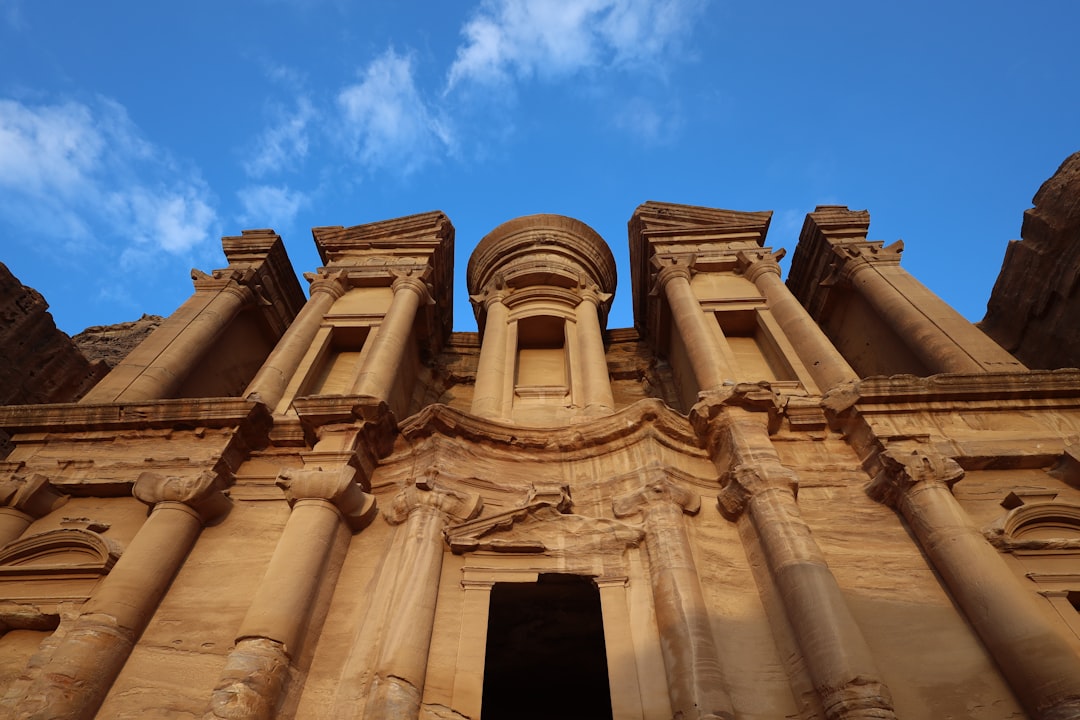
The Monastery sits above the main valley floor, reached by a stepped trail of around 800 rough-hewn stairs that starts near the Basin restaurant area and climbs roughly 45-60 minutes depending on your pace and how often you stop for the Bedouin tea stalls along the way. Winter is the season to do this climb; in summer heat it's genuinely punishing, but at 15-18°C it's simply a good, steady walk.
The facade itself is close to 50 metres wide, larger than the Treasury, and far less crowded because most day-trippers never make the climb. There's a small kiosk near the top selling tea for a dinar or two and a viewpoint a short scramble further on that looks out over Wadi Araba toward the Dead Sea depression on a clear day.
Go in the afternoon if you can. The facade faces roughly west, and the light in the last two hours before the winter closing time gives the carved columns a depth that flattens out at midday.
The High Place of Sacrifice
The climb almost nobody makes, and the view that punishes them for it
A steep stepped path climbs from near the Street of Facades up to a flattened summit where two obelisks and a Nabataean altar remain, thought to have been used for ritual sacrifice. The ascent takes about 45 minutes and drops back down through Wadi Farasa past the Garden Tomb and the Roman Soldier's Tomb, so it works well as a loop rather than an out-and-back.
What makes this worth the sweat is the view: the whole basin of Petra laid out below, the Treasury and Royal Tombs reduced to pale rectangles in the rock. In winter's clearer, cooler air the visibility runs further than it does in the summer haze, and you'll likely have the summit to yourself outside the first hour after opening.
Petra by Night at the Treasury
The same facade, a thousand candles, and Bedouin music echoing down the Siq
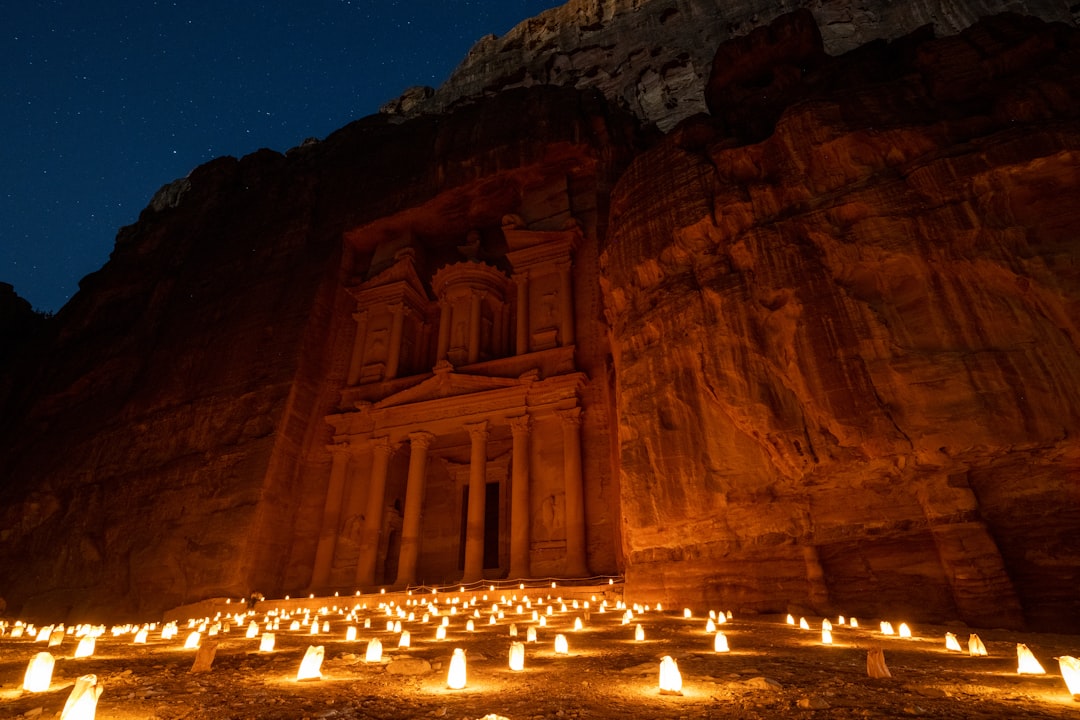
This ticketed evening event runs five nights a week — Sunday through Thursday — and walks small groups down the candlelit Siq to the Treasury for about two hours of light, sound, storytelling, traditional music and tea under the stars. Tickets run around JOD 17 as of recent seasons and are sold separately from the daytime entrance fee.
It is not a substitute for seeing the Treasury by daylight, and the candles give you a softer, more atmospheric version of the same view rather than a new angle. Arrive by around 20:15 for the roughly 20:30 start; latecomers are turned away at the gate since the gorge is narrow and the walk-in is timed.
The Royal Tombs
Four facades in a row, best caught in the last hour of light
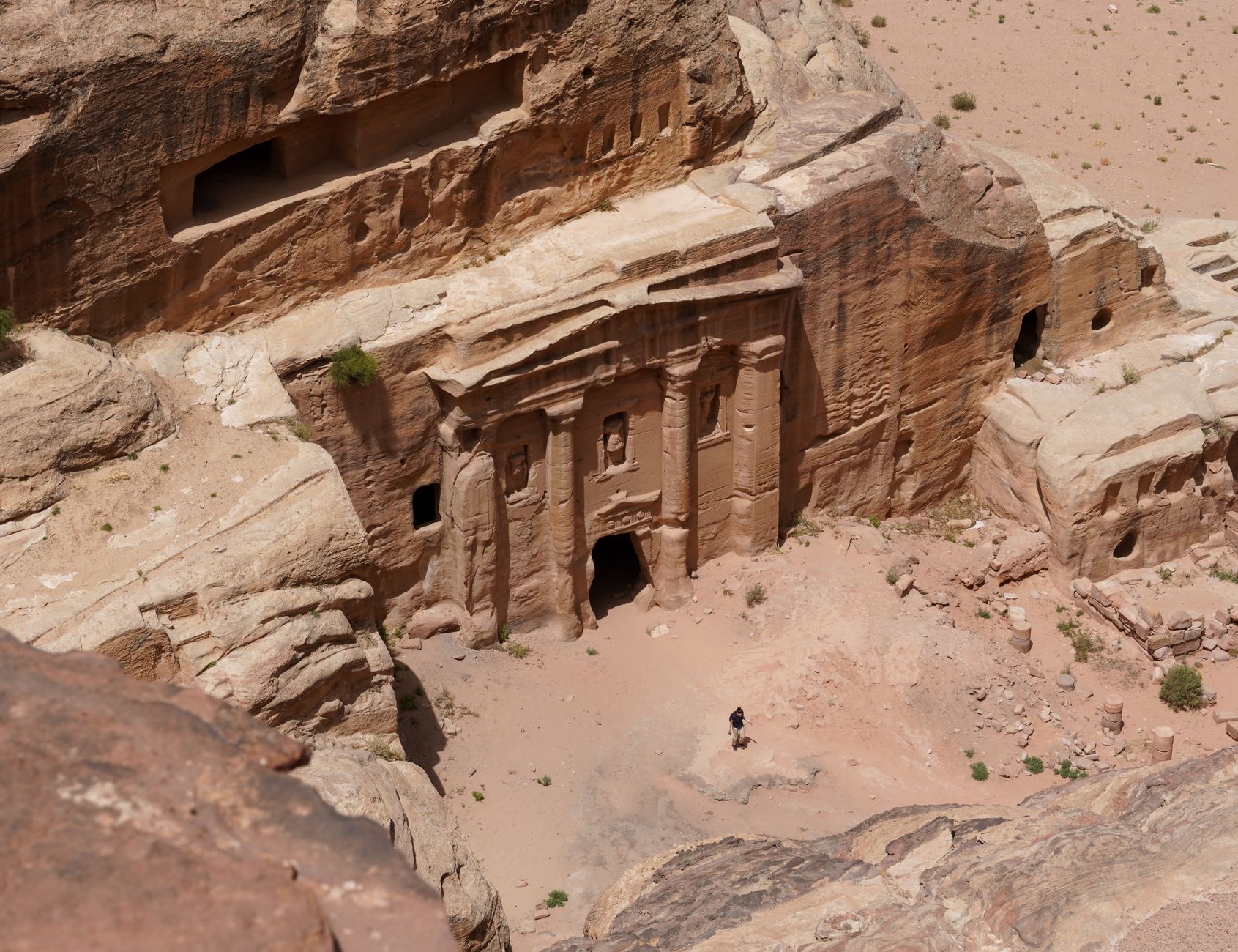
The Urn Tomb, Silk Tomb, Corinthian Tomb and Palace Tomb sit carved into the cliff face across the valley from the theatre, a short and mostly flat walk from the main path. The Silk Tomb in particular is worth lingering at — its sandstone shows natural bands of red, yellow and grey that look almost painted, a result of mineral deposits rather than any decoration.
Late afternoon, roughly the hour before the winter closing time, throws warm light directly onto these facades and turns the whole row gold. It's also when the crowds have mostly thinned toward the exit, leaving the terrace in front of the Urn Tomb — itself later used as a Byzantine church — almost empty.
Cordelie travel advisors
Planning Petra? Go with someone who knows
The right suite, the right season, the reservations that never appear online — your Cordelie advisor knows them, and holds them for you.
Plan with a Cordelie advisorFree to ask. Cordelie Travel Services · IATA/ARC 06649064
Little Petra (Siq al-Barid)
A quieter Nabataean settlement, a short drive north
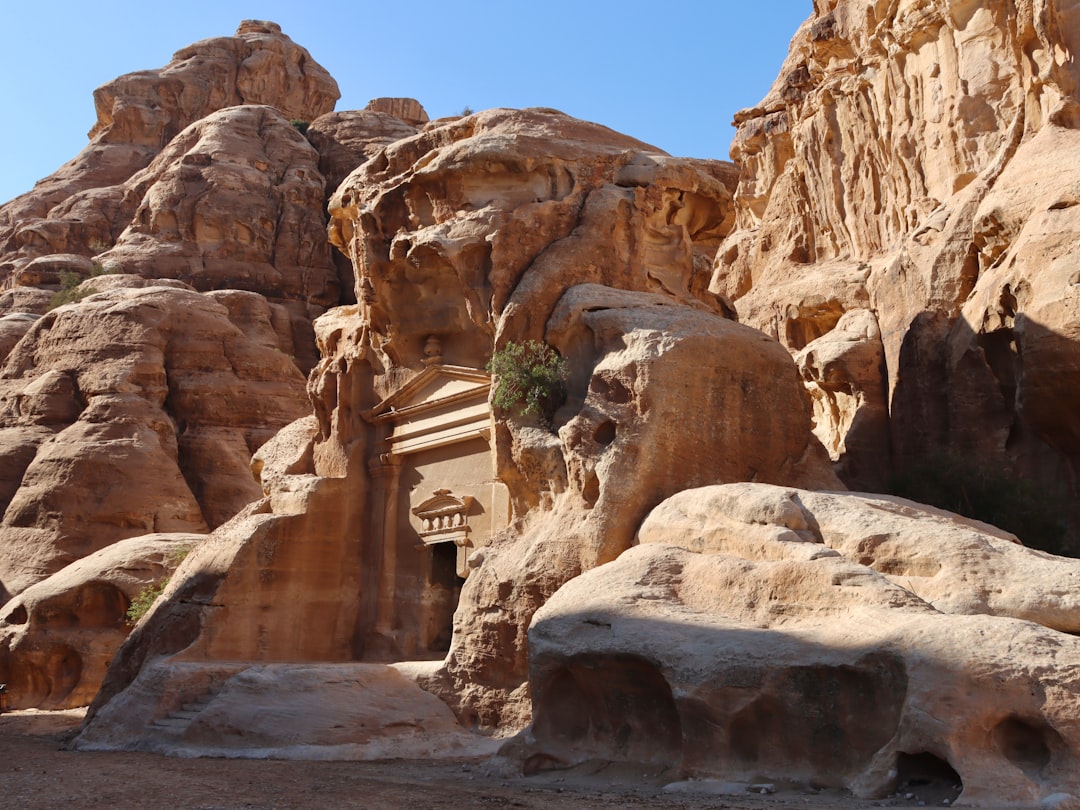
About 15 minutes by car or taxi from the main Petra visitor centre, Little Petra is a compact, cool gorge lined with smaller Nabataean facades and dwellings, generally free to enter and rarely crowded even in high season. It's an easy half-day add-on and a good option if the main site's climbs have worn you out but you still want more Nabataean rock-cutting.
The highlight is a biclinium — a carved dining hall — with faded but visible painted ceiling decoration of vines and figures, one of the few painted interiors surviving anywhere in the Petra region. Bring a torch or your phone light; the chamber is dim even at midday.
The Petra Museum
A warm, air-conditioned pause with real context
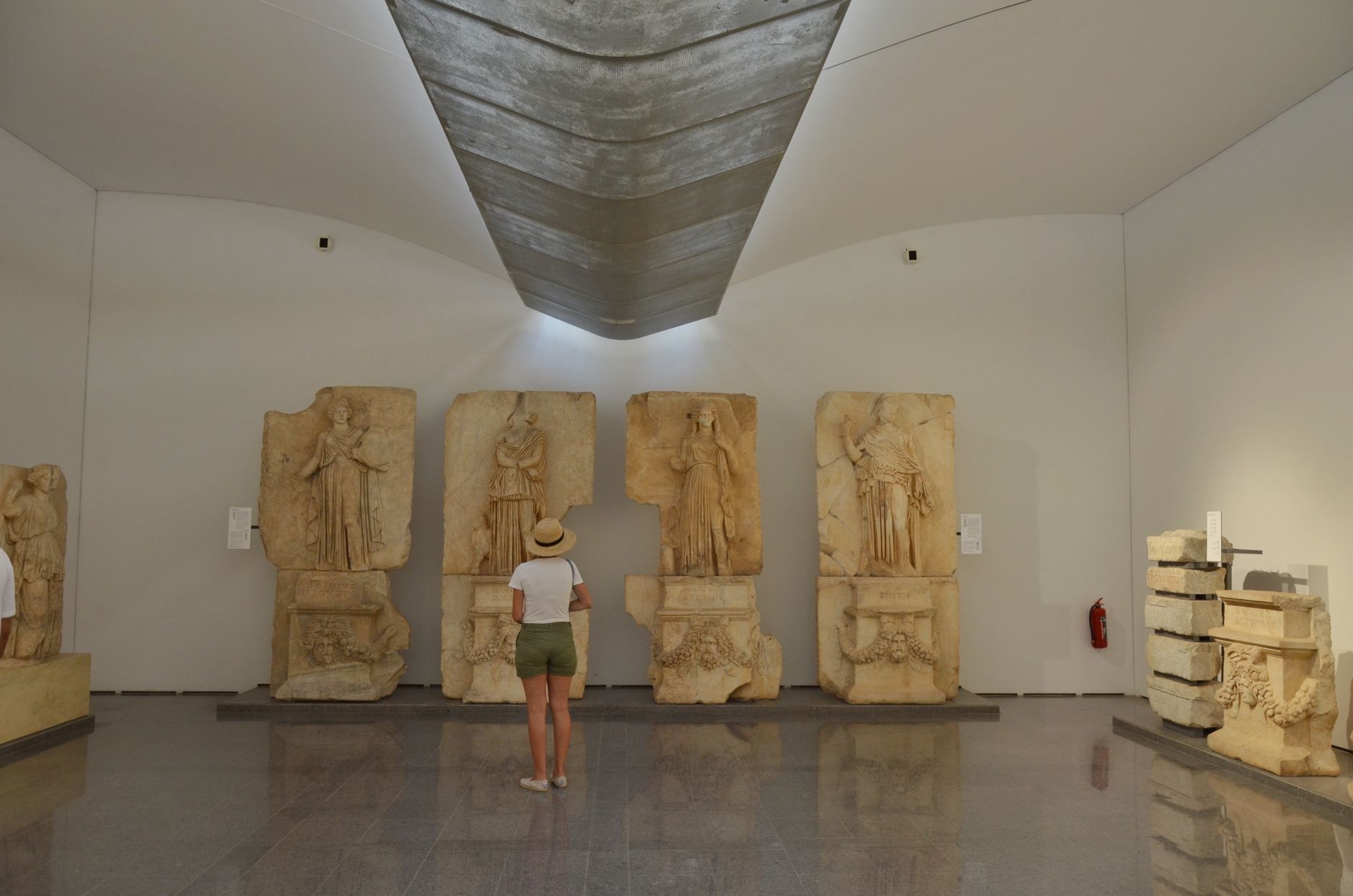
Opened in 2019 near the main visitor centre, this modern museum holds artifacts recovered from the site itself — Nabataean pottery, coins, and carved architectural fragments too fragile to leave in the open air. It's a useful stop either before you set out, to give the ruins some grounding, or afterward, when your legs have had enough and you want the story behind what you just walked through.
Entry is typically included with the main Petra ticket, and the museum stays open on the same schedule as the archaeological park. Give it 30-45 minutes; it's compact enough not to feel like a chore.
The Petra Theatre and Street of Facades
Where Nabataean tombs meet Roman engineering
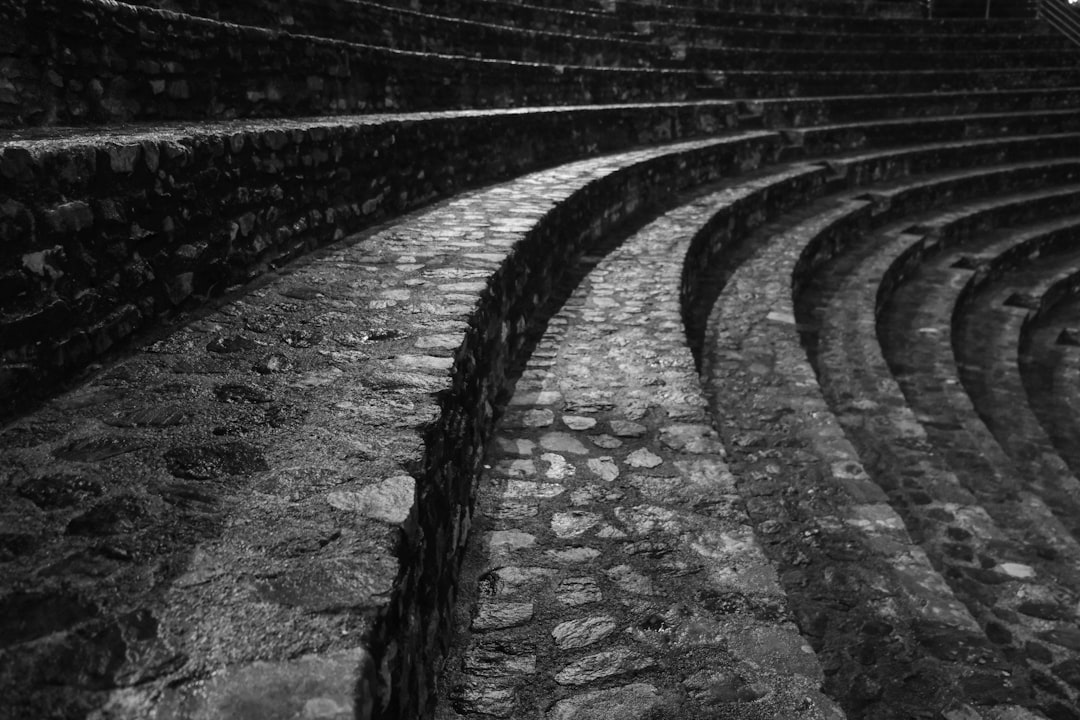
Carved directly into the hillside opposite the Royal Tombs, the theatre shows the clear imprint of Roman-era remodelling after Petra was absorbed into the Roman province of Arabia in 106 AD, its tiered seating cut to hold several thousand spectators. It sits right on the main path, so there's no detour required — just a reason to slow down rather than walk past.
Just before it, the so-called Street of Facades lines the gorge walls with a dense run of Nabataean tomb entrances, close enough together that it's easy to lose an hour picking out the differences in each doorway's carved crownstep pattern.
What Almost Made the List: Beidha, Jabal Haroun, and a Proper Meal in Wadi Musa
A short walk beyond Little Petra, the Neolithic village site at Beidha dates back roughly 10,000 years and shows some of the earliest known permanent settlement in the region, though its low stone walls demand more imagination than spectacle. Jabal Haroun, the shrine traditionally identified as Aaron's tomb, is a genuinely serious day hike — several hours each way from the main valley — and belongs on a longer itinerary rather than a first visit. And for dinner back in Wadi Musa, Al-Qantarah Restaurant and the terrace at the Petra Kitchen cooking class both do a solid mansaf and a view back toward the hills where you spent your day; neither will change your life, but both earn their place after a long climb.
Petra by Night sells out on its running nights, especially around Jordanian and regional school holidays, and the difference between a dawn Treasury and a mid-morning one is the difference between a private courtyard and a queue for photographs. A Cordelie advisor can secure your evening tickets ahead of arrival, arrange a private guide for the High Place of Sacrifice or the Monastery climb, and build your stay around a base at the Mövenpick Resort Petra or Beit Zaman, both a short walk from the visitor centre, so your mornings start at the gate rather than in a taxi from further afield.
For travellers combining Petra with the Dead Sea or Wadi Rum, the routing matters more than it looks on a map — get it wrong and you lose a half-day to drive time you didn't need to spend. That's the kind of planning worth putting in front of someone who's done it before.
Top Pick: Al-Khazneh (The Treasury) via the Siq
The one site in Petra you cannot skip, and the one that still delivers even after you've seen every photograph of it.
Everything else on this list is genuinely worth the detour, but the Treasury remains the reason Petra exists in the collective imagination, and the walk through the Siq to reach it is inseparable from the payoff. Time it for early morning in winter — cool air, low golden light, and a square you can sit in without fighting for the frame — and it earns every bit of its reputation.
Last checked for accuracy: . How we check

Alex Moreau writes about going slowly. Nine years of reporting from trains, river boats and towns nobody has a hashtag for, mostly across Europe and North Africa. They live in Lisbon, keep a running list of the continent's best two-hour lunches, and believe most itineraries would improve if you deleted a city.