
The Best Things to Do in Okinawa

The Best Things to Do in Okinawa: A Slow Traveler's Guide to Japan's Subtropical Islands
Most first-time visitors try to see all of Okinawa in five days, which is a bit like trying to taste the whole Caribbean from one hotel bar. The prefecture is scattered across more than 150 islands stretching roughly 1,000 kilometers between Kyushu and Taiwan, and the main island alone takes close to two hours to drive end to end. This list leans toward staying put in fewer places and letting the pace slow down, because Okinawa rewards that kind of travel more than almost anywhere else in Japan.
Spring here runs mild and increasingly humid, with April and early May offering the sweet spot: air temperatures in the mid-20s Celsius, sea water already warm enough for snorkeling, and the rainy season (typically starting mid-May) still a few weeks off. What follows are the seven places and experiences that earn a spot on any serious Okinawa itinerary, ranked by how much they reward the time you give them, plus a few worthy runners-up.
Rankings here weigh three things: how distinct the experience is from anything else in Japan, how well it holds up to a slower, unhurried visit rather than a rushed stop, and how practical it is to actually reach and enjoy given real ferry schedules, opening hours and driving distances.
Anything that photographs well but delivers little once you're standing in front of it was left off. Anything that takes real effort to reach but pays that effort back handsomely made the cut, even if it means recommending a second or third night somewhere off the main tourist track.
Shuri Castle
Naha — the ceremonial heart of the old Ryukyu Kingdom

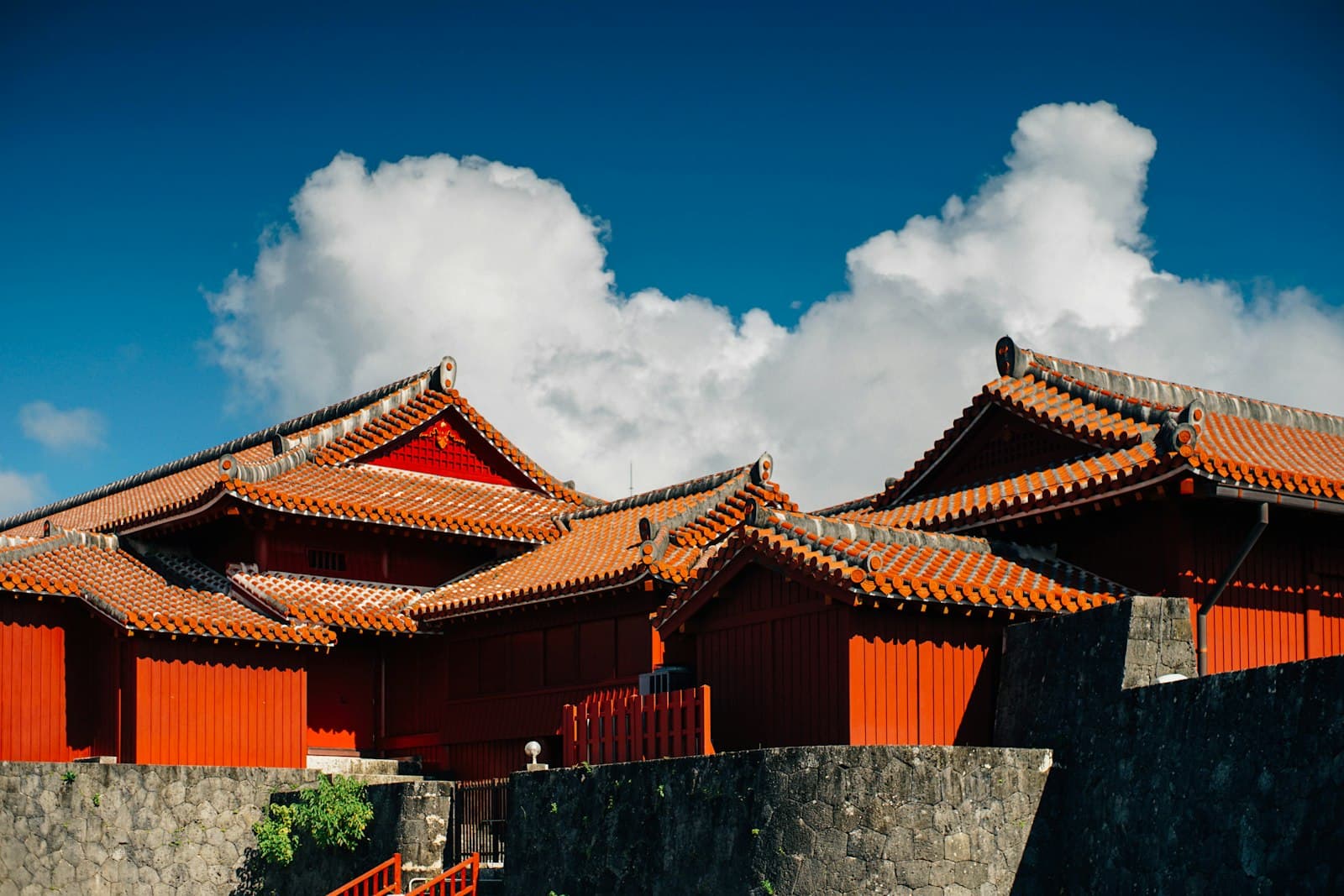
Shuri Castle sits on a hilltop in Naha and served as the royal seat of the Ryukyu Kingdom for roughly 450 years, until Japan formally annexed the kingdom in 1879. The site blends architectural DNA from both China and Japan in a way you won't see at any castle further north — vermillion-lacquered halls, dragon motifs, and a stone wall system built from Ryukyu limestone that curves rather than corners, a defensive quirk unique to the islands.
The main hall, or Seiden, burned in a 2019 fire and reconstruction has been underway since, with completion targeted around 2026. That means part of the interior is currently a construction viewing gallery rather than a finished palace room, which some travelers find disappointing and others find oddly more interesting — you can watch traditional joinery techniques being used in real time.
Entry to the castle park is roughly 400-600 yen (2024 pricing) and the grounds open around 8am, closing between 6pm and 8pm depending on season. Give it 90 minutes minimum, and go before 10am if you want the main gate, Kankaimon, without a tour bus crowd behind you.
A day among the Kerama Islands
Zamami and Aka — the water Okinawans actually brag about

Ask an Okinawan local where the best water is and they'll rarely say the main island's resort beaches — they'll say the Kerama Islands, a scatter of small islands about 30-40 kilometers west of Naha, famous for a shade of turquoise locals call 'Kerama Blue.' Visibility routinely runs 20-30 meters, rivaling parts of the Caribbean, and coral cover here has fared better than much of the main island's reef.
High-speed ferries leave from Tomari Port in Naha to Zamami Island, taking about 50 minutes one-way and costing roughly 2,700-3,000 yen each way (2024). A slower car ferry runs closer to two hours for about half the price. Either way, this is not a rushed half-day trip — the smart move is an overnight on Zamami, where guesthouses run from about 6,000-10,000 yen a night, so you get an early snorkel session at Furuzamami Beach before the day-tripper boats arrive around 10am.
Snorkeling gear rents for roughly 1,500-2,500 yen a day from shops near the port, and from late January through March the Kerama Channel is also one of the more reliable spots in Japan for humpback whale watching, though by April the whales have mostly moved on north.
Churaumi Aquarium and Ocean Expo Park
Motobu Peninsula — whale sharks under one of the largest single acrylic panels in the world

Churaumi Aquarium sits inside Ocean Expo Park on the Motobu Peninsula in northern Okinawa, about a 90-minute drive from Naha along the Okinawa Expressway. The centerpiece Kuroshio Tank holds several whale sharks and manta rays behind acrylic panels roughly 60 centimeters thick, and standing in front of it at feeding time — typically posted around 11am and 3pm — is genuinely one of those moments that makes people go quiet.
Admission runs about 2,000-2,180 yen for adults (2024 pricing), with the aquarium open 8:30am to 6:30pm most of the year and later, to 8pm, during peak summer months. Arrive at opening if you can; by midday the walkway in front of the Kuroshio Tank gets three or four rows deep.
The wider park is worth the extra hour it takes — there's a subtropical botanical garden, a small beach, and the Emerald Sea observation deck, all included in the same grounds without an extra ticket.
Cape Manzamo and the Fukugi tree lane at Bise
Two very different reasons to slow the car down on the west coast

Cape Manzamo, near Onna Village on Okinawa's west coast, is a limestone cliff carved by the sea into a shape locals liken to an elephant's trunk. It's free to walk out to the viewpoint, parking runs a small fee of around 500 yen, and the light is best in late afternoon when the East China Sea below turns a deep cobalt.
About 30 minutes north, the village of Bise near Churaumi Aquarium has one of Okinawa's best-preserved fukugi tree lanes — a shaded corridor of centuries-old trees planted originally as windbreaks against typhoons, running alongside traditional coral-stone walls. Bicycle rental stands near the entrance charge roughly 500 yen per hour, and it takes no more than 20 minutes to cycle the full lane, though most people linger longer than that.
Combine both in one afternoon: Manzamo around 4pm for the light, then Bise on the way to or from Churaumi the next morning, since they sit on the same coastal stretch.
Taketomi Island
A red-roofed Ryukyu village, water buffalo carts, and a deliberately slower clock

Taketomi sits in the Yaeyama Islands, a separate chain roughly 430 kilometers south of Okinawa's main island — this is a genuine extension, not a day trip layered onto Naha. You fly from Naha to Ishigaki, about 60-70 minutes by air, then take a 10-15 minute ferry from Ishigaki port to Taketomi, which costs roughly 700-800 yen each way.
What you get for the trouble is a village that has kept its low red-tiled roofs, coral-lime shisa guardians, and sand-covered lanes largely intact, protected by preservation ordinances that limit new construction. Water buffalo carts still trundle tourists through the village center for about 2,000-2,500 yen for a 30-minute loop, complete with a guide playing sanshin, the three-stringed Okinawan lute.
Most visitors do Taketomi as a rushed half-day from Ishigaki. Don't — the island has a handful of small minshuku guesthouses charging around 7,000-9,000 yen a night, and staying over means you catch Kondoi Beach at sunrise with almost no one else on the sand, and the star-sand beaches on the island's north side under a genuinely dark sky.
Cordelie travel advisors
Planning Okinawa? Go with someone who knows
The right suite, the right season, the reservations that never appear online — your Cordelie advisor knows them, and holds them for you.
Plan with a Cordelie advisorFree to ask. Cordelie Travel Services · IATA/ARC 06649064
Tsuboya Pottery District
Naha's old kiln quarter, still firing after roughly 300 years

A ten-minute walk south of Naha's main Kokusai-dori shopping street, Tsuboya has been Okinawa's ceramics quarter since kilns were consolidated here in the late 1600s under the Ryukyu Kingdom. The main lane, Yachimun-dori, is paved in old stone and lined with workshops still producing shisa — the guardian lion-dog figures you see on rooftops across the islands — alongside the heavier, glazed pottery known as arayaki.
Shops generally open around 10am and close by 6pm; a few workshops let you watch potters at the wheel, and several offer hands-on classes for roughly 3,000-5,000 yen that take about an hour and ship your finished piece home weeks later once it's been fired and glazed.
This is a good counterweight to a trip otherwise spent on beaches and reefs — it's the one entry on this list that's entirely about slowing down in a city, not a landscape.
Kouri Island and the Kouri Ohashi Bridge
A short drive over the water to Okinawa's own creation myth

Kouri Island connects to the main island via the Kouri Ohashi Bridge, a roughly 2-kilometer causeway over shallow turquoise water that's free to cross and takes about three minutes to drive if you don't stop — though almost everyone stops. There's a small parking area near the bridge's midpoint for photos.
Local legend holds Kouri as the birthplace of Okinawa's own Adam-and-Eve creation story, and the island still feels smaller and quieter than the Motobu Peninsula it's attached to. Tiida Beach on the island's east side has clean, shallow water good for a swim without a crowd, and a scattering of beachside cafes serve the local specialty, sea grapes (umibudo), best eaten fresh with a splash of soy and vinegar.
Kouri sits about 15-20 minutes from Churaumi Aquarium by car, which makes it an easy add-on to a northern Okinawa day rather than a destination requiring its own overnight.
Three More Okinawa Stops That Almost Made the Cut
Gyokusendo Cave, part of the Okinawa World complex near Naha, is one of the longer explored limestone caves in Japan, with roughly 900 meters of a walkable route open to visitors past dense stalactite formations. Entry to the combined park, including the cave, snake museum and craft village, runs about 2,000-2,500 yen (2024), and it's a solid rainy-day option if a spring shower rolls in.
Ishigaki Island, the main gateway to the Yaeyama chain, deserves its own multi-day trip rather than a footnote — but if you're only stopping through en route to Taketomi, Kabira Bay's glass-bottom boat tours (about 1,000-1,500 yen, 30 minutes) are worth the layover.
Nakijin Castle Ruins, on the Motobu Peninsula not far from Churaumi, predates Shuri Castle and offers a wilder, less-restored counterpoint — crumbling curved stone walls with far fewer visitors, and one of the earliest-blooming cherry blossom spots in Japan each January, though by spring proper the trees are long past bloom.
The hardest part of an Okinawa trip isn't picking what to see — it's the logistics of stitching together a main-island stay, a Kerama overnight, and a Yaeyama extension without wasting a day on ferry timetables or booking the wrong season for whale watching or diving visibility.
A Cordelie advisor can build you a trip where the guesthouse on Zamami is confirmed before the good rooms sell out, the Naha-Ishigaki flight lines up with the Taketomi ferry schedule, and every night is somewhere worth staying rather than a convenient stopover. That's the difference between seeing Okinawa and actually experiencing it.
Our Top Pick: Shuri Castle
The single best entry point into Okinawa's identity as its own kingdom, not just another region of Japan.
Shuri Castle earns the top spot because nothing else on this list explains Okinawa quite as directly. The Ryukyu Kingdom's distinct culture, language, and architecture — visible in everything from the shisa on the castle gates to the curved stone walls — trace back to this hilltop, and understanding it changes how you read every other stop on this list.
Go early, before 10am, spend the 400-600 yen entry fee without hesitation, and don't skip the reconstruction viewing gallery even though the Seiden isn't finished — watching Okinawan craftsmen rebuild it by hand is its own kind of history lesson.
Last checked for accuracy: . How we check

Alex Moreau writes about going slowly. Nine years of reporting from trains, river boats and towns nobody has a hashtag for, mostly across Europe and North Africa. They live in Lisbon, keep a running list of the continent's best two-hour lunches, and believe most itineraries would improve if you deleted a city.