
Southeast Asia's Living Festivals: Why Luang Prabang's Pi Mai Beats the Big-City Celebrations

Why Luang Prabang's Pi Mai Outshines Every Big-City Festival in Southeast Asia
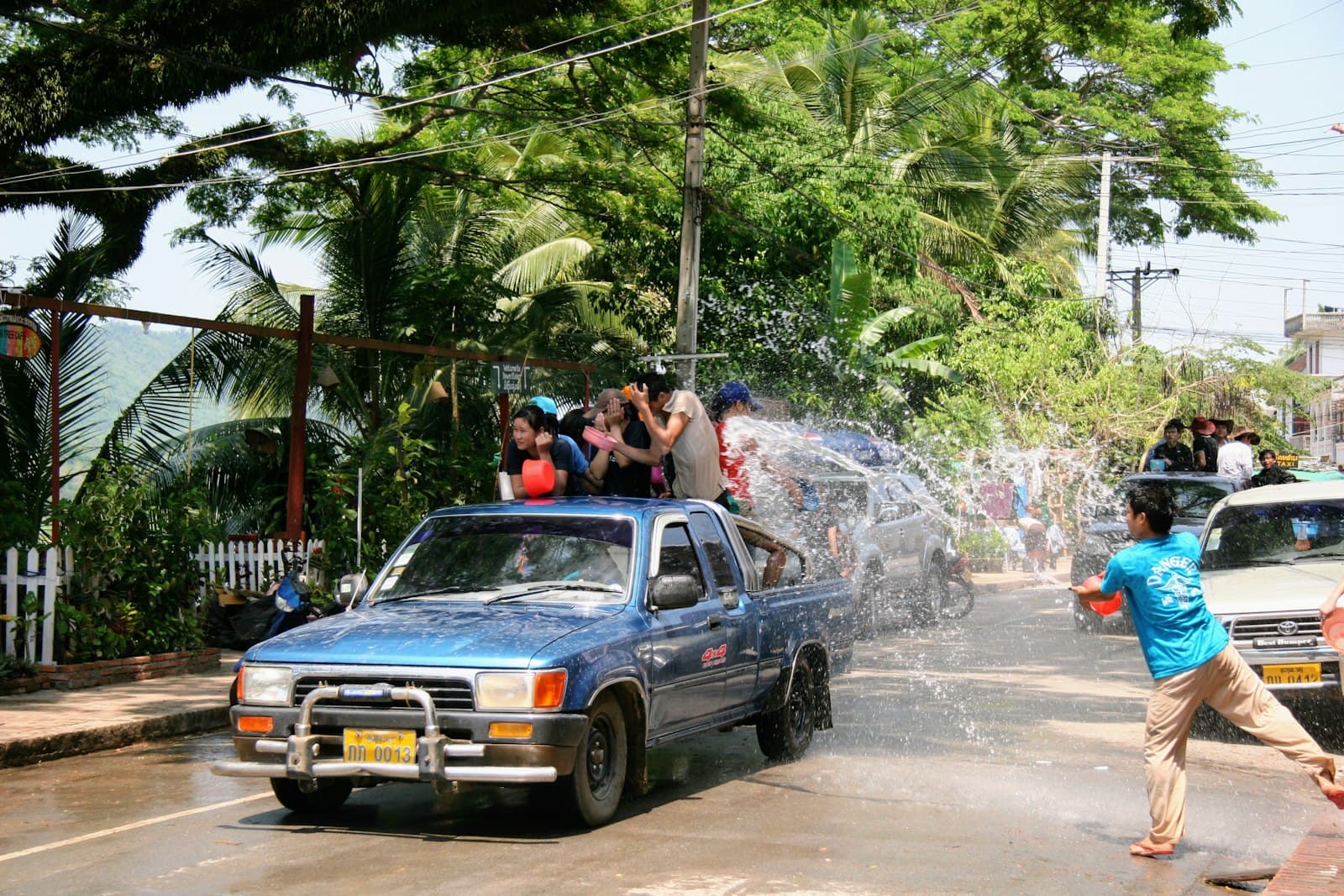
Stand on the bank of the Mekong in Luang Prabang just after 5:30am during Pi Mai and you will understand the problem with calling this a water festival. Monks file past in unbroken orange lines, mist still sitting on the river, and the only sound is bare feet on wet stone. Compare that to the foam-cannon chaos on Chiang Mai's moat a few days later and you get two very different ideas of what a new year festival is for. This list ranks seven living festivals across the region, with Luang Prabang's multi-day Pi Mai Lao at the top, and it stays honest about why the bigger, louder celebrations in Chiang Mai and Hoi An land lower.
Every entry here was judged on whether the ritual still belongs primarily to the people who live there, rather than existing mainly as a tourist spectacle performed on a schedule.
I also weighed physical access: can a respectful visitor actually get close enough to a Buddha-washing or an alms procession to understand it, without a loudspeaker or a rope line in the way, and without disrupting it?
Timing mattered too. Pi Mai, Songkran and Khmer New Year all follow the same solar new-year calendar, landing in mid-April but shifting by a day or so year to year, so exact dates below are given as ranges to confirm against a current lunar-solar calendar before booking flights.
Pi Mai Lao, Luang Prabang
Three to five days along the Mekong and Nam Khan, mid-April
Pi Mai typically falls between April 14 and 16, timed to the solar new year rather than a fixed Gregorian date, and Luang Prabang often stretches the celebration a day or two longer than Vientiane or Bangkok because the old town's temple density gives it so much more to do. More than 30 working monasteries sit inside a peninsula barely a square mile, pinched between the Mekong and the Nam Khan, so you can walk between ceremonies rather than drive to them.
Sisavangvong Road, the main street through the old town, closes to traffic for the central days. Families visit grandparents with gifts of flowers and candles, water gets poured gently rather than hosed, and by late afternoon the whole peninsula smells of frangipani and woodsmoke. Luang Prabang International Airport connects internationally to Chiang Mai in about an hour and to Bangkok in roughly 1.5 to 2 hours, plus a short domestic hop from Vientiane of around 45 minutes.
Dawn Alms-Giving Along the Mekong
Tak Bat at its fullest during festival week
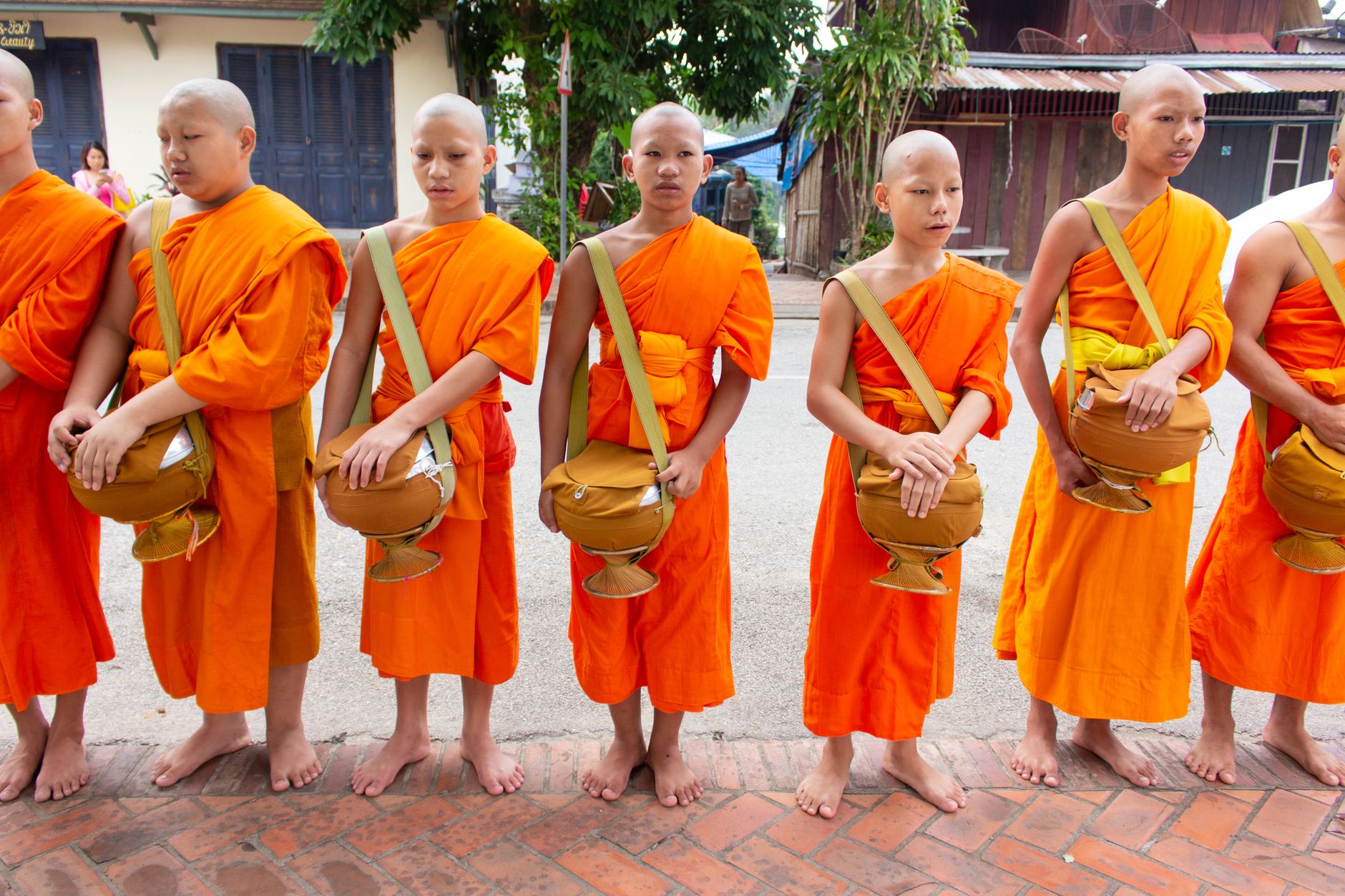
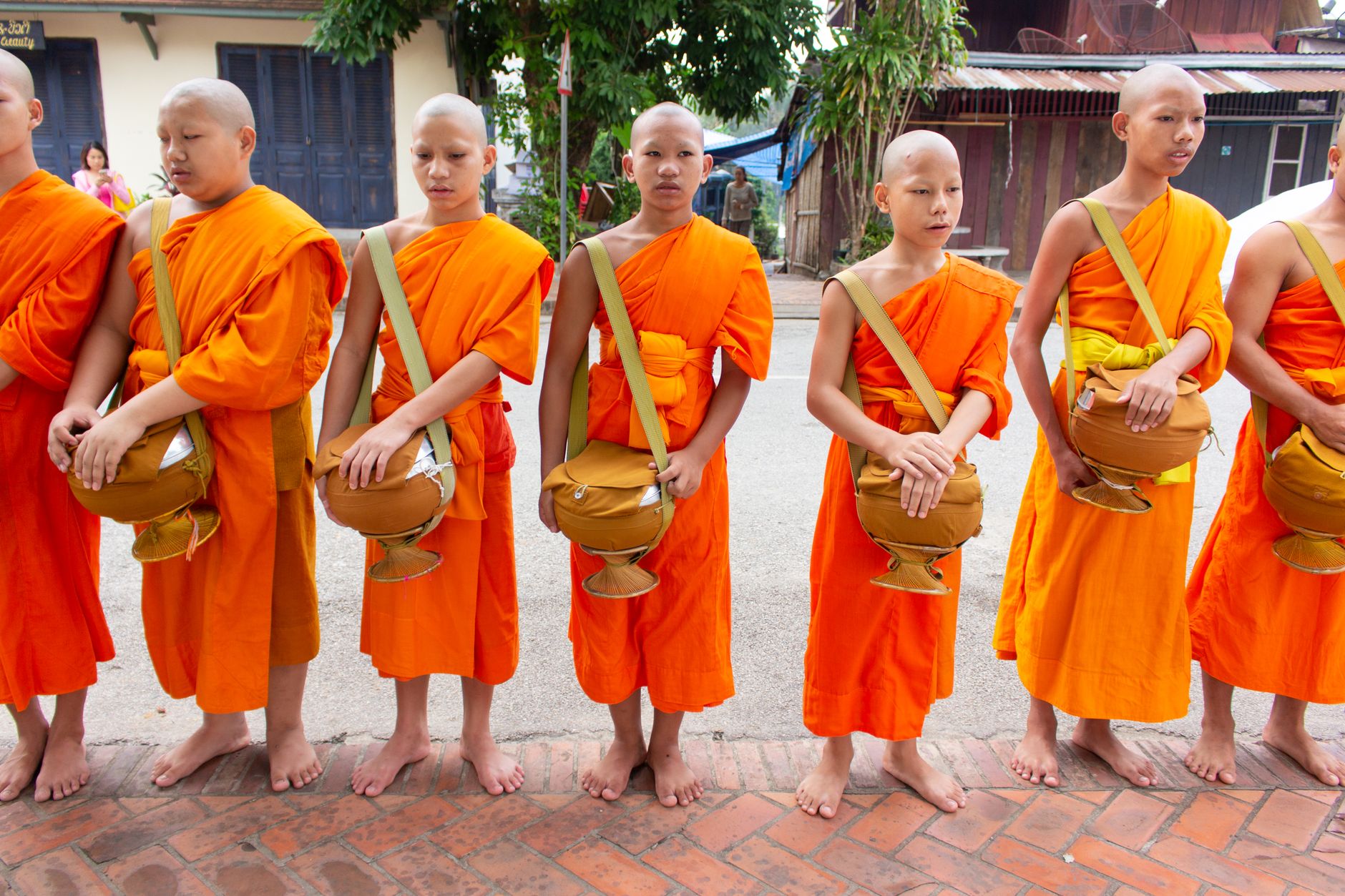
Tak Bat, the alms procession, happens every morning of the year starting around 5:30 to 6:00am, but during Pi Mai extra monks join from monasteries outside town and the line stretches further along Sisavangvong Road toward Wat Xieng Thong near where the Nam Khan meets the Mekong.
Buy sticky rice the evening before from vendors near the morning market on Kingkitsarath Road, roughly 15,000 to 20,000 Lao kip, about $1 to $1.50. Kneel on a low stool, place the rice without making eye contact, and keep phones silent and at least 2 to 3 meters back. This is a daily devotional act, not a photo call, and Luang Prabang's town authorities have asked visitors directly to stop blocking the route with tripods.
Buddha-Washing at Wat Xieng Thong, Wat Mai and Wat Visoun
Scented water poured over centuries-old images, courtyard by courtyard
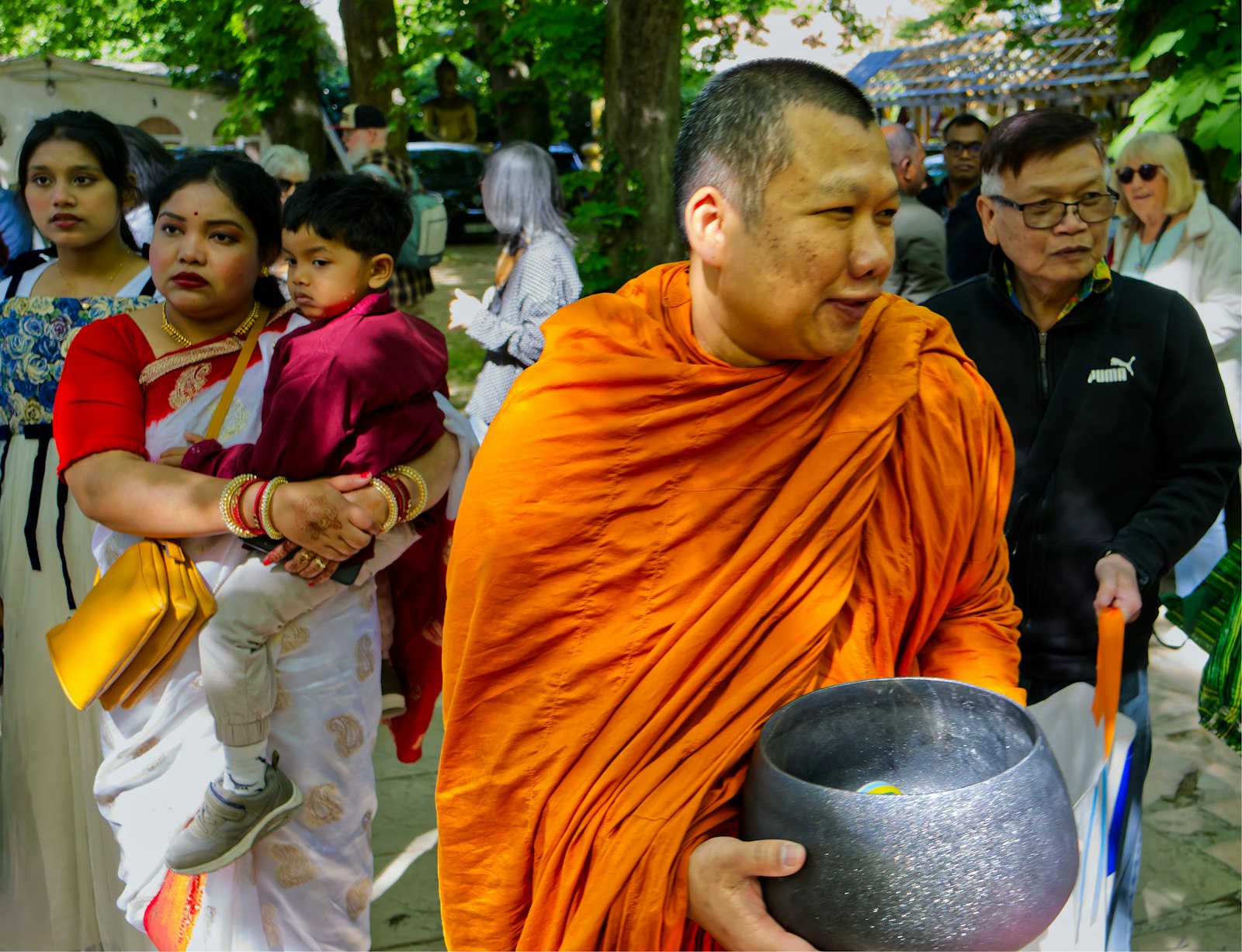
The Pha Bang, the gold Buddha image that gave the town its name, leaves the National Museum (the former royal palace) and travels to Wat Mai Suwannaphumaham for the three main days of Pi Mai, where the public lines up to pour jasmine-scented water over it.
Wat Xieng Thong, built in 1560 under King Setthathirat, holds its own washing rites in a courtyard shadowed by a sim roof that sweeps almost to the ground. At Wat Visoun, locals build small sand stupas at the base of That Pathum, the bulbous 'watermelon' stupa - traditionally one stupa for each year of your life, plus one more for luck.
The Nang Sangkhan Procession
Masked elders, flower floats and the spirit of the new year
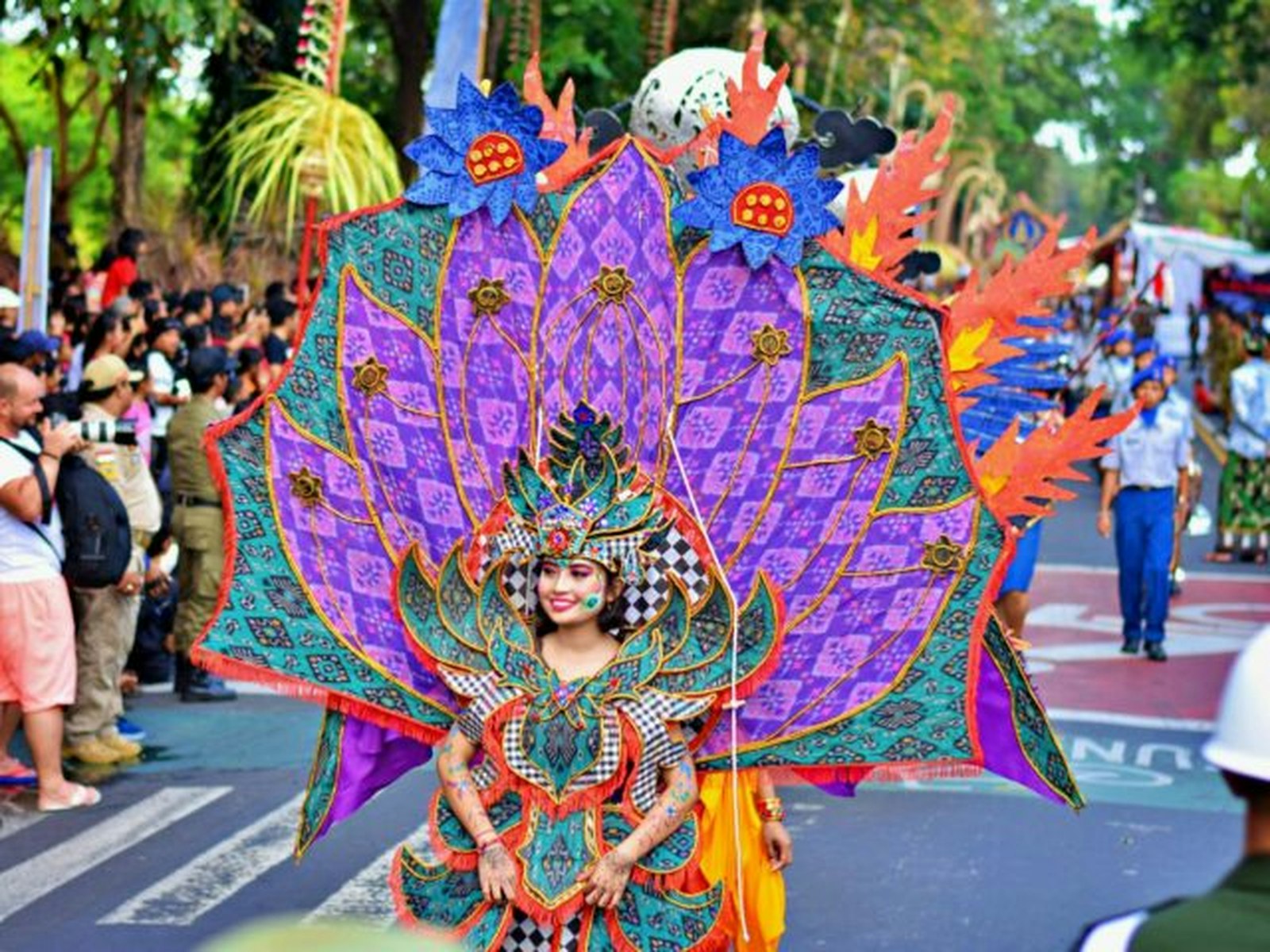
The main procession usually moves down Sisavangvong Road in the early afternoon, roughly 2:00 to 4:00pm on the central festival day, though timing shifts slightly by year. Pu Nyeu Nya Nyeu, oversized masked figures representing an elderly couple, lead the way, followed by a float carrying a young woman chosen to represent Nang Sangkhan, the new year's guardian spirit.
Drummers and flower-decked floats from each neighborhood temple follow behind. The best viewing spots, near the Royal Palace Museum and the junction with Kitsalat Road, fill in early, so arrive by early afternoon if you want more than a view of someone's shoulders.
Water Blessings and Evening Lantern Floats
Gentle by day on the Nam Khan, candlelit by night
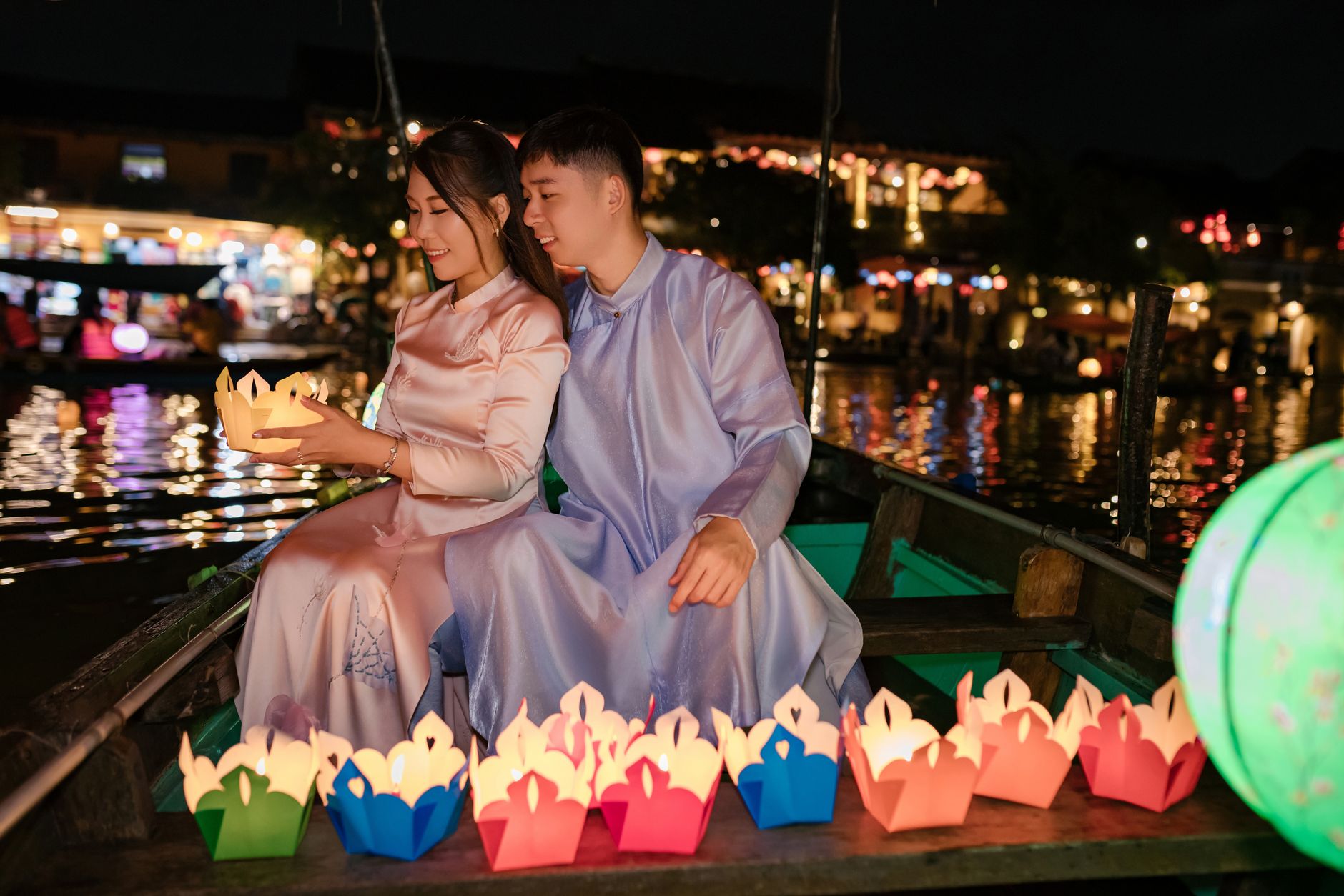
Unlike the hose-and-water-gun fights elsewhere in the region, Luang Prabang's version stays mostly gentle: cupped hands and small bowls, often poured over an elder's hands as a blessing rather than thrown at strangers. Some good-natured splashing happens on side streets near the market, but it rarely escalates past wrists and shoulders.
After dark, small banana-leaf floats carrying a candle are released into the Nam Khan near its confluence with the Mekong, below Mount Phousi. Climb Phousi's 328 steps to Wat Chom Si beforehand for a quieter sunset view over the river bend, before the lantern crowds settle in below.
Cordelie travel advisors
Planning Luang Prabang? Go with someone who knows
The right suite, the right season, the reservations that never appear online — your Cordelie advisor knows them, and holds them for you.
Plan with a Cordelie advisorFree to ask. Cordelie Travel Services · IATA/ARC 06649064
Songkran in Chiang Mai
Same mid-April calendar, far bigger water fight
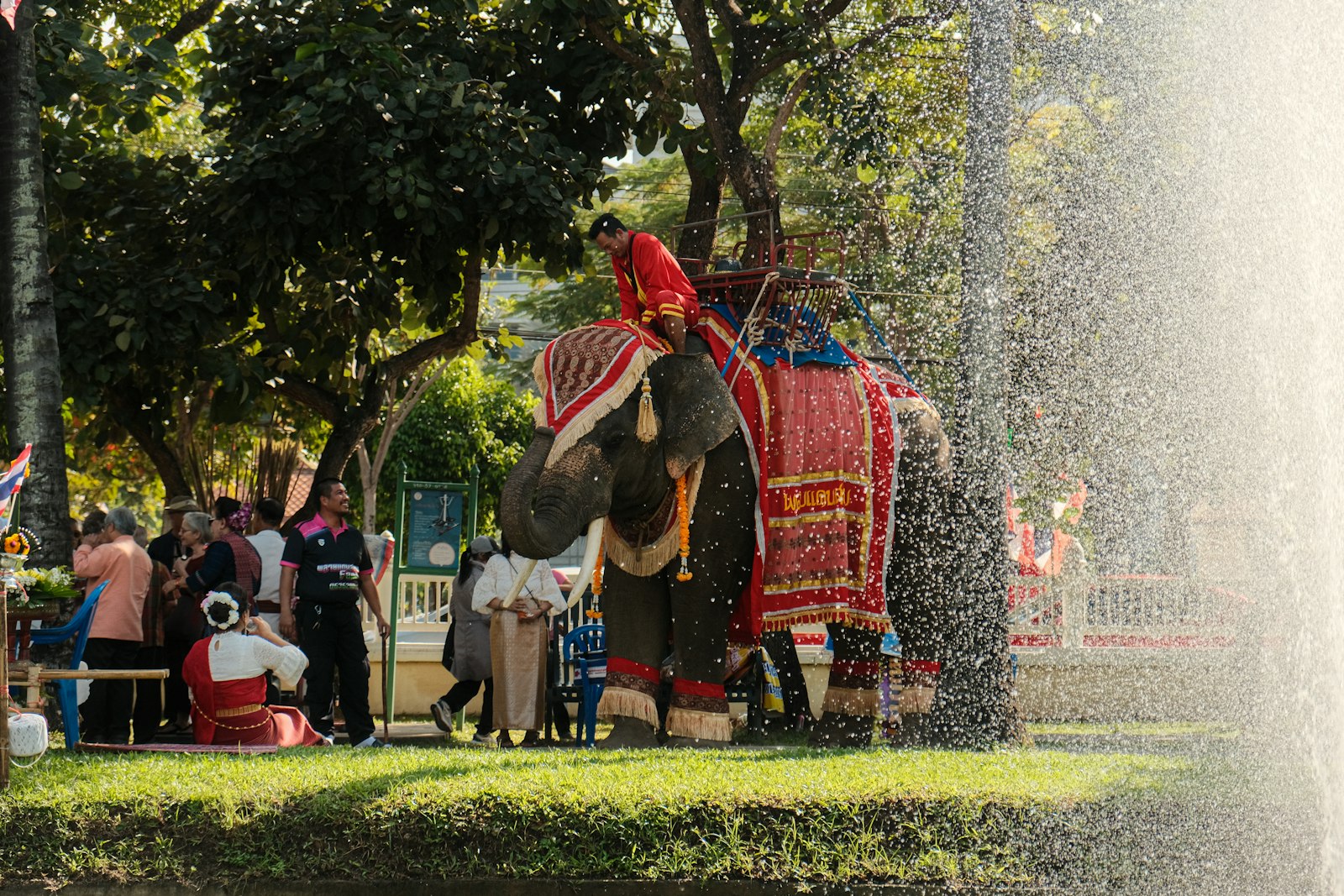
Chiang Mai's Songkran lands on the same mid-April dates as Pi Mai, officially April 13 to 15, and the moat ringing the Old City becomes the main water-fight corridor, with pickup trucks hauling barrels and a soundtrack of competing speaker stacks for days.
The genuine ritual hasn't disappeared - Wat Phra Singh still holds a real Buddha procession and sand-stupa building each morning before the crowds arrive - but it sits inside a much bigger, much louder tourist event than anything in Luang Prabang. Great for pure festival energy and street photography; a poorer choice if quiet ritual is what you came for.
The Full Moon Lantern Festival, Hoi An
Vietnam's Ancient Town goes dark for candlelight - every month
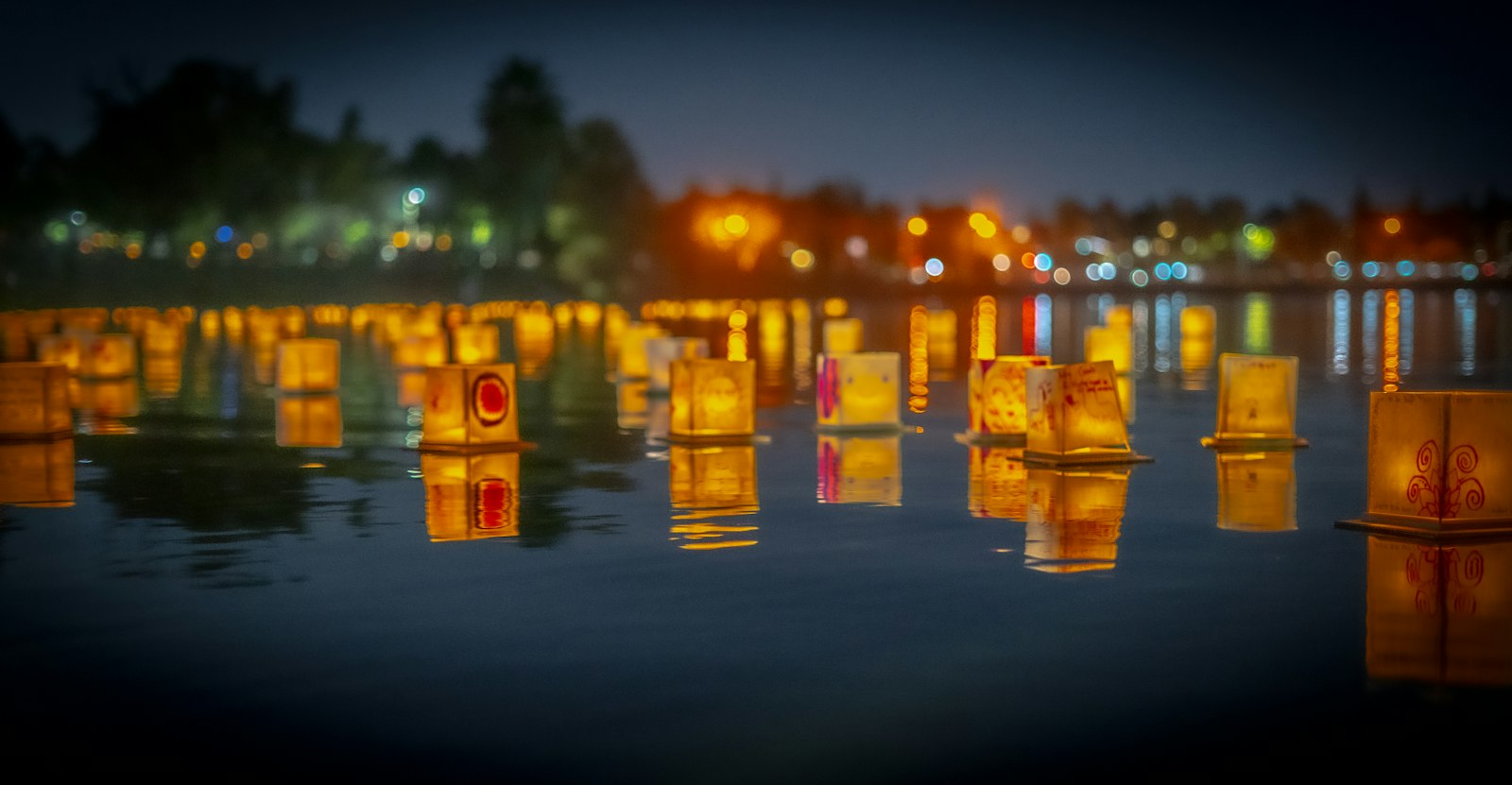
Hoi An's lantern festival happens on the 14th day of every lunar month, not once a year like the others on this list, which makes it an easy add-on for anyone combining Laos and Vietnam in the same spring trip. At dusk, electric lighting in the Ancient Town switches off and paper lanterns take over.
Vendors along the Thu Bon River sell small candle-lanterns to float downstream, typically 5,000 to 10,000 Vietnamese dong each, roughly $0.25 to $0.45. It is lovely and photogenic, but it is a monthly civic tradition rather than a once-a-year rite tied to the turning of the year, which is why it sits at the bottom of this particular ranking.
Three More New Year Festivals Worth Building a Spring Trip Around
Vientiane celebrates the same Pi Mai dates as Luang Prabang, centered on Wat Si Saket and the golden stupa of Pha That Luang, but the capital's wider streets and heavier traffic dilute the intimacy you get in the smaller river town. Siem Reap marks Choul Chnam Thmey on the same mid-April calendar, with water splashed good-naturedly around Angkor Wat's moat and pilgrims climbing Phnom Bakheng for sunset, making it an easy pairing with a Cambodia leg of a longer Southeast Asia itinerary. And if your spring travel stretches into May, Boun Bang Fai, the rocket festival celebrated across Laos and Thailand's Isaan region, sends home-made bamboo rockets skyward to call the rains before rice planting begins - raucous, agricultural, and almost entirely unvisited by foreign tourists.
A Cordelie advisor builds your Pi Mai trip around the actual lunar-solar dates for the year you're traveling, not a guess from last year's calendar, so you land exactly when the Pha Bang moves to Wat Mai and the procession forms on Sisavangvong Road.
Through established relationships with temples and small-group operators in Luang Prabang, your advisor can arrange courtyard access for the Buddha-washing rites and a sunrise viewing spot for Tak Bat that doesn't put you in the monks' path. Pair it with a stay at Amantaka or Rosewood Luang Prabang, a half-day on the Mekong to the Pak Ou Caves, and an onward connection to Chiang Mai or Hoi An if you want the contrast this list makes a case for.
The Verdict: Pi Mai Lao in Luang Prabang
Southeast Asia's most complete living new year festival
Pi Mai wins this list because the ritual here still belongs to the families who live inside that river peninsula, not to a crowd that flew in for a water fight. Walk from dawn alms-giving at Wat Xieng Thong to a Buddha-washing at Wat Mai to the afternoon procession on Sisavangvong Road, and you've covered the whole arc of the new year on foot, in under a square mile, over the course of a single day.
Rooms at Amantaka run roughly $350 to $550 a night in high season, with simpler options like 3 Nagas Hotel on Sakkaline Road well under half that - book both well ahead, since mid-April sells out fast in a town with limited rooms. Time your visit to the lunar-solar calendar, arrive a day early to watch the sand stupas go up, and let the louder festivals in Chiang Mai and Hoi An be the contrast trip, not the main event.

Alex Moreau writes about going slowly. Nine years of reporting from trains, river boats and towns nobody has a hashtag for, mostly across Europe and North Africa. They live in Lisbon, keep a running list of the continent's best two-hour lunches, and believe most itineraries would improve if you deleted a city.