
Sacred Ground: Tracing American Sacrifice Along Normandy's D-Day Coast

Nine Thousand Crosses and a Beach That Still Whispers June 6
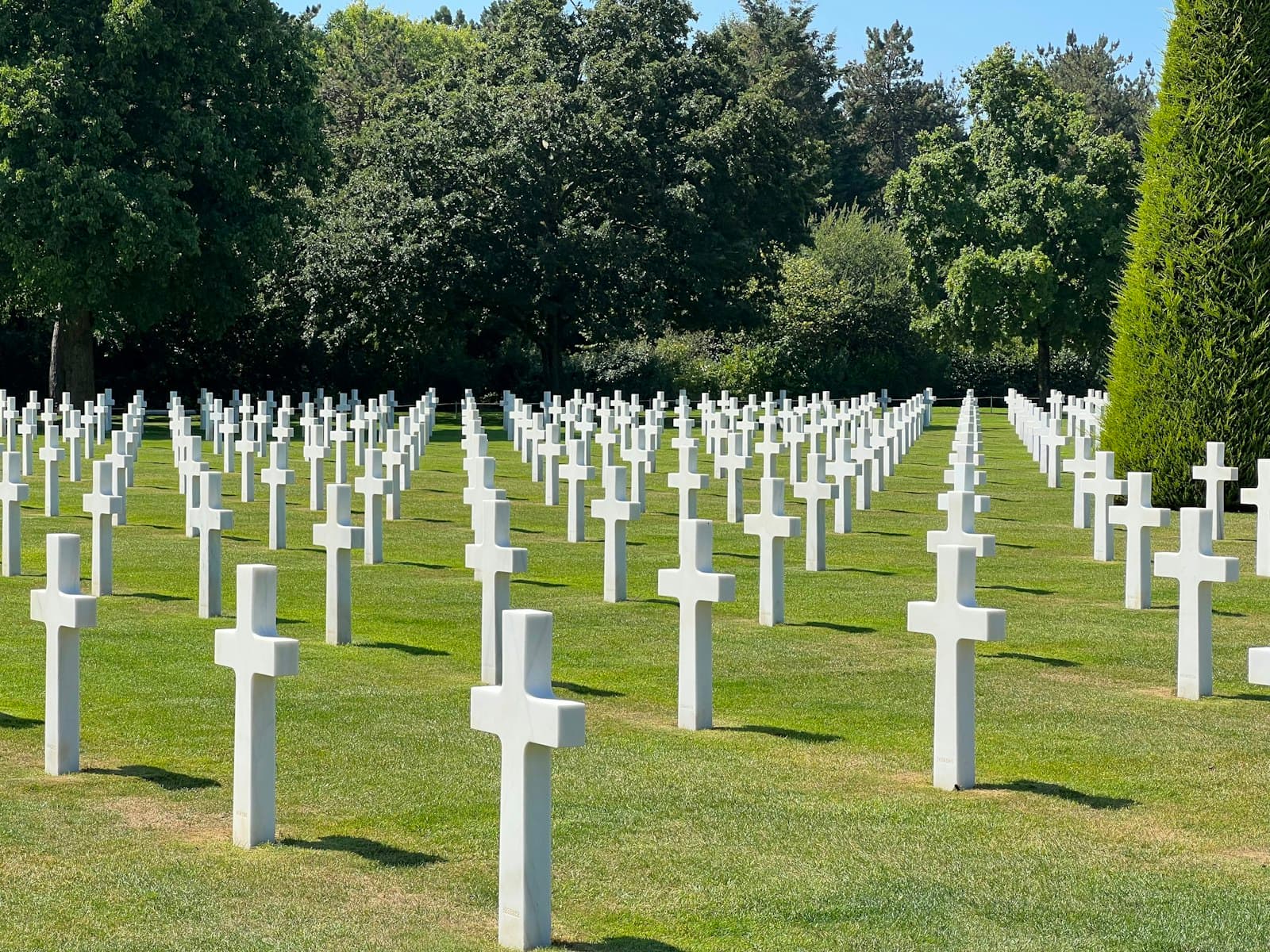
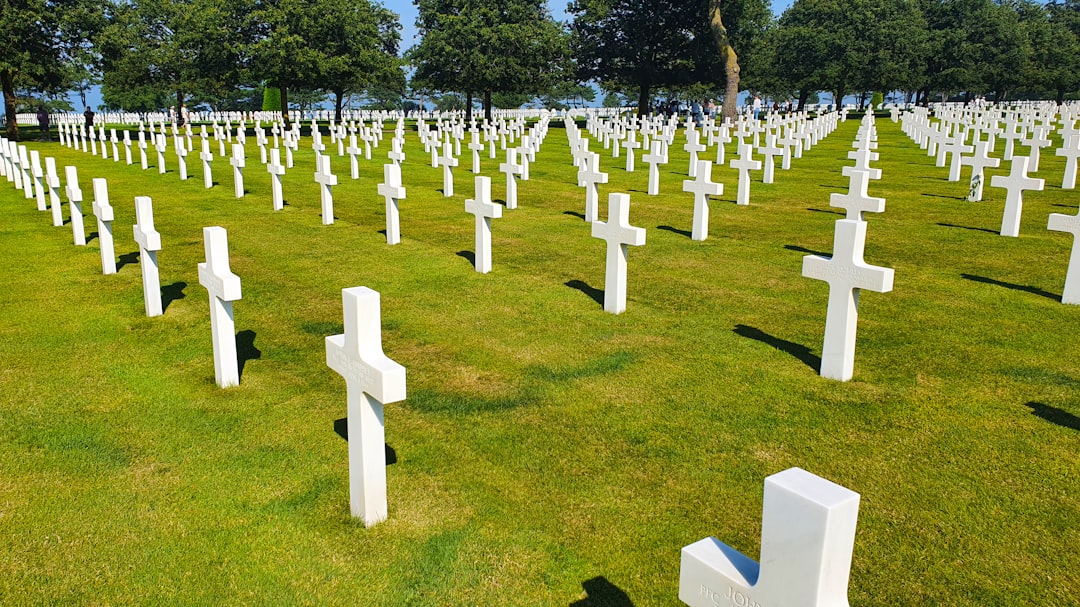
I got out of the rental car at the Normandy American Cemetery in Colleville-sur-Mer a little after 9am, and the wind coming off the English Channel hit me before I'd even shut the door. It was late April, the grass on the 172-acre bluff still that improbable, saturated green that only lasts a few weeks in Normandy, and the flags along the reflecting pool were snapping hard enough to crack. I'd read the numbers before I flew over from Boston: 9,388 American dead buried here, another 1,557 names carved into the Walls of the Missing behind the reflecting pool. Numbers like that don't mean much on a page. They mean something different when you're standing among them with the wind trying to take your hat.
This is the trip report of four days spent tracing the American landing sector of the Normandy coast in spring: the cemetery itself, the sand at Omaha Beach where the 1st and 29th Infantry Divisions came ashore, the shattered cliffs of Pointe du Hoc, and the flatter, quieter dunes of Utah Beach further west. It's a trip that rewards sturdy boots, a rental car with good tires, and a willingness to stand still in the cold longer than feels comfortable.
“I found a headstone with my grandfather's home county carved into the base plate, and I hadn't been looking for it. That's the thing about this ground — it finds you.”
Four Days on the Coast, From Bayeux's Timbered Streets to the Rangers' Cliffs
Landing in Bayeux and Getting Your Bearings
I flew into Paris-Charles de Gaulle and picked up a rental car at the airport rather than fight the Paris ring roads with luggage; the drive west to Bayeux runs about 2 hours 45 minutes on the A13 and A84, mostly flat farmland once you clear the Paris suburbs. If you'd rather skip driving on day one, trains run from Paris Saint-Lazare to Bayeux in roughly 2 hours 10 minutes, with a taxi or short Uber picking up the rest.
I based myself at Hotel Villa Lara, a boutique property inside the old town walls with rooms running roughly EUR 190-280 a night in April; it's a five-minute walk to the cathedral and close enough to everything to leave the car parked most evenings. Bayeux itself survived the war almost untouched, which still feels strange to say out loud once you've seen what happened eight miles north.
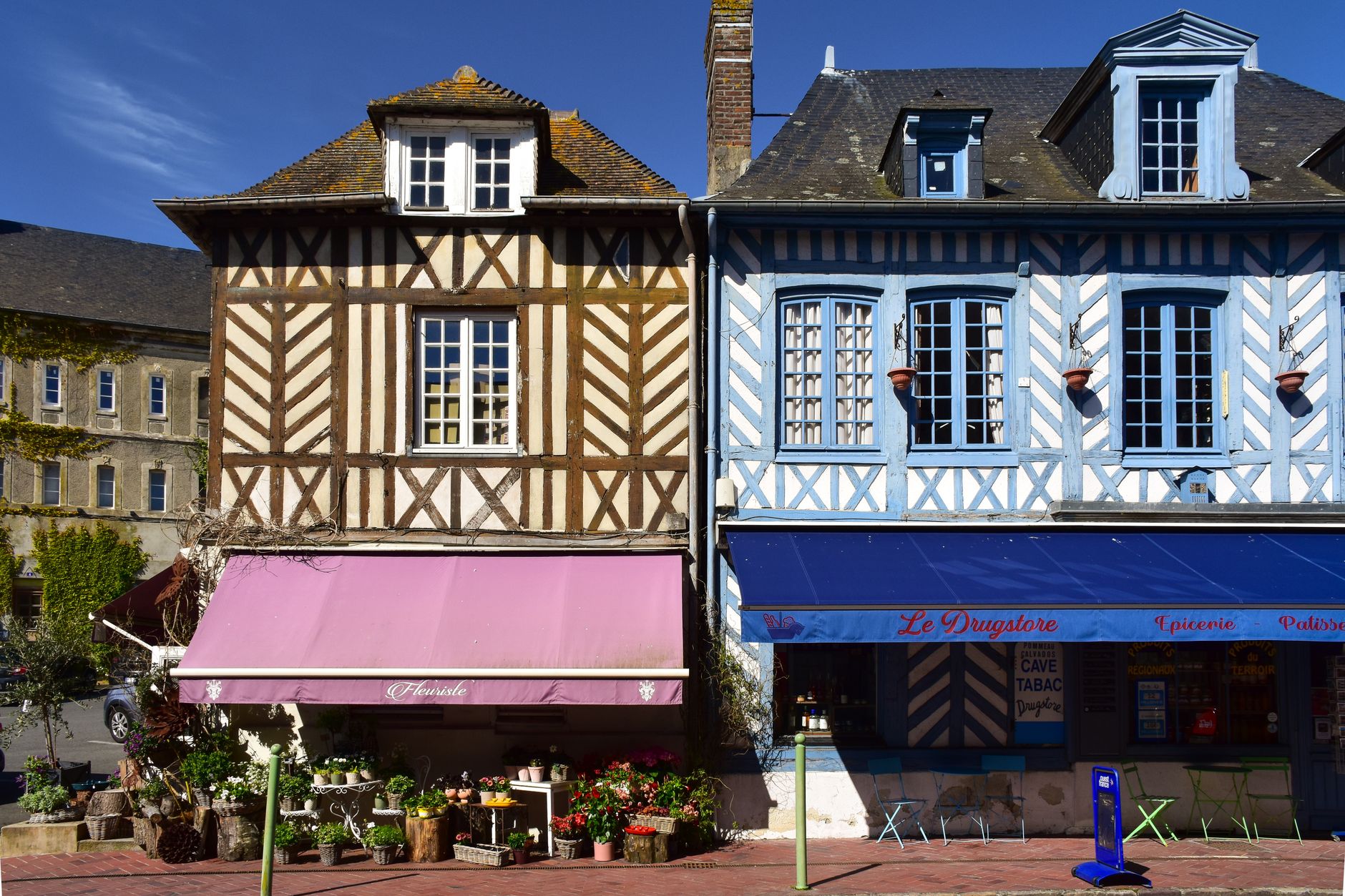
I spent the late afternoon walking the old town, past half-timbered houses on Rue Saint-Malo, and had dinner at La Rapiere, a stone-walled bistro near the cathedral doing Norman classics like tripes a la mode de Caen and a cider-braised chicken that set the tone for the trip: this is not a region that skimps on butter.
The Cemetery, the Sand at Omaha, and the Bluffs Above WN62
I got to the Normandy American Cemetery visitor center right at opening, which the ABMC lists at 9am daily (closed December 25 and January 1), because I wanted the paths mostly to myself before the tour buses arrived around 10:30. Admission is free. The visitor center itself, a low limestone building set into the hillside, takes maybe 30-40 minutes if you read the panels properly, and it's worth every one of them before you walk out to the graves.
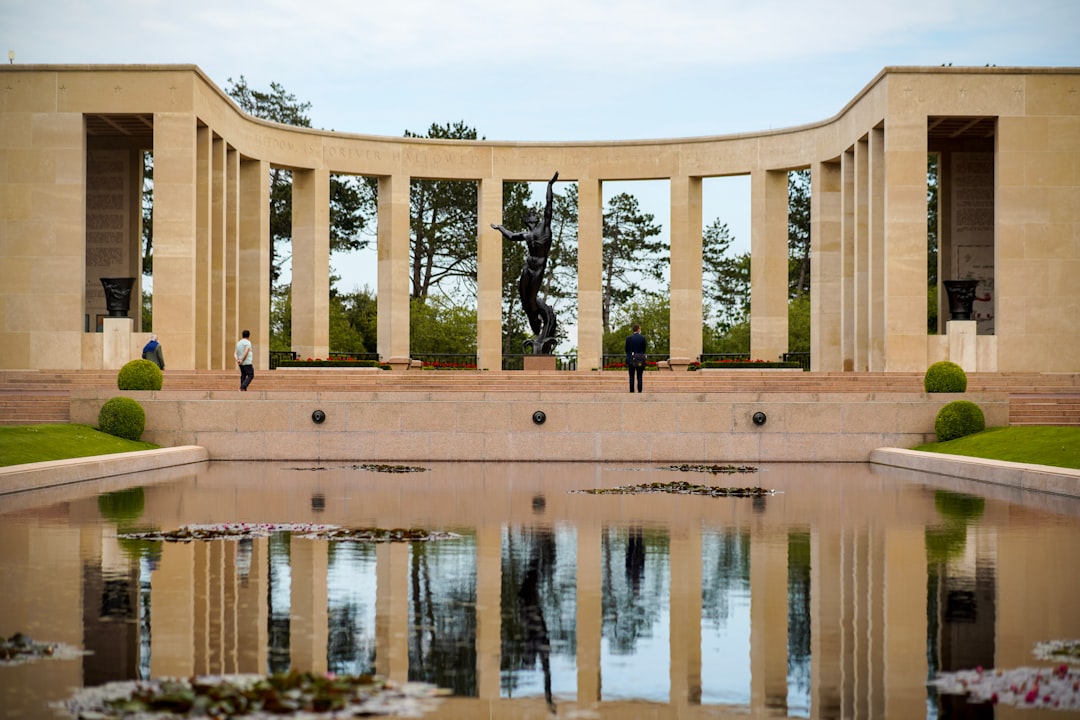
The rows run in long, gently curving arcs toward the Walls of the Missing, and every headstone is oriented so it faces west, back toward home. I walked the full length of the burial ground, out past the Garden of the Missing to the semicircular colonnade with its statue, 'Spirit of American Youth Rising from the Waves,' and then down the sloped path near Colleville-sur-Mer that leads to the beach itself, a walk of roughly 15-20 minutes on a paved but steep track.
Omaha Beach at low tide is enormous, close to 300 yards of hard sand between the dunes and the water, and it's a strange sensation to walk it after standing among the graves. Near the draw at Les Moulins and further along at WN62 above Colleville, the concrete German strongpoints are still there, half-buried and streaked green, and you can climb up into some of them if you're careful; the footing inside is uneven concrete rubble, not lit, so a headlamp or phone flashlight helps.
In the afternoon I drove about 25 minutes west to Pointe du Hoc, where the 2nd Ranger Battalion scaled 100-foot cliffs under fire on the morning of June 6, 1944. The site is free to enter and the grounds stay open daily from 9am-5pm, with last admission 30 minutes before closing. but the ground itself is the real difficulty rating here: bomb craters from the pre-invasion bombardment have grassed over into deep, uneven pits, paths dip and rise constantly, and the cliff edges are fenced but close. Give it a solid 90 minutes and wear boots with ankle support, not sneakers.
West to Utah Beach and the Church Steeple at Sainte-Mere-Eglise
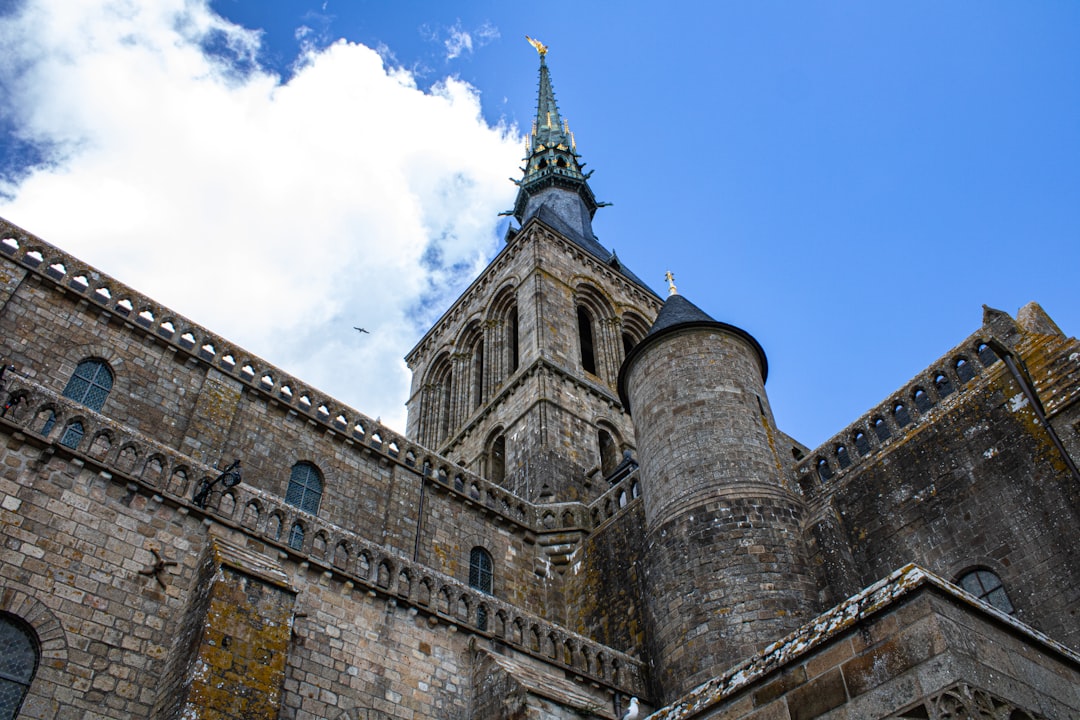
Utah Beach sits about 45 minutes northwest of Bayeux by car, near Sainte-Marie-du-Mont, and it's a completely different landscape from Omaha: wide, flat, and far gentler, which is partly why the 4th Infantry Division's landing here went more smoothly on D-Day than the fight further east. The Utah Beach Landing Museum sits right on the dune line, with an entry fee of roughly EUR 9-11, and houses an original B-26 Marauder and a beached Higgins boat replica you can walk right up to.
From there it's a 15-minute drive inland to Sainte-Mere-Eglise, the village made famous by paratrooper John Steele, whose parachute snagged on the church steeple during the night drop; a effigy of a paratrooper still hangs there today, a slightly macabre but genuinely moving bit of local memory-keeping. The Airborne Museum in the village square, covering the 82nd and 101st Airborne Divisions, runs about EUR 9-9.50 for adults and is worth an hour on its own.
I had lunch at a small creperie just off the square, the kind of place with paper placemats and a formidable cider list, and it struck me how ordinary the village feels now, tractors rolling past a war memorial, kids on bikes past the church where a plaster paratrooper still dangles from the roofline.
Arromanches, the Memorial in Caen, and the Drive Home
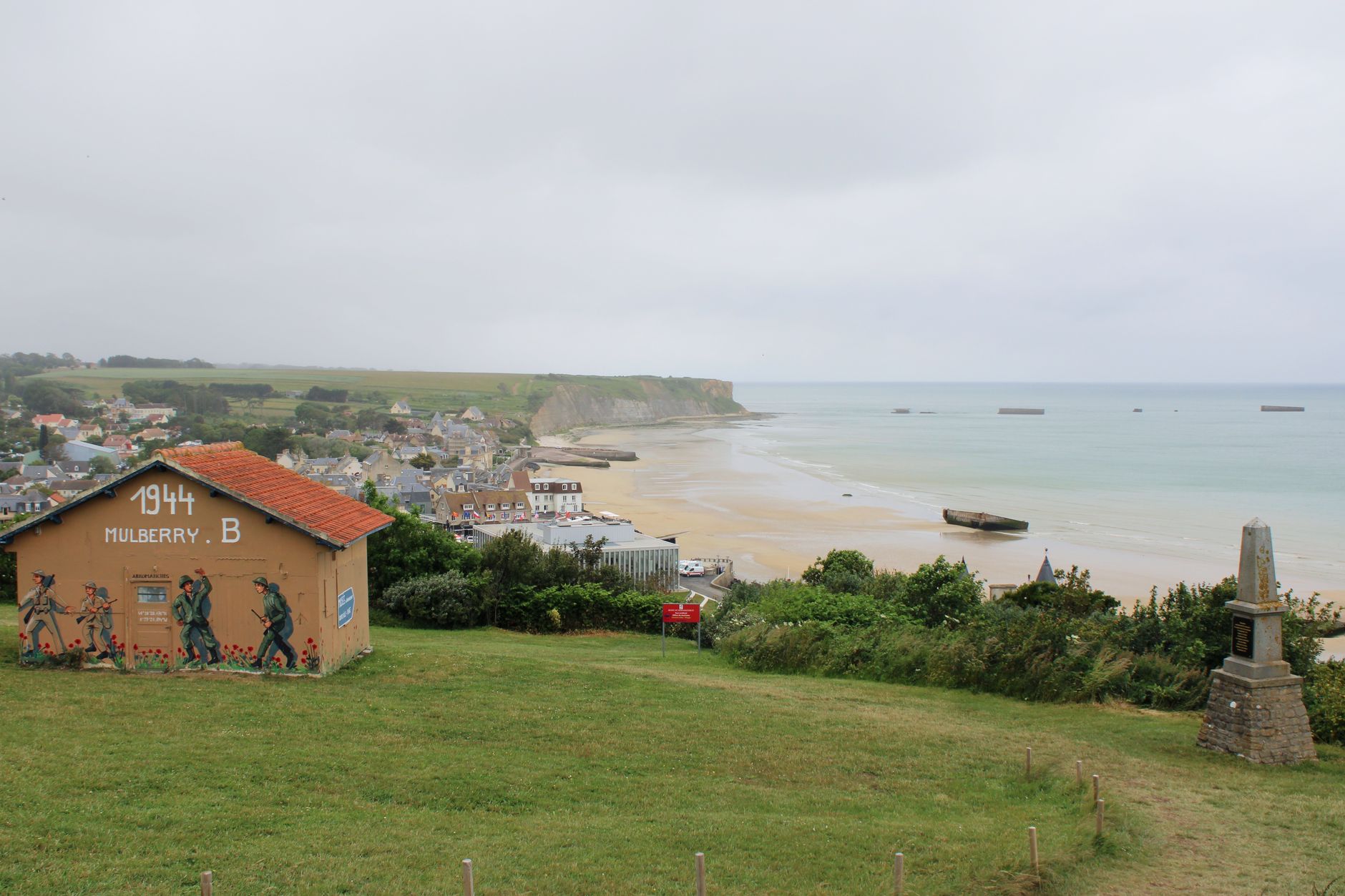
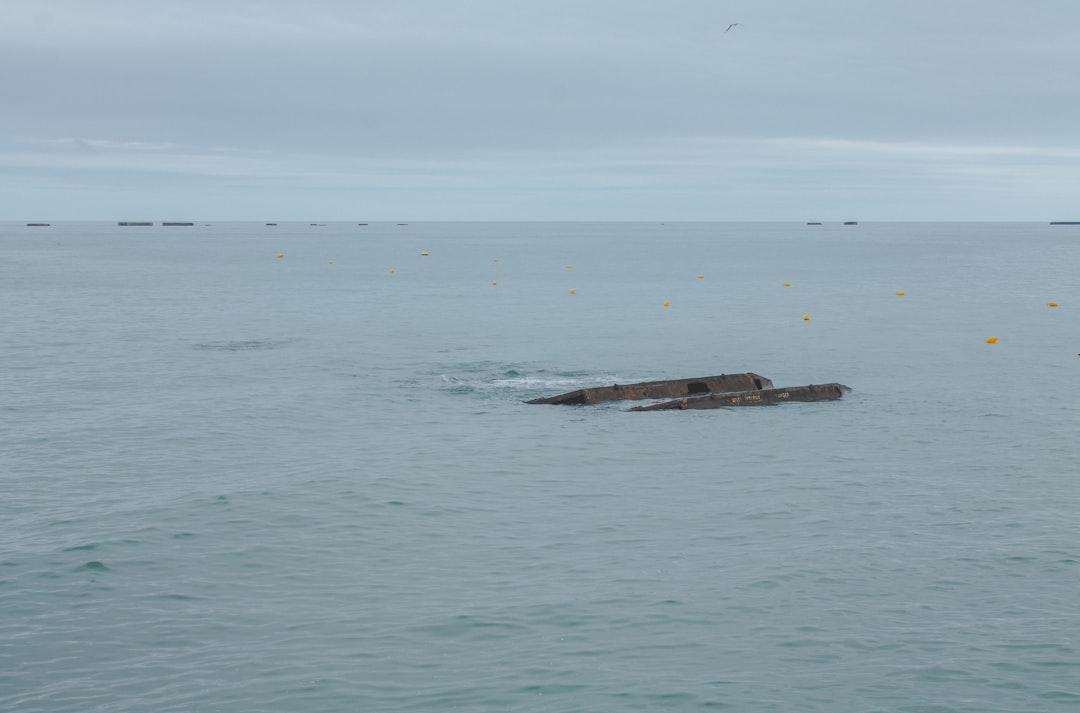
My last full day started at Arromanches-les-Bains, about 20 minutes east of Bayeux, where the remains of the Mulberry harbor, an artificial port towed across the Channel in pieces, still sit rusting in the bay at low tide. The Musee du Debarquement on the seafront (entry roughly EUR 8-10) explains the engineering, but the real thing to do is walk the beach at low tide and stand next to the pontoons themselves, which is free and takes maybe 30 minutes.
From Arromanches I drove about 45 minutes to the Memorial de Caen, a museum that widens the lens beyond the American sector to the whole of the Battle of Normandy and the war that led up to it; admission runs roughly EUR 19.80-21.50 for adults, and I'd budget a full 2.5-3 hours if you want to do the exhibits justice.
I handed the rental car back at Caen train station and took a direct train to Paris Saint-Lazare, about 2 hours, which meant I was back in the city in time for a late dinner, still a little sand in my boots.
Scenes from the American Sector
Cordelie travel advisors
Go with someone who knows
The right suite, the right season, the reservations that never appear online — your Cordelie advisor knows them, and holds them for you.
Plan with a Cordelie advisorFree to ask. Cordelie Travel Services · IATA/ARC 06649064
The Moments That Stopped Me Mid-Stride
The cemetery is the obvious center of gravity, but it wasn't the only place that got me. At Pointe du Hoc, standing in a bomb crater the size of a swimming pool with sheep grazing the far rim, I understood in my legs, not just my head, why the Rangers who climbed those cliffs are still spoken of the way they are. The ground there hasn't been smoothed over for visitors, and that rawness is deliberate.
Reading names on the Walls of the Missing, I found myself scanning for states, almost without meaning to, and stopping when I hit one from home. If you're American, bring a notebook and jot down a name or two before you go; the ABMC's visitor center has a simple lookup terminal if you want to find a specific burial or a name on the wall, and the staff will point you to the exact row without hesitation.
The other standout was quieter: the low-tide walk at Omaha, alone except for a few dog-walkers, watching the tide line retreat and expose the same wet, rippled sand that thousands of soldiers crossed under fire. It's an ordinary beach now, cold and a little windswept in April, and that ordinariness is somehow the whole point.
Calvados, Camembert, and the Comfort Food of the Bessin
Normandy doesn't do light lunches, and after a morning on windswept bluffs, I wasn't complaining. Bayeux's Le Pommier does an excellent galette complete with local Camembert de Normandie and a glass of dry cider for around EUR 14-18, and it's an easy walk from Hotel Villa Lara. La Rapiere, my dinner spot on night one, leans heavier: expect tripe, andouille, and a Calvados-flamed dessert that will end your evening decisively.
Between the beaches, I stopped at a roadside cider farm outside Sainte-Marie-du-Mont for a tasting flight of cider and Calvados, the local apple brandy, for about EUR 8-10; most farms along the D913 near Utah Beach sell direct and will let you taste before you buy. If you have a car with room in the trunk, a bottle of Calvados travels well and makes a far better souvenir than another D-Day t-shirt.
The American sector rewards context most visitors never get on their own: a battlefield historian who can walk you through the actual assault plan at Omaha rather than the general outline, or timed access that avoids the tour-bus crush at the cemetery between 10:30am and 2pm.
A Cordelie advisor can arrange a private historian-led day across the cemetery, Omaha, and Pointe du Hoc, coordinate lodging in Bayeux around the June anniversary crush when rooms sell out months out, and build in a Mulberry harbor viewing timed to the tide. It's the difference between seeing the beaches and understanding them.
Is Normandy's D-Day Coast Worth the Trip?
An essential, physically real pilgrimage for American travelers, best done over three to four days with a car and good boots.
This is not a checklist trip. The cemetery, Omaha, Pointe du Hoc, and Utah Beach reward slow, unhurried walking, and the emotional weight lands hardest when you give each site real time rather than a photo stop.
Best for Americans tracing family or unit history, WWII history readers, and anyone who wants their history experienced on foot rather than through glass. Base in Bayeux, rent a car, and budget at least three full days on the ground; two is not enough.
Last checked for accuracy: . How we check

Marcus Rivera has spent fifteen years writing about places you have to walk into. He has guided in Patagonia, reported from Kilimanjaro's quieter routes, and has strong opinions about which of them are worth the airfare. He is based in Boulder, mostly so he can leave it.