
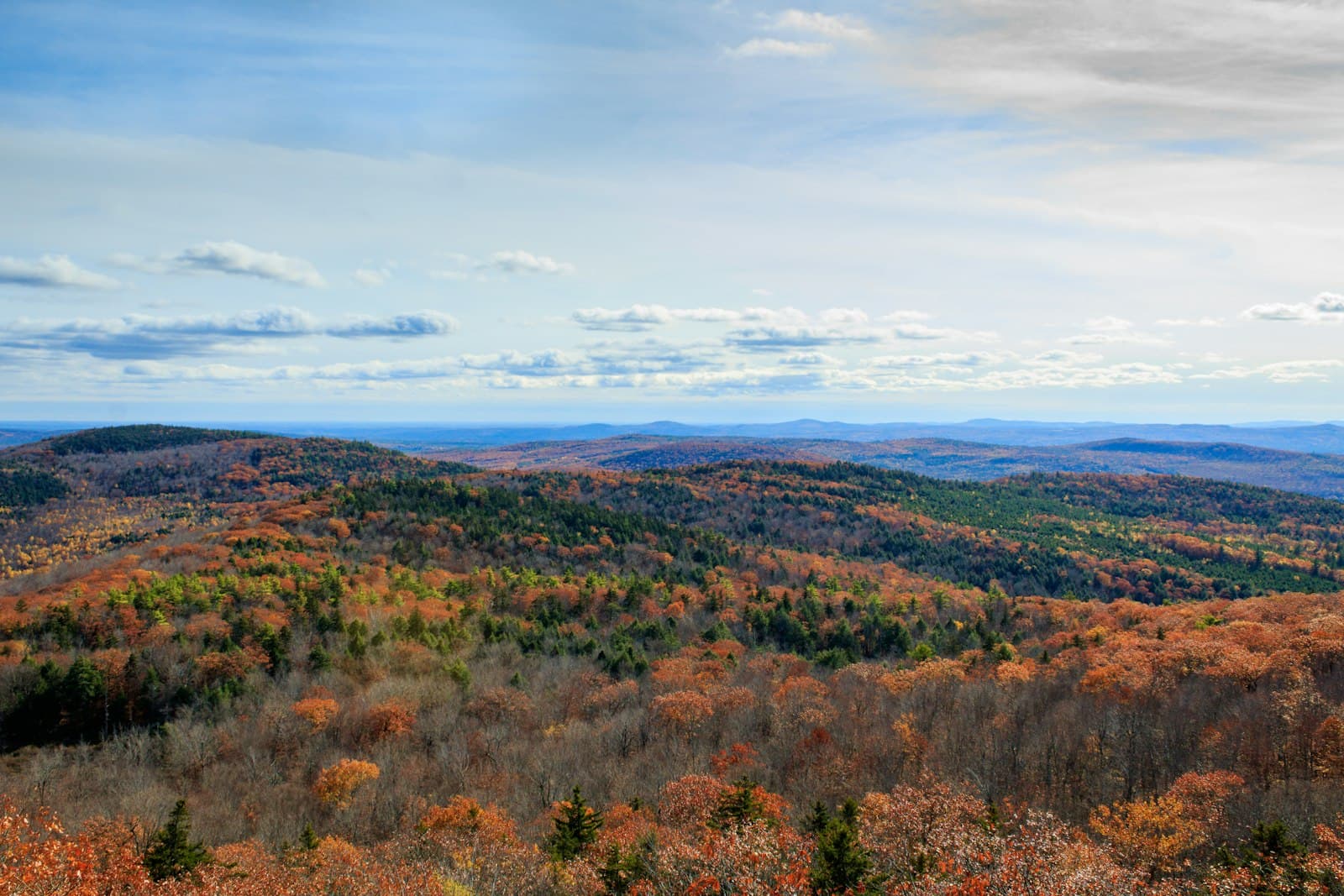
Peak Foliage: A New Hampshire Road Trip Through the White Mountains

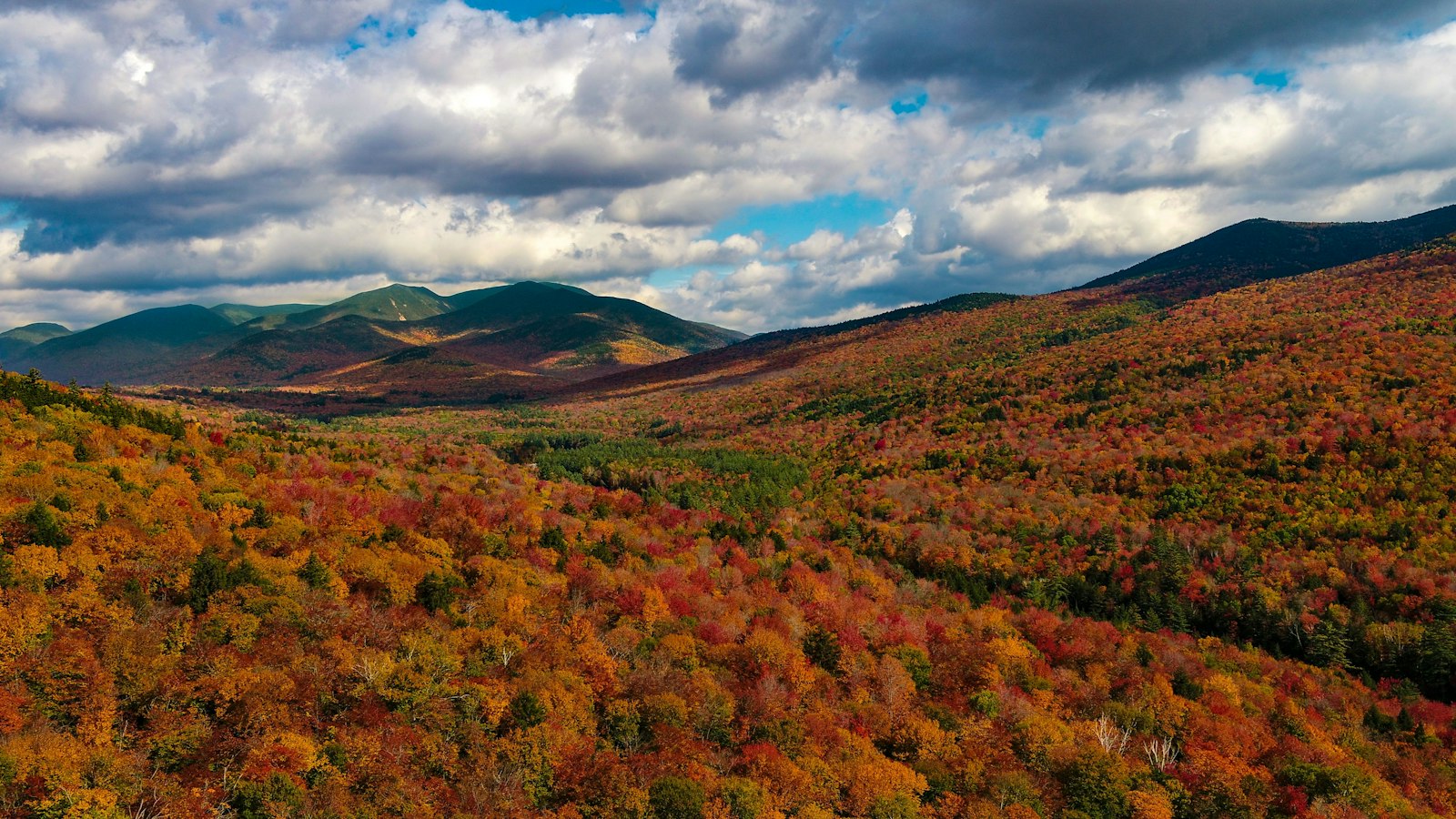
When the White Mountains Ignite: Timing Your Peak Foliage Drive Through New Hampshire
Every fall, roughly 30 miles of the Kancamagus Highway—a National Scenic Byway that cuts east to west through the White Mountains—becomes a moving gallery of impossibly vivid color. The drive from Lincoln to Conway usually takes two to three hours without stops, but foliage season makes it a pilgrimage. Maples flame scarlet and orange. Birches glow butter-yellow. The mountains themselves seem to burn. The payoff for timing this right is singular: you drive through it, not just past it. This is why foliage chasers book rooms in September and plan their weeks around a weather forecast in early October.
The Kancamagus Highway and Its Covered Bridges: Where to Chase Color
Kancamagus Highway: The Scenic Drive Itself
Lincoln to Conway, 34.5 miles of uninterrupted foliage theater
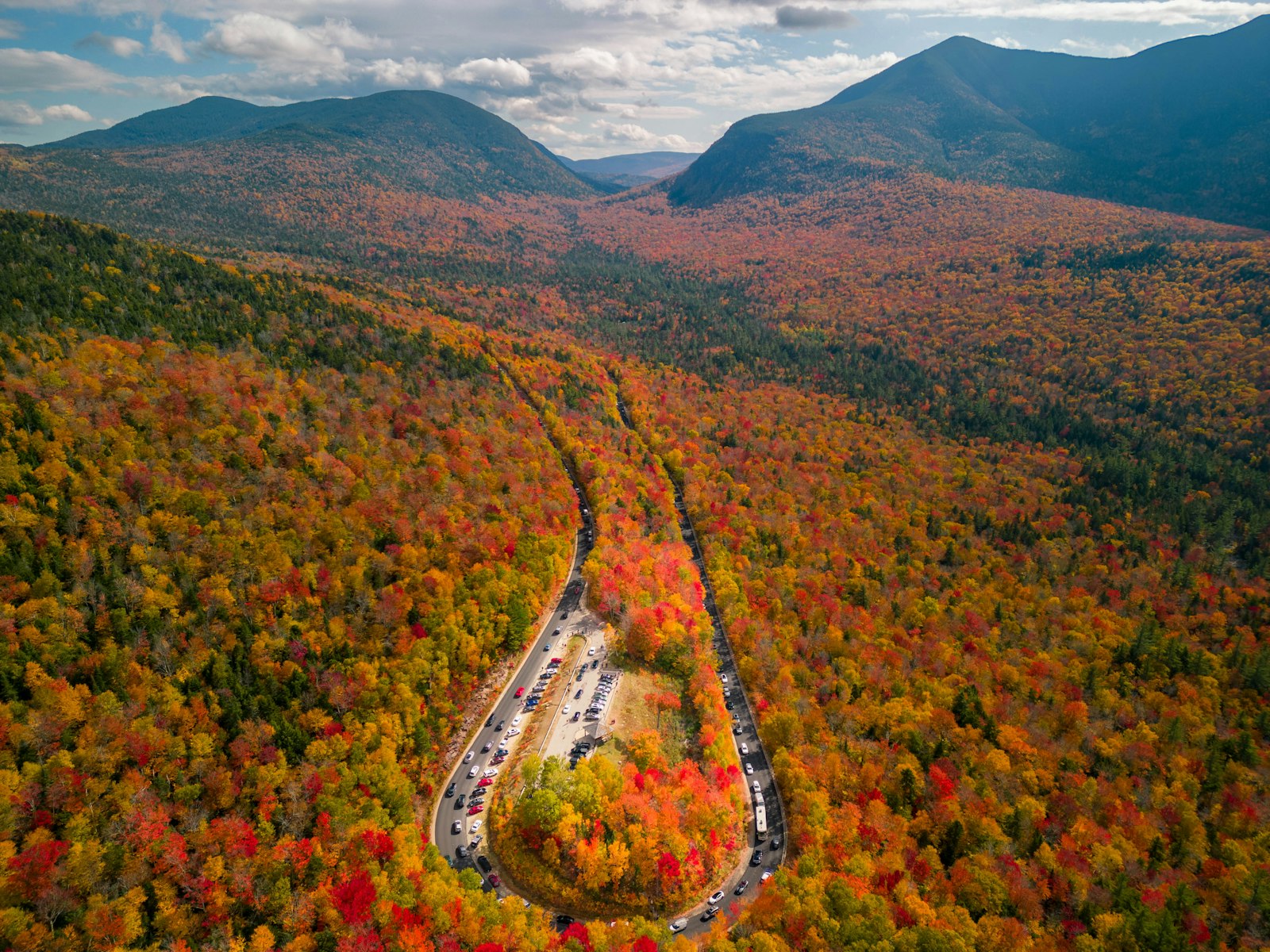
The Kancamagus Highway is not a destination you visit—it is a destination you drive. From Lincoln in the west to Conway in the east, the byway follows the Swift River through a corridor of old-growth and regenerating forest, gaining and losing elevation gradually enough that the drive stays manageable in an ordinary car. Route 112 intersects dozens of pull-offs, trailheads, and rest areas where you can stop to photograph, walk, or simply sit and absorb the color.
Foliage typically peaks in the White Mountains between early October and mid-October, though timing varies by year based on frost, rain, and temperature. The week of October 8-14 is historically when the highway sees its densest concentrations of red and gold. If you drive midweek rather than weekends, you can find parking at the major overlooks. Peak hours run from 9:00 a.m. to 3:00 p.m., particularly on Saturdays and Sundays.
The drive itself is nearly treeless in sections—you are hemmed in by forest on both sides. Bring a camera with a wide lens, or plan to pull over repeatedly. The road is well maintained year-round, but in October you should be prepared for sudden weather changes and bring layers: mornings often start near 40°F, afternoons climb to the mid-50s, and wind at elevation can make it feel several degrees colder.
Covered Bridges Near the Highway: Three Historic Crossings
Americana touchstones that frame the foliage perfectly
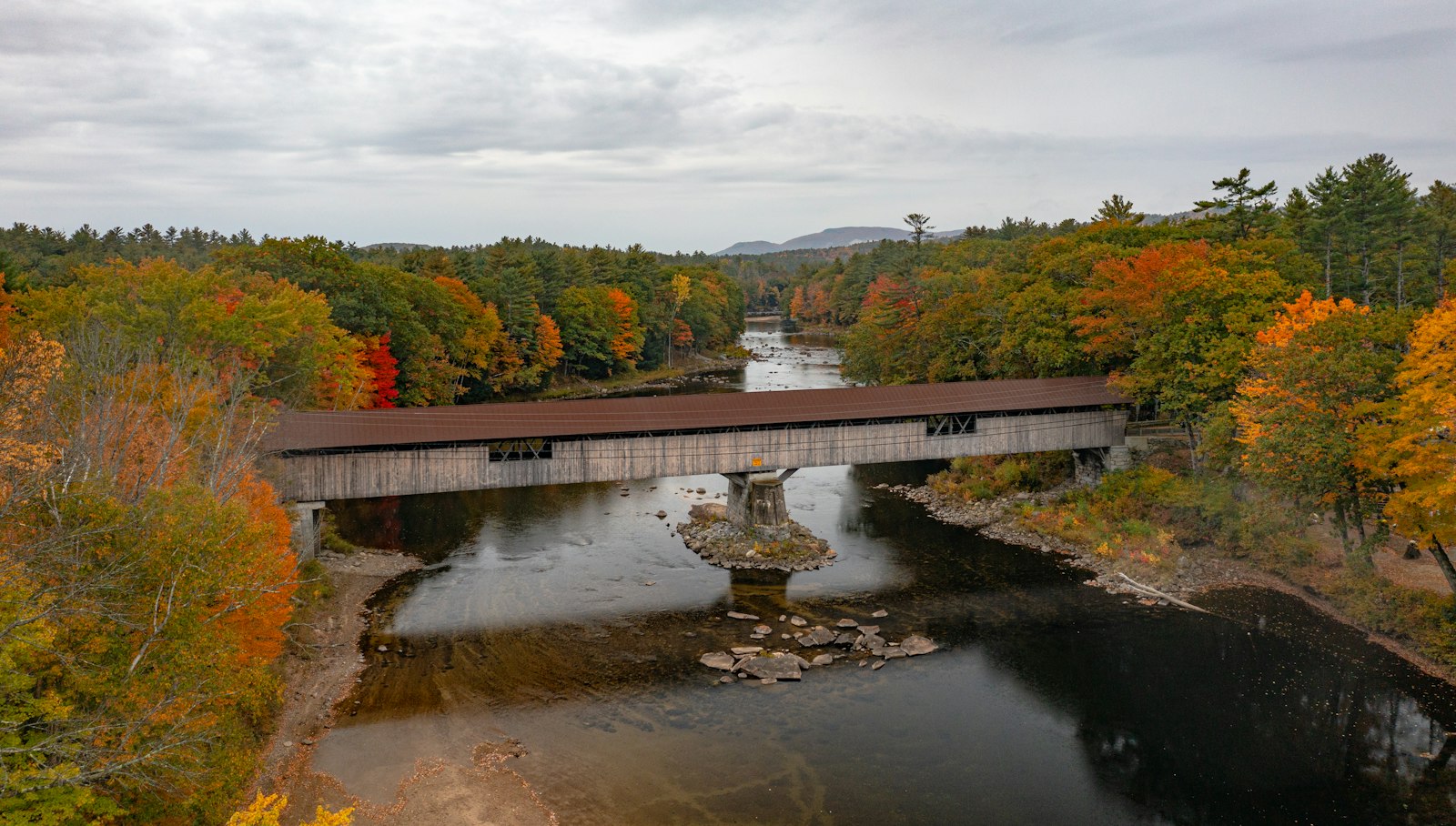
Two covered bridges sit close enough to the Kancamagus Highway to be worth a detour: the Covered Bridge at Conway and the historic structures visible from Route 112 itself. The Covered Bridge in North Conway (officially the North Conway covered bridge, built in 1874) is the nearest substantial historic crossing and is exactly the kind of rustic wooden architecture foliage photographers crave as foreground. It is a working bridge, not a museum artifact, and traffic moves through it regularly.
If you have time for a short excursion, the covered bridges in the surrounding valleys reward the drive. The Albany Covered Bridge, about 20 minutes south of the highway, sits over the Saco River and is less crowded than the in-town crossings. The bridge's red wooden frame and the water reflections below are particularly striking in October light. The drive to reach it is scenic in itself.
These bridges are free to photograph and walk across. Early morning light, around 7:00 a.m. to 9:00 a.m., offers the best photography conditions with softer light and fewer visitors. If foliage is at its peak, arrive by mid-morning to secure parking near the bridge itself.
Apple Orchards and Farmstand Stops Along Route 16
Cider, unpicked apples, and genuine Americana between drives
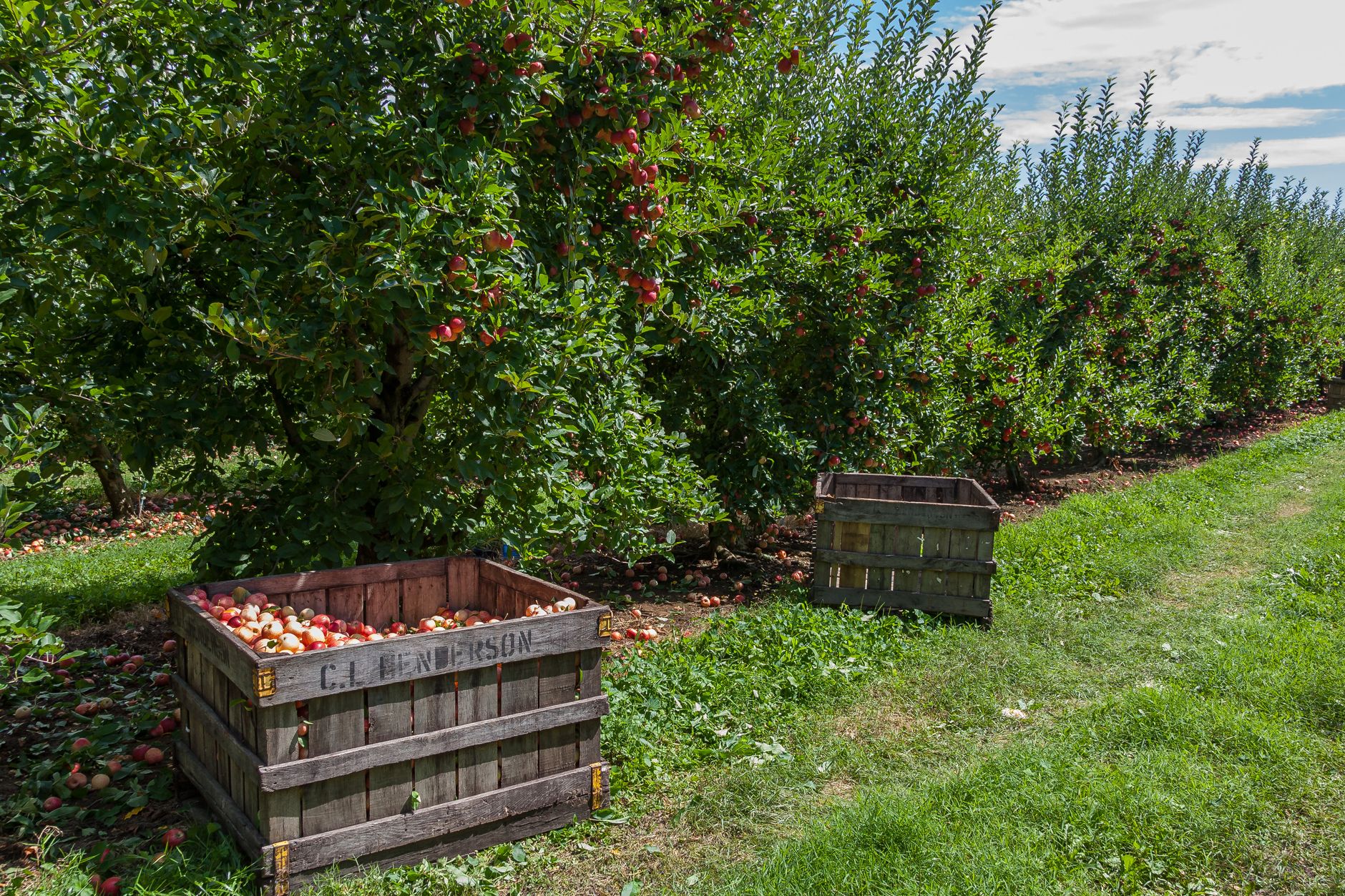
The Kancamagus Highway has no services mid-route—you will not find restaurants, gas stations, or shops once you are committed to the drive. Plan accordingly. But on either end, particularly around the Conway and Lincoln areas where the highway terminates, apple orchards and farmstands offer perfect rest stops that fit the foliage season's sensory rhythm. Zeb's General Store in North Conway stocks a curated selection of local ciders, jams, and prepared foods. It is a tourist trap in the best way: crowded, charming, and filled with people in the same foliage-chasing headspace you are.
For a more traditional orchard experience, local farms within 20-30 minutes of the highway entrance offer pick-your-own apple operations and fresh cider throughout October. Many also operate bakeries or cafés where you can sit with warm cider and a cinnamon donut while looking at the trees. Pricing for pick-your-own apples typically runs $2-4 per pound for common varieties like Honeycrisp or Gala, plus a bushel fee of around $5-8. Fresh cider ranges from $8-15 per gallon depending on the farm. These are cash-preferred establishments, though most now accept cards.
Build in 45 minutes to an hour for an orchard stop if you want to pick fruit or walk the grounds. The peak picking season and peak foliage season overlap in late September through early October, so lines at popular orchards can be substantial on weekends. Visit on a weekday morning if possible, or go late afternoon after lunch crowds clear.
Scenic Overlooks and Short Walks: Photography Spots Without Backpacking
Effort rating: easy to moderate. Best for peak-color photography.
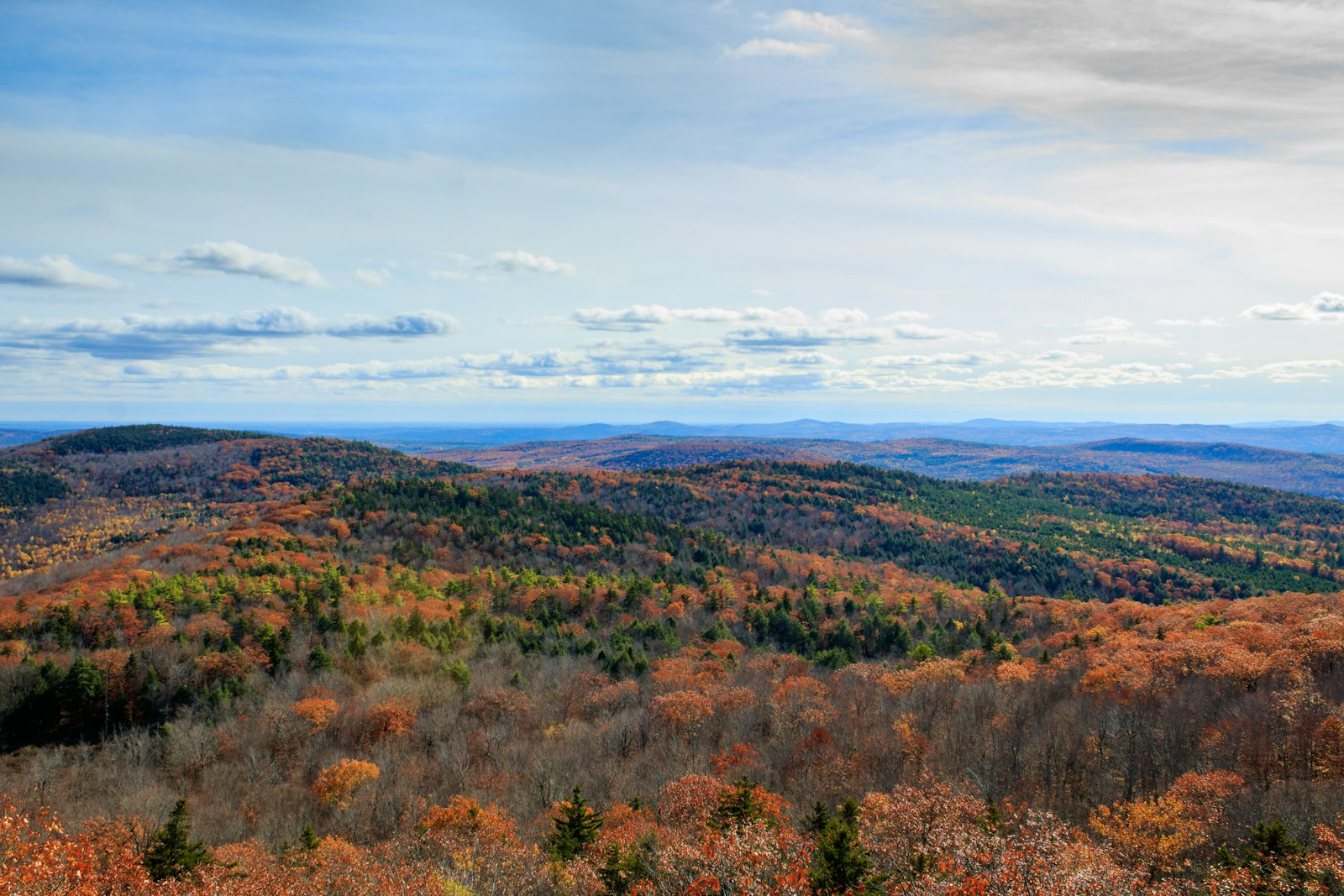
The Kancamagus Highway is lined with pullouts and trailheads that range from 30-second photo stops to multi-hour hikes. For foliage chasers without technical hiking experience, several short walks deliver panoramic views without committing to a steep or lengthy route. The Sabbaday Falls trailhead, roughly halfway along the highway, offers a 2.3-mile roundtrip walk that gains elevation gradually and delivers views of a modest waterfall and the surrounding mountainside in full color. The walk takes 60 to 90 minutes at a moderate pace and requires normal hiking boots; the trail is well groomed and marked.
Rocky Gorge, another midway stop, is essentially a photogenic river gorge with a short loop walk of roughly 0.8 miles that takes 30 to 45 minutes and is suitable for all fitness levels. The trail hugs the Swift River as it carved through solid rock, and in October, the trees framing the gorge provide a natural frame for the water. The gorge area is extremely popular during peak foliage weekends, with parking often full by 10:00 a.m.
For the minimal-commitment option, the pull-offs at Lower Falls and higher-elevation overlooks often provide striking views with no walk required. A camera with a telephoto lens is useful here; you can frame distant mountains and closer foreground trees to create depth in your images. These turnouts can be difficult to find while driving at posted speeds; use your phone's GPS marker list or download maps before you lose service at elevation.
Cordelie travel advisors
Go with someone who knows
The right suite, the right season, the reservations that never appear online — your Cordelie advisor knows them, and holds them for you.
Plan with a Cordelie advisorFree to ask. Cordelie Travel Services · IATA/ARC 06649064
Reading the Foliage Forecast: A Week-by-Week Peak Guide
New Hampshire foliage follows a predictable arc, driven by night temperatures, rainfall, and the killing frost that triggers color change in the trees. The White Mountains, at higher elevation than lower-lying parts of the state, peak first—usually in early October. Lower valleys and river drainages peak 5 to 10 days later. Understanding this progression helps you time your trip.
Late September through early October: The first crimson maples appear at the highest elevations, and birches begin turning gold. Color is patchy and concentrated in sheltered valleys. If you are choosing between early-October weekends, the second week of October (October 8-14) historically offers the fullest peak. Mid-October: Color typically peaks for roughly 10 to 14 days, depending on weather. Most trees have turned, and the landscape reads as uniformly brilliant. This is the window when casual photographers get their best shots. Late October: Leaves begin falling off the trees. The landscape takes on a more mottled appearance—some branches are bare, others still hold color. Late-season foliage can be beautiful, but it is unpredictable and weather-dependent.
No one can predict peak color with absolute certainty weeks in advance. However, the New Hampshire Division of Parks and Recreation publishes a weekly foliage report every Friday from mid-September through mid-October. Check their online foliage tracker in late September to read current conditions and make your booking around the reported peak date. If peak is projected to arrive October 10, try to be on the highway October 8-12. A single week's delay can mean the difference between seeing color and seeing bare branches.
Where to Stay: Lodging Near the Highway for Peak Season
Rooms within 20 minutes of the Kancamagus Highway fill fast during peak foliage season. Booking six to eight weeks in advance—ideally in August—is necessary to secure your choice of properties. Here are the main clusters and character of each.
Lincoln, on the western end of the highway, is the larger tourist town and offers the widest range of accommodations. The Mountain Club on Loon offers a contemporary lodge with mountain views and runs $180-280 per room per night during peak foliage (late 2024 pricing). The property sits on a slope overlooking the town and has an on-site restaurant, which is convenient if you want to avoid leaving the property for dinner. Parking is included. Smaller inns like the Woodstock Inn & Brewery—a rambling Victorian-era property in nearby Woodstock—run $140-220 per room and offer a more intimate, colonial Americana aesthetic; the property has its own brewery and dining room and is walkable to downtown. Pet policies vary; confirm when booking.
North Conway, at the eastern terminus, is the secondary hub and offers a mix of chain hotels and local properties. The North Conway Grand Hotel is a larger contemporary property running $160-250 per room during peak season, with in-house dining and mountain views from upper floors. The Covered Bridge Resort, despite its name, is a condominium-style property in nearby Intervale with kitchens in units, which can be cost-effective if you are planning to prepare some meals; rates run $120-180 per unit per night. Parking is ample and free. Many properties offer early-October rates that are slightly lower than peak mid-October rates—booking a trip for October 2-8 instead of October 10-16 can save $20-40 per room per night, and foliage will still be very good.
Smaller lodges and bed-and-breakfasts dot the valleys around the highway. The Bald Mountain Barn in Albany, about 20 minutes south of the main highway, offers five rooms in a historic structure with views toward the surrounding peaks; rates run $110-160 per room per night. These smaller properties often have character and local knowledge, but fewer amenities and smaller common spaces. Check cancellation policies carefully during foliage season—if weather changes your plans, you may want flexibility.
Autumn Experiences and Seasonal Rhythms in the White Mountains
Peak foliage season overlaps with several other autumn traditions in the White Mountains region, and combining them with your highway drive creates a more complete experience of the season.
Farmers markets in Conway and Lincoln run year-round but peak in late September and early October, when local vendors bring fall produce, preserves, and baked goods. The North Conway Farmers Market operates Saturdays from 9:00 a.m. to noon at the Eastern Slope Inn grounds; parking is free. The Lincoln Farmer's Market runs Saturdays from 9:00 a.m. to 1:00 p.m. in downtown Lincoln. Both markets feature heavily in the weekend foliage-chase routine for locals and travelers alike. Budget 45 minutes to an hour for browsing, and bring cash—smaller vendors often do not accept cards. Apple cider and fresh cider donuts are nearly always available, and prices typically range from $3-8 for baked goods and $8-12 for fresh cider per half-gallon.
Fall festivals and harvest-themed events run throughout October in the surrounding towns. Loon Mountain Resort, which overlooks Lincoln, often hosts fall events and has a gondola that operates during foliage season, offering aerial views of the peak color without the hike. Gondola rides typically cost $18-24 per person and run from 10:00 a.m. to 5:00 p.m. daily during peak foliage weeks. The ride to the summit takes about 15 minutes, and you have roughly one hour at the top before descending. The views are panoramic and are often stunning when clouds cooperate.
Photographing foliage requires patience and planning. Peak color occurs when sunny days combine with cool nights and moisture—conditions that are as likely to produce overcast skies as crystal-clear ones. Bring a tripod if you are serious about images; standard phone cameras struggle with high-contrast scenes of bright sky and dense shadow. The golden hours—one hour after sunrise and one hour before sunset—offer the softest, most flattering light. These same hours are when other photographers are out in force, so arrive early to secure vantage points.
The White Mountains Foliage Experience
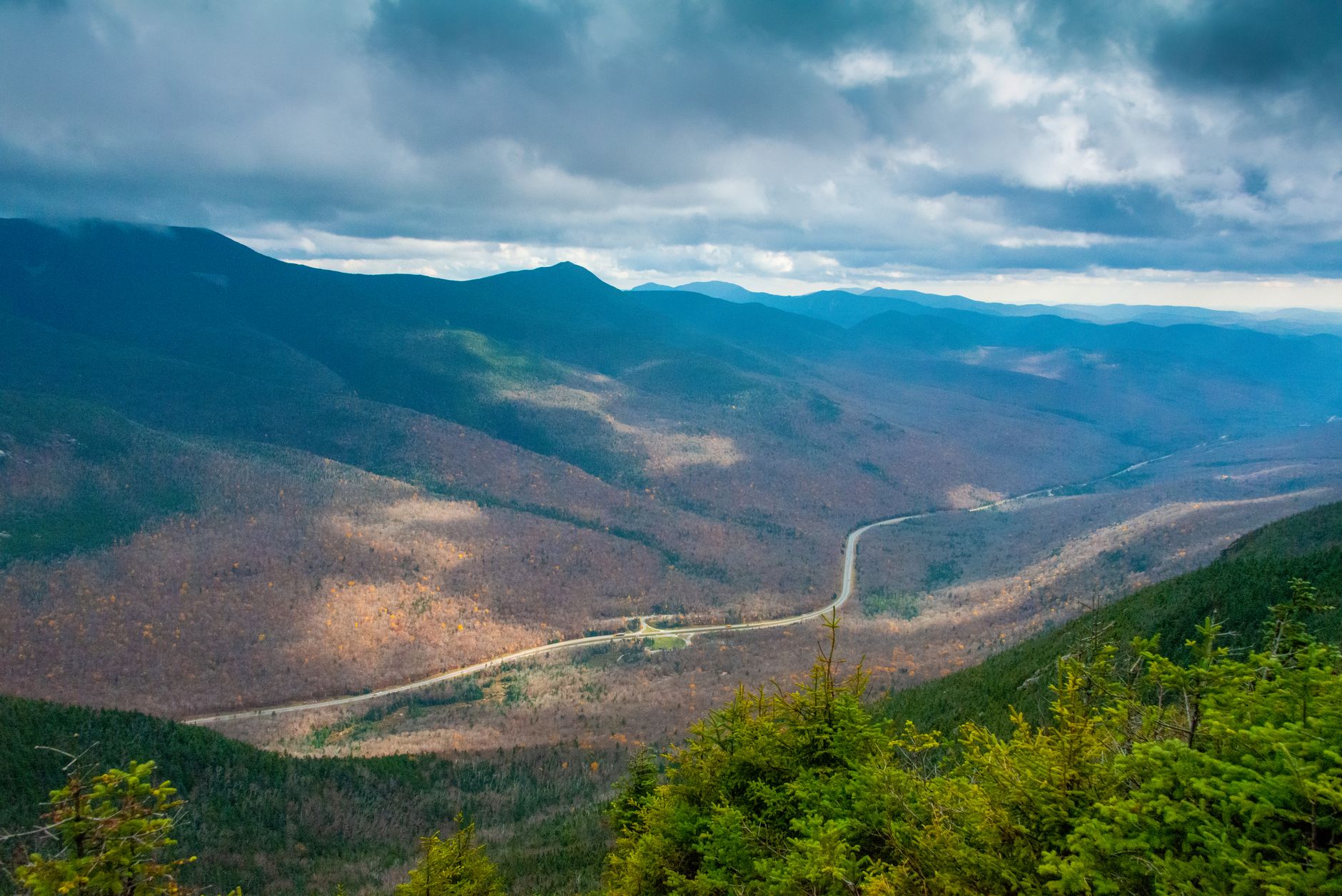
Foliage season on the Kancamagus Highway combines natural beauty with the logistical reality of coordinating lodging, weather windows, and timing across multiple variables. A Cordelie travel advisor can craft a trip that accounts for historical peak dates, secures rooms during the competitive booking window, and builds in flexibility if weather or foliage conditions shift. Rather than chasing forecasts and making changes as a trip approaches, let an advisor orchestrate the details and ensure you arrive when color is at its best. The result is a journey shaped around the season itself, not around availability constraints.
Practical Logistics: What You Need to Know Before You Drive
The Kancamagus Highway is open year-round and is a standard two-lane paved road suitable for all ordinary vehicles. Conditions in October are typically clear and dry, though mountain weather can change rapidly. Check forecasts before departing and bring layers—mornings routinely dip into the 30s and 40s while afternoons reach the mid-50s. Wind at elevation makes the air feel colder than thermometer readings suggest.
Gas stations are not available along the highway itself. Fill up in Lincoln before heading east or in Conway before heading west. The drive one way is roughly 35 miles and takes 2.5 to 3 hours depending on stops. Even a fuel-efficient car can make the trip on one tank, but do not leave with less than a quarter tank.
Cell service is unreliable above 2,000 feet elevation. Download offline maps of the highway and surrounding areas before your trip, and photograph overlook signs or trailhead markers so you can reference them later. If you are planning to photograph specific locations, scout them the day before if possible, or research them ahead of time using Google Street View to identify promising vantage points.
Parking at pull-offs and trailheads can be extremely limited during peak foliage weekends. Arrive before 9:00 a.m. or plan to drive on a weekday. If a lot is full, do not attempt to park illegally on the roadside—it is both unsafe and results in towing. Move on to the next overlook or rest area.
Peak Foliage in the White Mountains: The Essential Trip
The Kancamagus Highway during peak foliage is an American classic—a single spectacular drive that distills autumn into a landscape too vivid to photograph convincingly. Timing it right requires planning, but the payoff is singular.
Best weeks: October 8-14 for peak color, mid-October for historical reliability.
Lodging: Book by August. Lincoln and North Conway offer the range of properties; expect $120-280 per room per night.
Driving time: 2.5 to 3 hours one way; factor in 4-5 hours for stops and photography.
Covered bridges, apple orchards, and farmers markets extend the foliage experience beyond the highway drive itself.
Weekday driving and early-morning starts minimize crowds and maximize photography opportunities.
Gas up before entering the highway; no services on-route.
Bring layers; afternoon temperatures in the 50s feel much colder with mountain wind.
Last checked for accuracy: . How we check

Marcus Rivera has spent fifteen years writing about places you have to walk into. He has guided in Patagonia, reported from Kilimanjaro's quieter routes, and has strong opinions about which of them are worth the airfare. He is based in Boulder, mostly so he can leave it.