
Ostia Antica: Ancient Rome's Best-Kept Walking Secret

Where Rome's Port City Still Whispers of Everyday Life
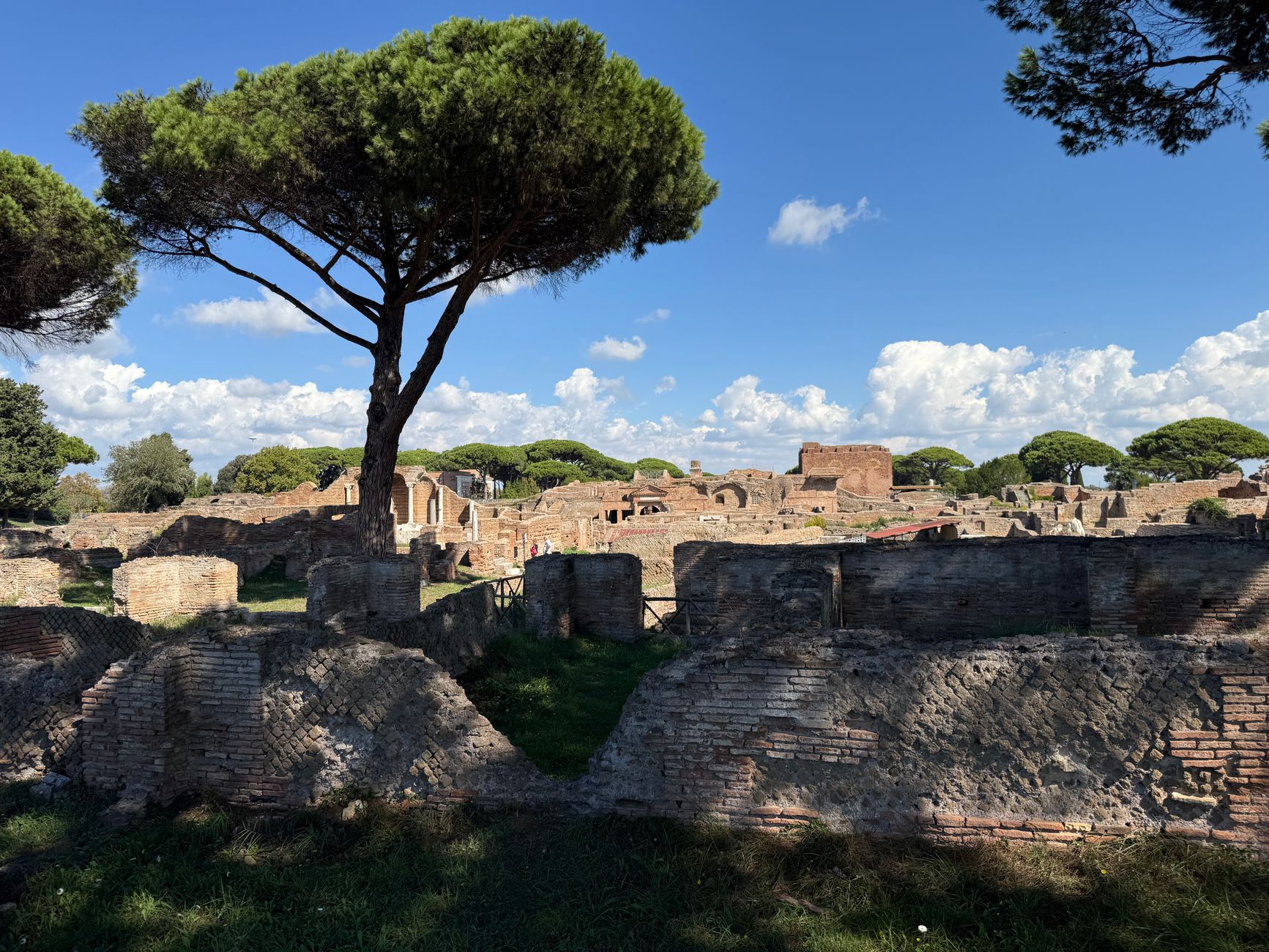
The Colosseum tells you how Rome entertained itself, and the Forum tells you how it governed. Ostia Antica tells you how it lived. Thirty minutes by train from central Rome, this sprawling harbor city sits half-swallowed by umbrella pines, its brick apartment blocks still four storeys tall in places, its bakeries and bars and public latrines all standing more or less where their last customers left them.
There is no velvet rope here, no crush of tour groups funneling past a single famous arch. You walk streets that real dockworkers, grain merchants and freed slaves once walked, past a working snack counter, a 3,000-seat theater, and mosaic floors that have survived nearly two thousand springs. For a traveler drawn to the texture of daily Roman life rather than its monuments alone, Ostia Antica is the more honest ruin.
Ostia Antica Quick Facts
Spring Mornings, Wildflowers and the Best Light of the Year
Spring is Ostia Antica's finest season. By April the site's meadows are thick with poppies and wild fennel, softening the brick ruins without hiding them, and the midday heat that makes summer visits punishing hasn't arrived yet. Temperatures typically sit in the mid-teens to low twenties Celsius through April and May, comfortable for the two to three hours of walking the site genuinely rewards.
Arrive before 10am and you'll likely share the Forum and theater with only a handful of other visitors, since most Rome-based tour buses head here later in the day or skip it entirely in favor of the Colosseum. Summer brings real heat, often into the mid-30s Celsius with almost no shade along the Decumanus Maximus, while winter closing times shrink the visiting window considerably. Autumn is a close second to spring, with similarly mild weather but slightly shorter days after the October clock change.
Cordelie travel advisors
Planning Ostia Antica? Go with someone who knows
The right suite, the right season, the reservations that never appear online — your Cordelie advisor knows them, and holds them for you.
Plan with a Cordelie advisorFree to ask. Cordelie Travel Services · IATA/ARC 06649064
Baths, Bars and Bedrooms: The Everyday Ruins That Set Ostia Apart
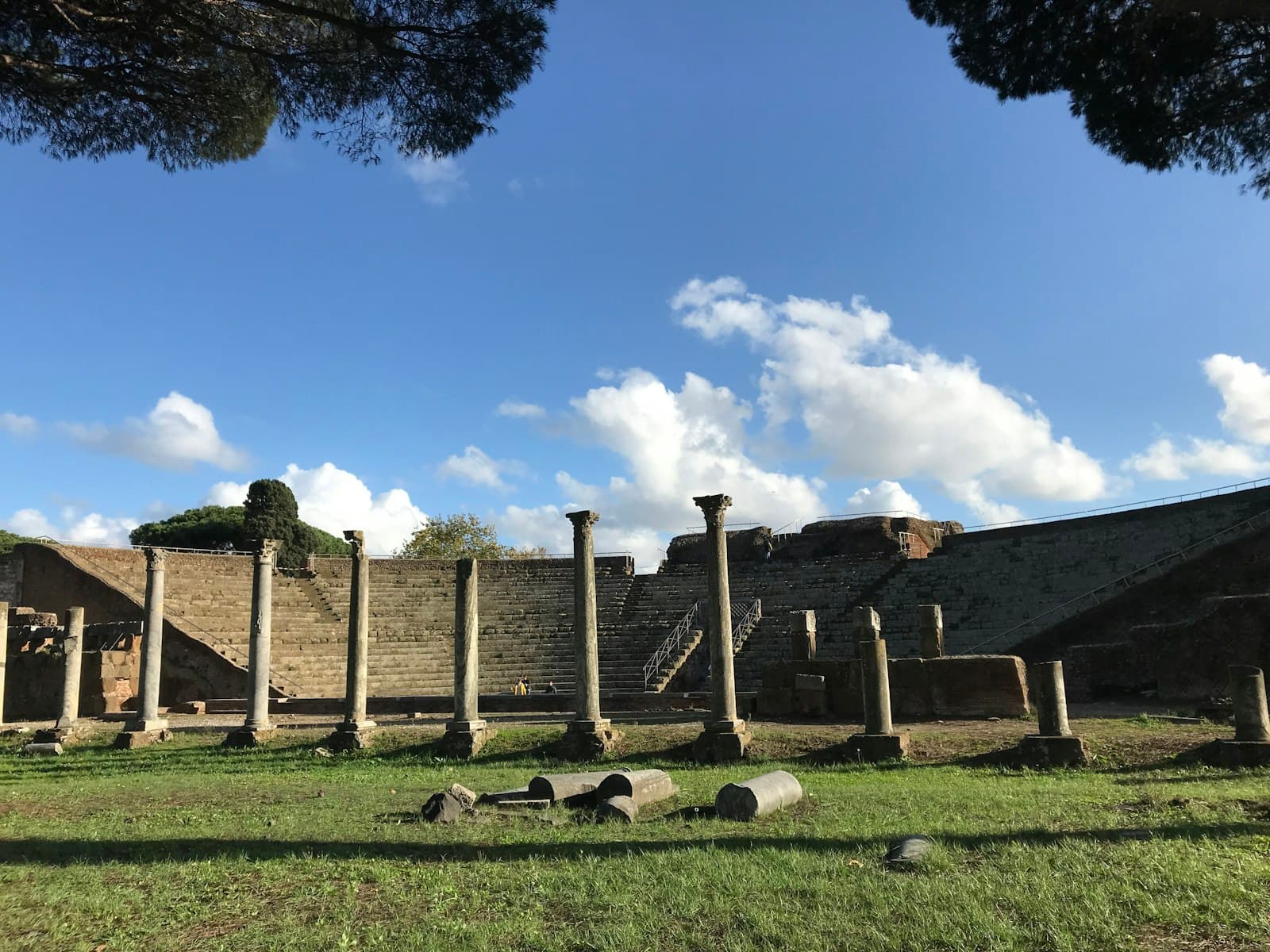
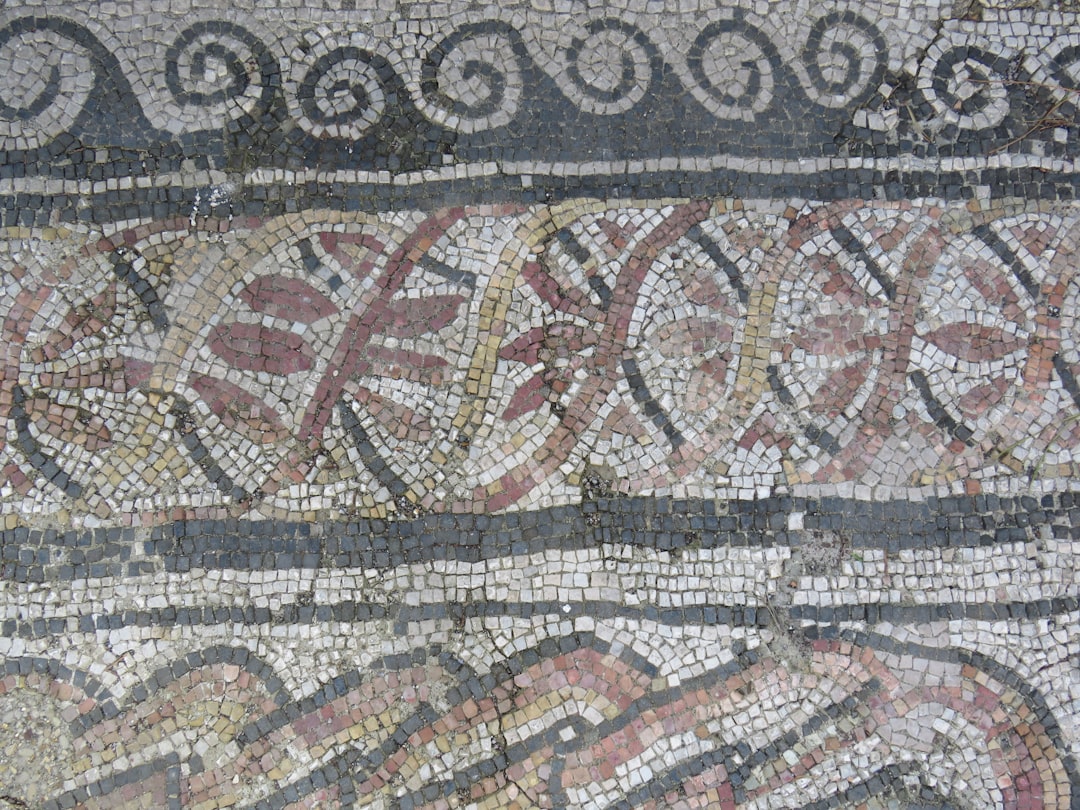
Start at the Terme di Neptuno, just past the entrance, where a black-and-white mosaic of Neptune driving a team of sea horses still covers the floor of a bath complex rebuilt under Hadrian around 120 CE. Climb the modern viewing platform beside it for the full picture; at ground level the scale is easy to miss. From there the Decumanus Maximus runs straight through the heart of the site, past the Teatro Romano, a theater built under Augustus and enlarged under Commodus to seat a few thousand spectators, its stone rows still climbable today.
Behind the theater, the Piazzale delle Corporazioni holds dozens of small offices, each floor mosaic advertising a different trade guild: grain measurers, rope makers, shippers from Alexandria and North Africa. This is Ostia's real specialty, and something the Forum in central Rome simply can't offer: proof of the working, trading, multiethnic city that fed imperial Rome. Walk on to the Casa di Diana, an insula, or apartment block, that still rises several storeys, with ground-floor shopfronts and stairwells intact. A few doors down, the Thermopolium on Via di Diana is a Roman fast-food counter, complete with a marble serving bar and faded fresco menu on the wall.
Don't skip the Forica, a row of marble public toilets near the Forum, or the Capitolium itself, the towering temple to Jupiter, Juno and Minerva that still dominates the skyline from its raised podium. Give yourself at least two and a half to three hours; the excavated area is considerably larger than the Roman Forum, and rushing it defeats the point.
Ostia Antica in Pictures
Basing Yourself Between the Ruins and the Roman Coast
Ostia Antica itself has almost no lodging; nearly everyone visits as a day trip from Rome or as a stop en route to the beach at Lido di Ostia. If you're staying in Rome, aim for a hotel near a stop on the Roma-Lido line or Metro B, which shaves real time off your morning. Testaccio and the Aventine, both a short walk or bus ride from Piramide station, are good bases; the boutique Hotel Sant'Anselmo on Piazza Sant'Anselmo puts you within 10-15 minutes of the train, in a quiet residential pocket of the city.
If you're extending into a slower, multi-day coastal itinerary, Lido di Ostia offers a run of straightforward 3-star seafront hotels along the Lungomare Duca degli Abruzzi, walkable to sand and beach clubs. It's not glamorous, but it's authentic, unpretentious Roman beach life, and a fair trade for a night away from the city center. Travelers who want something quieter still sometimes base themselves among the pines of Castel Fusano, a short drive south, though options there are limited and best arranged in advance.
A Port City's Table: Seafood, Guild Mosaics and the Oldest Synagogue in the West
Ostia was never a purely Roman city; it was a trading port, and its food and faith still show it. Near the site entrance, Ristorante Monumento and Allo Sbarco di Enea both serve solid, unfussy Roman staples, cacio e pepe, carbonara, supplì, ideal for refueling before or after a morning in the ruins. Push on to Lido di Ostia or Fiumicino, and the menu turns to the sea: spaghetti alle vongole, fritto misto and filetti di baccalà show up on nearly every trattoria board.
Culturally, Ostia's most striking feature may be its religious diversity. More than a dozen mithraea, small underground temples to the Persian-derived god Mithras, have been found scattered across the site, evidence of a garrison and merchant population drawn from across the empire. Near the coast, outside the main excavated core, stands the ancient synagogue of Ostia, generally considered among the oldest in the Jewish diaspora, with foundations attested from the 1st century CE and later expansions. Visiting it usually means a short taxi ride or a separate stop, since it sits apart from the main ticketed area.
“Pompeii shows you a city that died in an afternoon. Ostia shows you one that simply went quiet over centuries, and never stopped being a place people actually lived.”
From Piramide to the Forum: The Half-Hour Ride That Rewinds Two Thousand Years
The easiest way into Ostia Antica is the Roma-Lido suburban railway, boarded at Piramide station beside the Metro B stop and the Pyramid of Cestius. Trains run roughly every 15-20 minutes and the ride to Ostia Antica station takes about 30-35 minutes. A standard Rome public transport ticket, around EUR 1.50-1.70 and valid 100 minutes across metro, bus and this line, covers the fare; buy it before boarding, since there are no ticket gates on the platform itself.
From the station, follow the signed pedestrian overpass across the road and rail line; the site entrance is a five-to-ten-minute walk beyond it. Driving from central Rome takes roughly 30 minutes via Via del Mare or Via Ostiense, with paid parking available near the entrance. Inside the park, paths are gravel and uneven original paving, so wear proper walking shoes rather than sandals, and bring water and a hat, since shade is scarce along the main thoroughfares even in spring. Wheelchair access is limited on the ancient stone surfaces, though the museum and some main routes are more manageable. Licensed guides and small-group tours are available at the entrance or can be pre-booked, and an audio guide typically rents for around EUR 5.
A Slower Three-Day Route Through Ostia and the Roman Coast
Deep in the Ruins: Baths, Theater and the Insulae
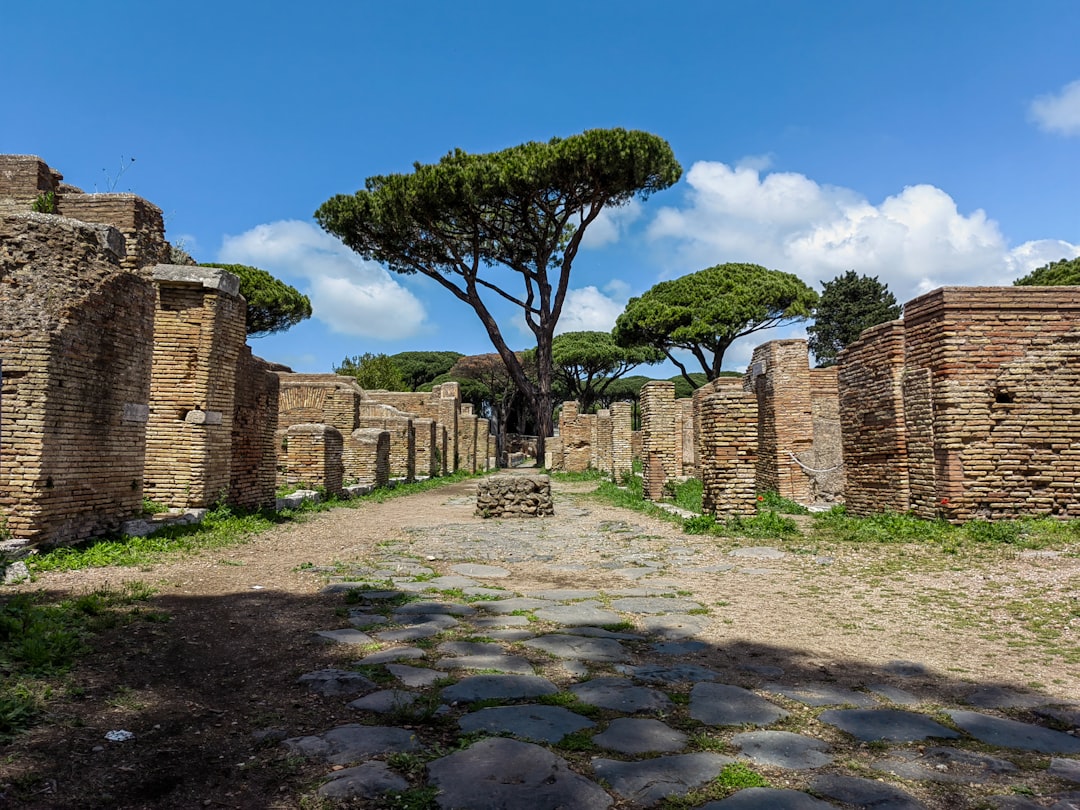
Take an early train from Piramide, aiming to reach the site entrance by 9:30-10am before the day's heat and any tour groups arrive. Buy your ticket and head first to the Terme di Neptuno mosaics, then walk the Decumanus Maximus to the Teatro Romano and the guild offices of the Piazzale delle Corporazioni.
Break for lunch at Ristorante Monumento, a short walk from the entrance, before returning inside for the afternoon. Spend it among the Casa di Diana insula, the Thermopolium counter, and the Capitolium and Forum, finishing at the small on-site Museo Ostiense before the ticket office closes.
Necropolis, Synagogue and an Afternoon on the Sand
Head by taxi or local bus to the Isola Sacra necropolis, a short distance toward Fiumicino, where carved tombstones show tradespeople, including midwives and ropemakers, at work. Continue to the ancient synagogue site near the coast, one of the oldest in the Jewish diaspora, best visited with a guide who can arrange access.
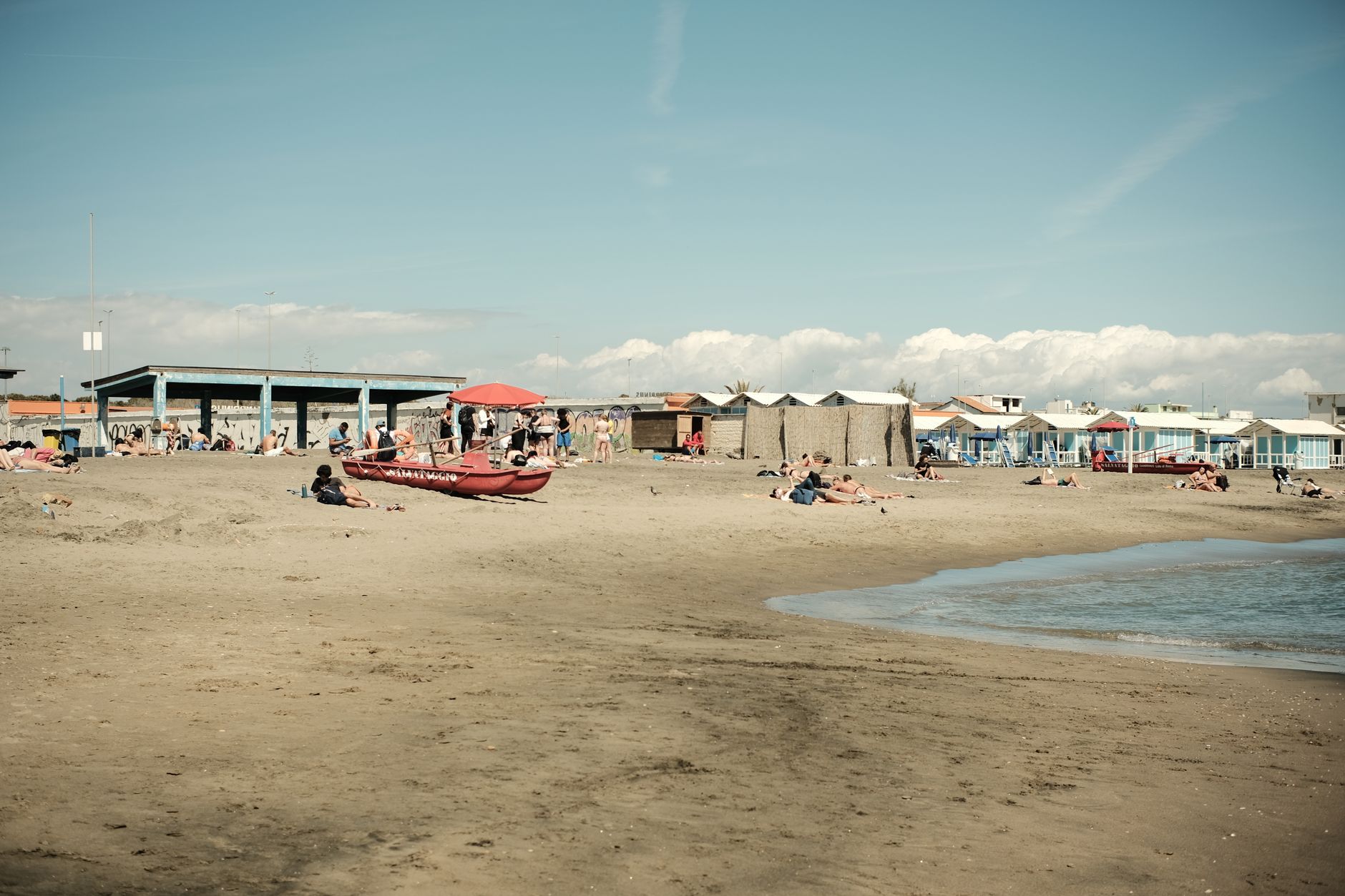
In the afternoon, take the Roma-Lido train a few stops further to Lido di Ostia and walk the Lungomare Duca degli Abruzzi. Rent a spot at a beach club for the afternoon, or simply walk the sand, before a plate of fritto misto at a seafront trattoria.
Pine Forest and the Fishing Port of Fiumicino
Spend the morning walking or cycling through the umbrella pines of Castel Fusano, part of the protected Litorale Romano coastal reserve, a genuinely quiet contrast to the ruins after two busy days.
In the afternoon, head to Fiumicino's fishing port, where restaurants like Bastianelli al Molo and Hostaria l'Isola Sacra serve the day's catch beside the docked boats. Return to central Rome by regional train on the FL1 line from Fiumicino, roughly 35-45 minutes to Roma Trastevere or Termini.
Several of Ostia Antica's mithraea and the coastal synagogue site aren't always open on standard tickets, and the most rewarding early hours, before the gates fill with school groups, take local knowledge to arrange.
A Cordelie travel advisor can build a private, guide-led morning at Ostia Antica into a wider Roman coast itinerary, timed for the quiet light of a spring morning and paired with a seafood lunch in Fiumicino that most day-trippers never find.
Ostia Antica at a Glance
A quieter, richer counterpoint to the Colosseum, built for travelers who want to see how Romans actually lived, not just where their emperors ruled.
Best for history-minded travelers with half a day to spare from Rome, and a good pair of walking shoes.
Reach it by Roma-Lido train from Piramide station in about 30-35 minutes, with entry running roughly EUR 12-18.
Come in spring for wildflowers and mild temperatures, allow at least two and a half hours inside, and consider extending onward to Lido di Ostia or Fiumicino for a full coastal day.
Last checked for accuracy: . How we check

Sarah Chen has covered Asia for twelve years, first as a wire reporter in Jakarta and now from Singapore, where she keeps a standing list of the region's most misunderstood destinations. She writes about the distance between what a place is famous for and what it is actually like to spend a week in — and is happiest on an overnight train with a bad seat and a good view.