
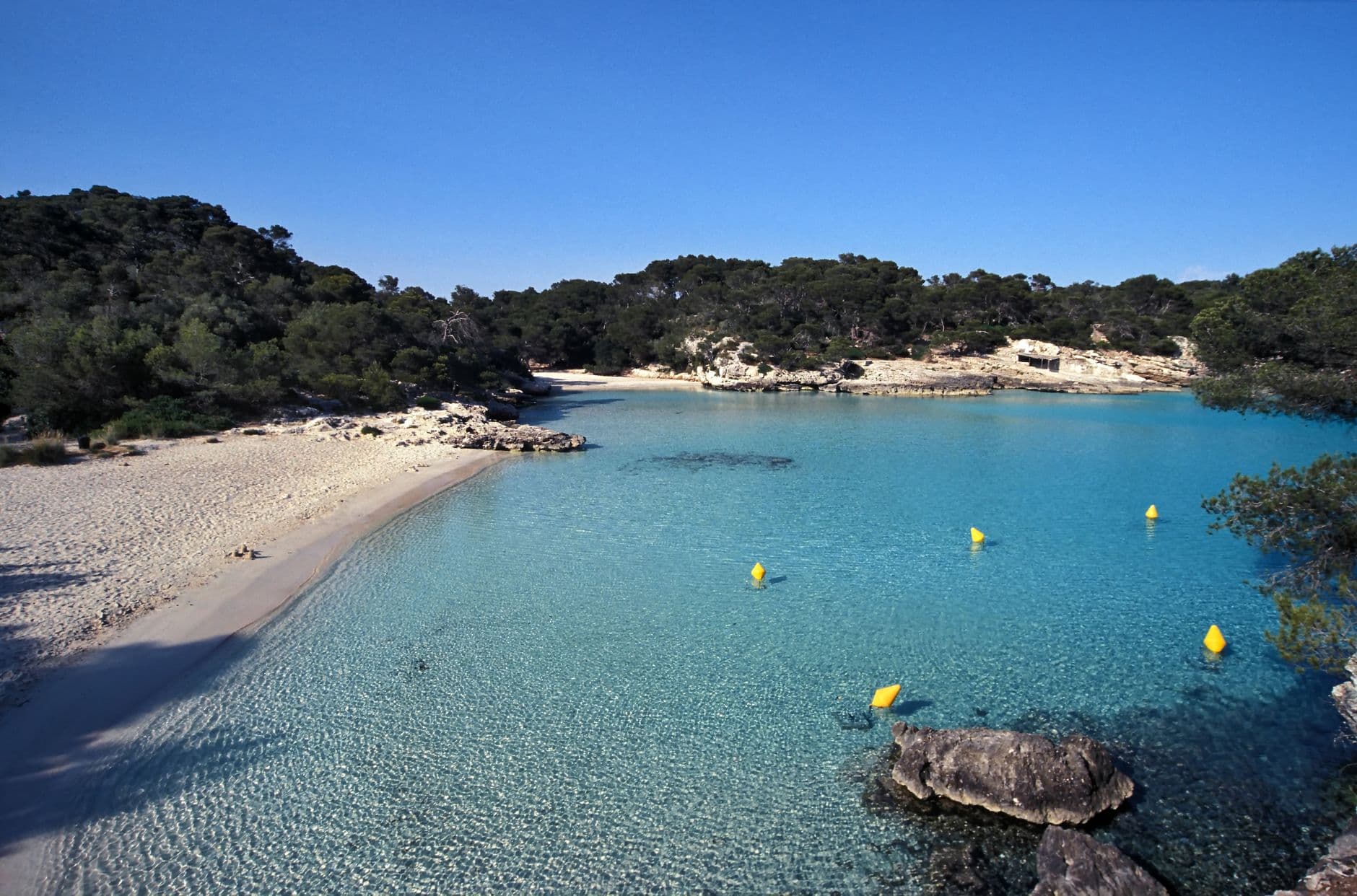
Menorca's Beach Calendar: The Quiet Mediterranean Alternative to Ibiza and Mallorca

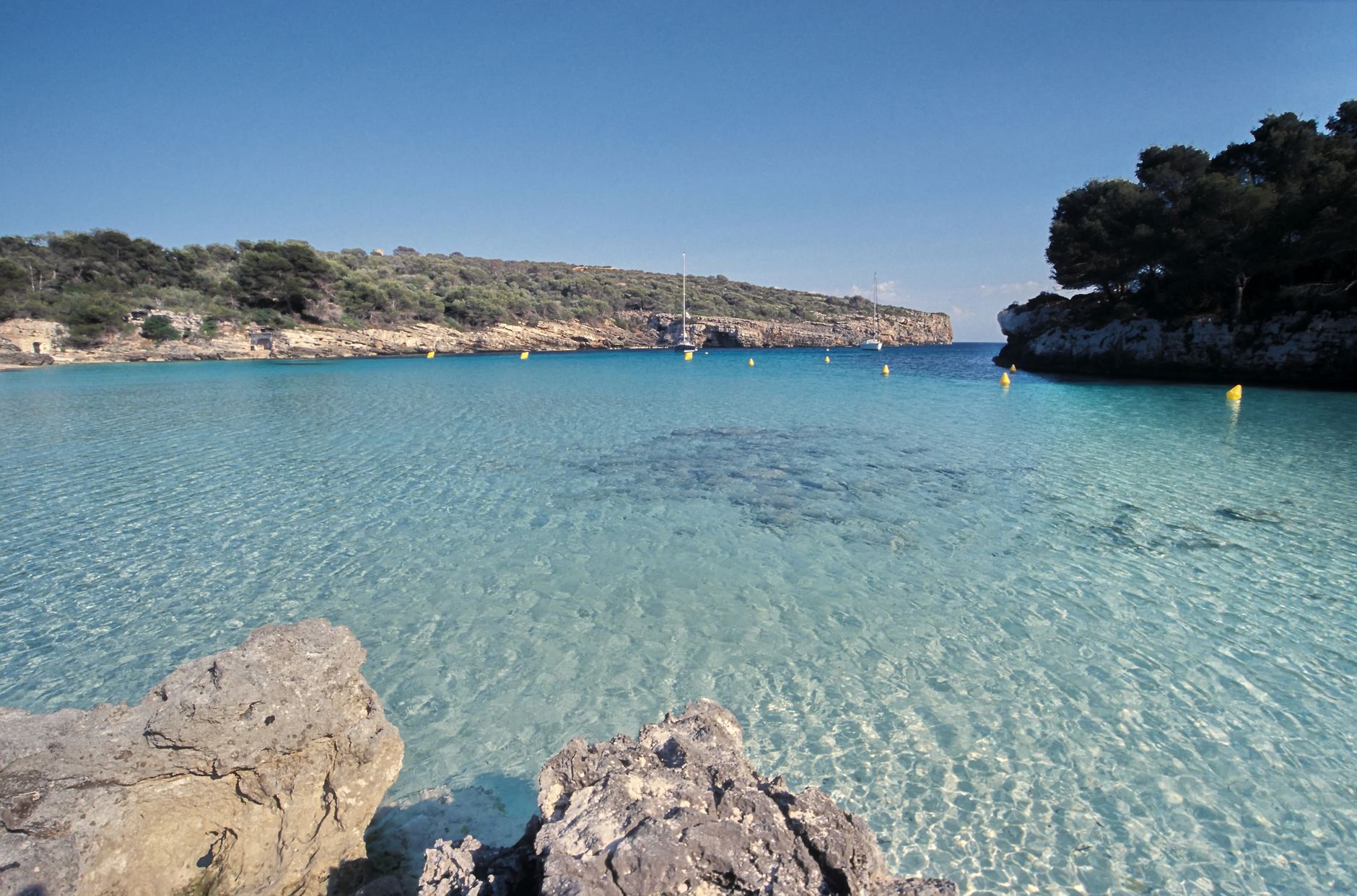
May Through June: When Menorca's Beaches Warm Without the Summer Crush
Menorca in spring feels like the Mediterranean before tourism reshaped it. The island sits 40 kilometers east of Mallorca and 160 kilometers from Ibiza, close enough to share their climate but far enough to escape their reputation. Water temperatures climb from the low 60s Fahrenheit in May to the upper 60s by June. The air reaches the high 60s to low 70s. That is warm enough for swimming without the August heat that sends visitors indoors by midday. More important: the ferries and beaches do not fill to capacity until July. This season rewards travelers who plan around other people's school holidays instead of their own.
Where to Stay: Five Coves and Towns Worth Your Nights
Cala Macarelleta
The protected cove most visitors forget to find
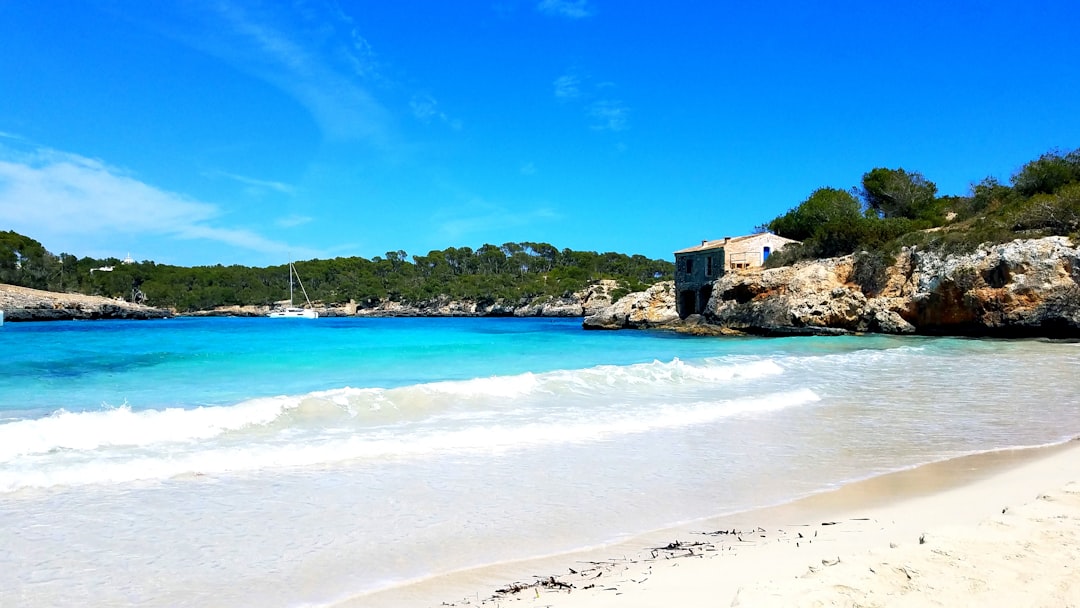
Cala Macarelleta sits on Menorca's south coast, a 15-minute drive from Alayor and then a 10-minute walk down a marked trail from the parking area. The cove is narrow enough that the sun leaves by 17:00, but that is also why it stays cool and uncrowded. The beach is 200 meters of white sand backed by low cliffs and junipers. A small chiringuito—a beach bar—opens seasonally in May and June, serving grilled fish and gazpacho from midday until early evening. Water temperature in June hovers near 65 degrees Fahrenheit. No lifeguard is present. The parking lot holds 30 spaces and fills by noon on weekends in July; in May and June, you will find a spot by 10:00 in the morning.
Near Alayor, Casa Francesca (a village hotel) or the apartments at Menorca Vintage near Alayor offer bases within 20 minutes' drive. These run EUR 80–140 per night in May–June, roughly half their July rate. A family with young children will find the sheltered cove manageable; the walk is easy terrain.
Ses Salines
A long beach built for both couples and families
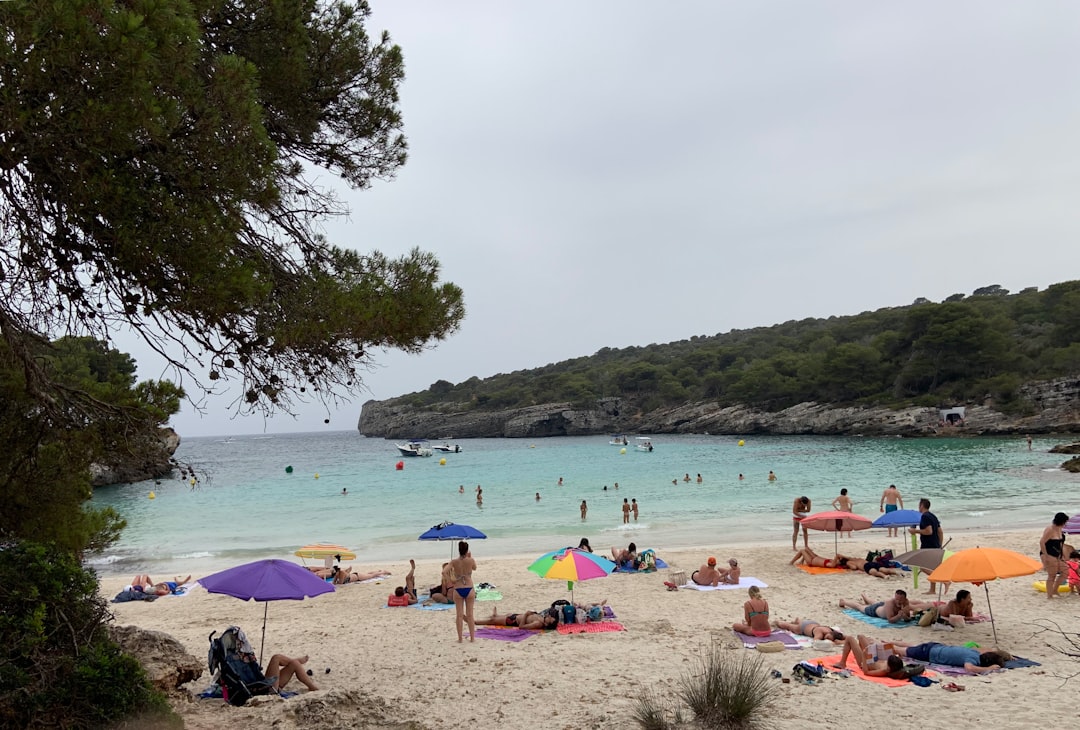
Ses Salines stretches across the north side of the south coast, near San Clemente. The beach extends nearly half a kilometer and slopes gently into the water. In May and June, the water is cool—around 63–65 degrees Fahrenheit—but the shallow approach means children can wade for 50 meters before reaching chest depth. The beach road has parking, a few chiringuitos, and a small grocery. Unlike the coves, Ses Salines fills gradually; you will find calm mornings until 11:00, then moderate activity by afternoon. It is the closest thing Menorca offers to a working family beach.
Sant Climent, the nearest village, has small hotels and apartment rentals. Xoriguer Restaurant, three kilometers away in Alayor, serves local specials at EUR 14–18 for mains; reserve ahead for weekend dinner. A family trip here works without a car rental if you stay in Sant Climent and take a taxi to the beach—roughly EUR 8–12 each way.
Arenal d'en Castell
The closest you come to a resort beach in Menorca
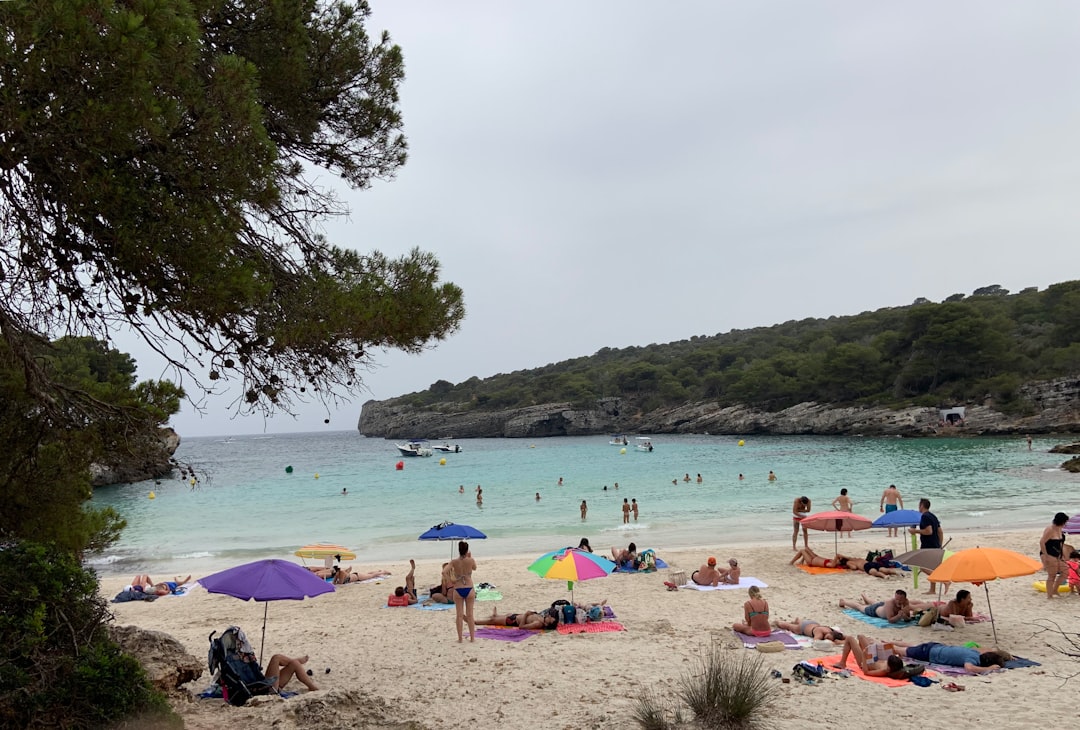
On Menorca's north coast, Arenal d'en Castell is a 400-meter arc of golden sand cupped by low buildings and pines. The beach faces north, so it catches afternoon shade by 16:00. In May and June, water temps range from 62 to 66 degrees Fahrenheit. Lifeguards are posted from 10:00 to 18:00 daily. The beach backs directly onto the small town of Castell, where restaurants occupy a hundred meters of waterfront. This is Menorca's most developed beach, which means it is busiest here in high summer—but in May and June, it remains manageable. Families with small children prefer this beach because of the lifeguard presence and the easy walk to restaurants and bathrooms.
Hotel Pinos Playa sits directly above the beach at EUR 120–180 per night in May–June. Restaurant Tano serves paella and fresh seafood for EUR 18–26 per person; open for lunch and dinner daily. A couple seeking a low-stress beach day will find this the most convenient choice; a couple seeking solitude should stay south of the island.
Cala Mitjana
A quieter northern cove for swimmers and explorers
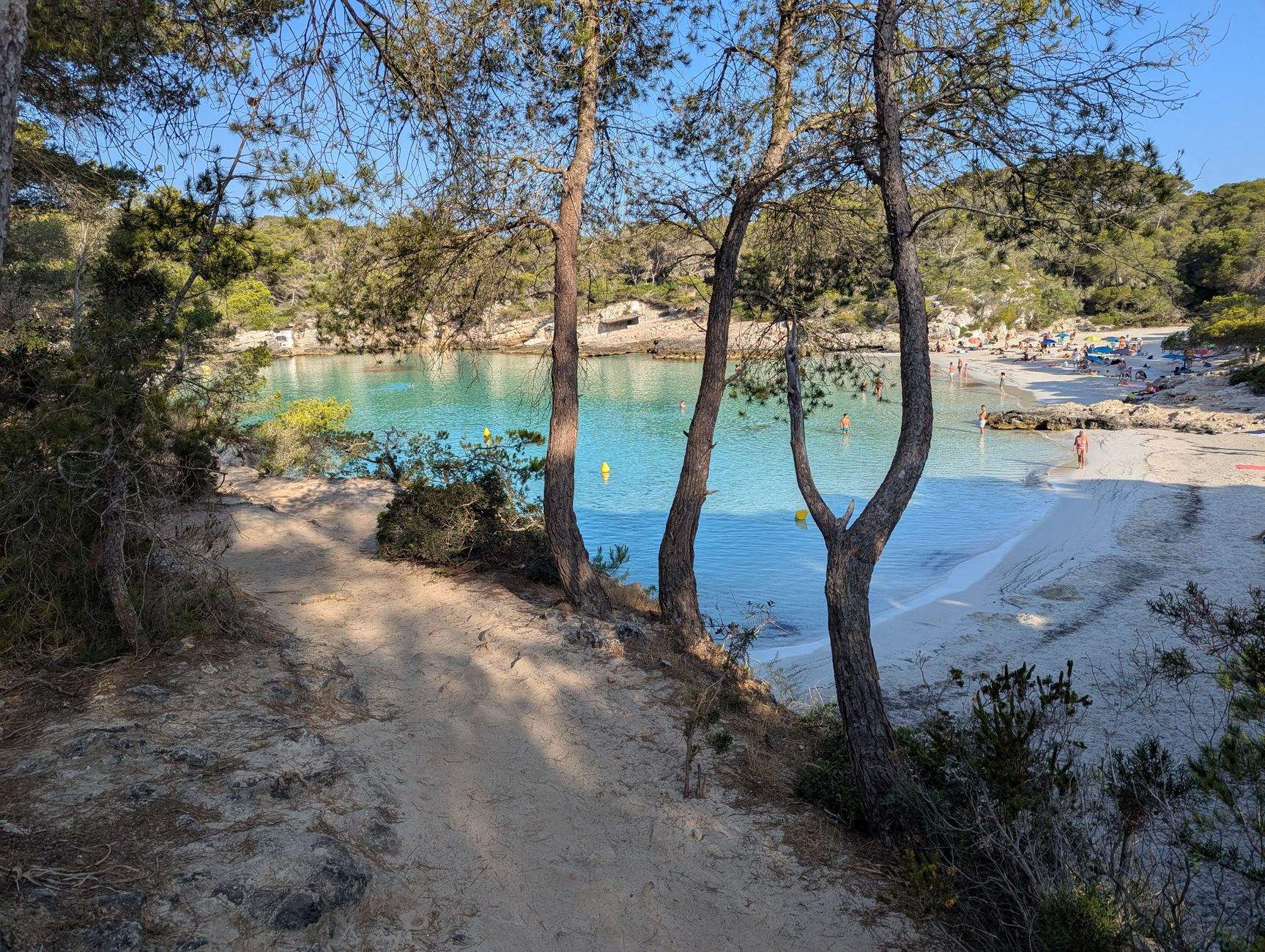
Cala Mitjana sits on the north coast near Ferrerias, accessible by a 20-minute walk from a small parking lot. The cove is compact—maybe 150 meters of sand—and boxed in by red cliffs. The water is clearer here than at larger beaches because fewer people visit. In June, you might share the cove with a dozen others on a weekday. Bring water and a snack; the nearest village is 15 minutes by car. This cove rewards swimmers and couples who will walk a bit; it does not suit families with small children because the exit trail is steep and there is no cell signal halfway down.
Near Ferrerias, Ferran and his family run a small apartment rental (EUR 70–110 per night in May–June) above a minimarket on the main road. They can arrange a packed lunch if you tell them you are going to the beach. The local taxi drivers know the parking lot; expect EUR 15–18 from town.
Punta Prima
A eastern-facing beach with afternoon sun and village charm
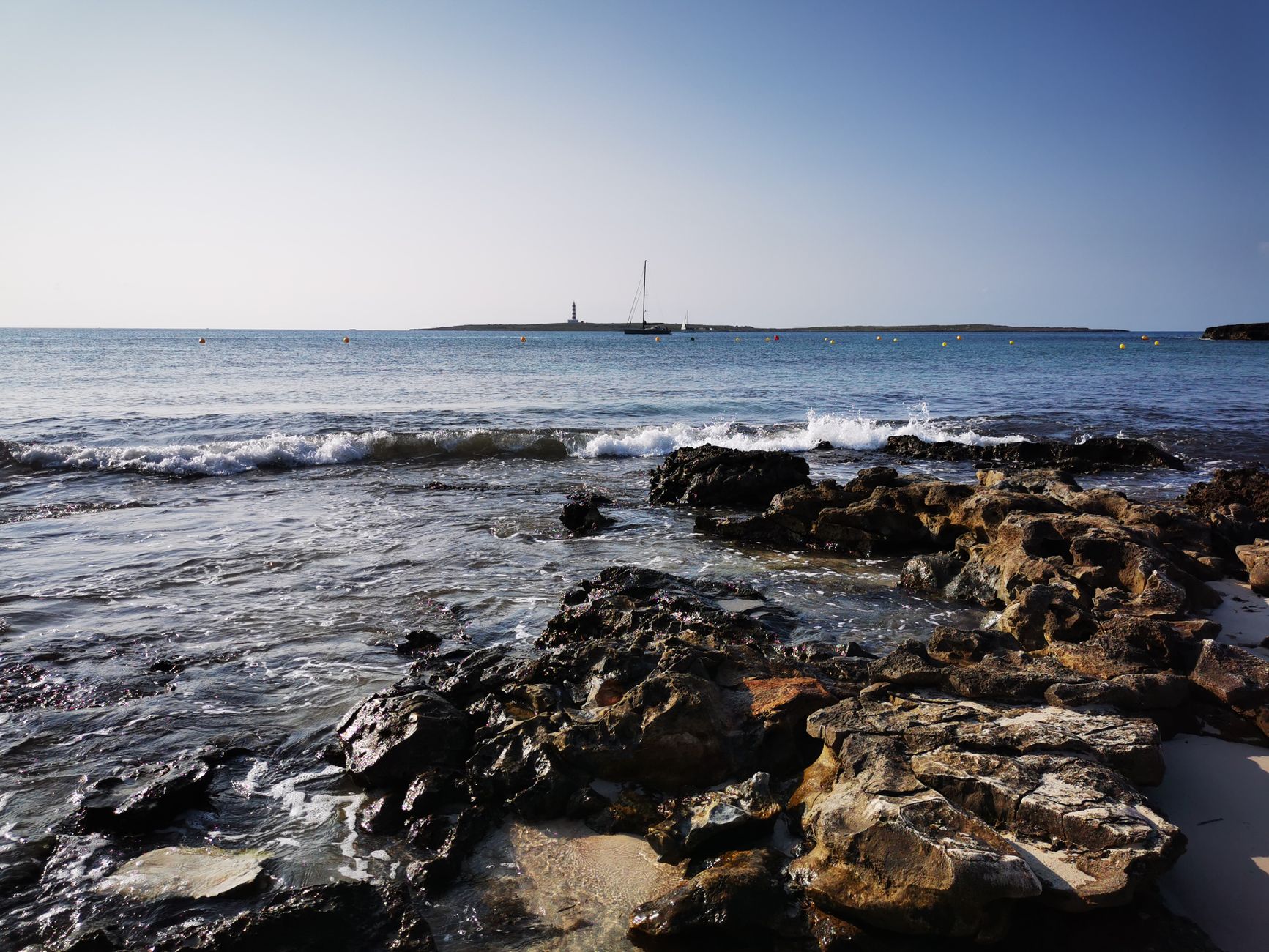
Punta Prima sits on the east coast, a 25-minute drive from Mahón. The beach is 300 meters long, with sand that slopes gently into turquoise water. Because it faces east, the sun is brightest in the morning and early afternoon. In May and June, water temperature reaches into the mid-60s Fahrenheit. The village above the beach has two small restaurants and a grocery. A lighthouse at the northern end of the beach is a 10-minute walk and offers views across to Ibiza on clear days. This is a good base if you want to divide time between beaches and exploring Menorca's eastern towns.
Punta Prima has a few small hotels and apartment rentals at EUR 85–140 per night in spring. Restaurant Gust serves local seafood and vegetable dishes at EUR 15–22 per main; reserve for dinner. Car rental is useful here because other beaches are 20–40 minutes away.
Cordelie travel advisors
Planning Menorca? Go with someone who knows
The right suite, the right season, the reservations that never appear online — your Cordelie advisor knows them, and holds them for you.
Plan with a Cordelie advisorFree to ask. Cordelie Travel Services · IATA/ARC 06649064
How to Arrive, When to Go, and Why September Still Works Too
Menorca International Airport lies north of Mahón, the island capital. From the UK, flights via Barcelona or Madrid run roughly EUR 100–180 return but involve a connection; direct flights are rare. The airport is 5 kilometers from Mahón; a taxi into town costs EUR 15–20, and rental cars are available from the usual companies at EUR 30–50 per day for a compact car.
Ferry access exists from mainland Spain and from Mallorca. Balearia and Acciona run car ferries from Palma, Mallorca to Mahón; the journey takes 2 hours and costs EUR 30–60 per person and EUR 60–120 for a car, depending on season and booking timing. These ferries operate year-round. A ferry from Valencia, Spain to Mahón runs overnight (9 hours) and costs EUR 50–100 per person; this is useful if you are combining a mainland trip with the island.
May and June offer the ideal timing: water warm enough for swimming, air warm enough for all-day beach time, and crowds still manageable. July and August draw tourists from across Europe; hotels fill, restaurants require reservations weeks ahead, and beaches are visibly crowded by 10:00 in the morning. September is often overlooked. Water temperature lingers in the low 70s Fahrenheit, air remains in the high 70s, and European school holidays have ended. Beaches and restaurants are noticeably quieter. The only drawback: rainfall increases in September, though morning showers are usually brief and do not prevent beach days.
What to Do Beyond the Beach: Spring Activities and Open-Air Markets
Menorca is small enough to cross end-to-end in an hour by car, which means beach days can pair with village exploration. The interior is quiet: stone villages, windmills, and farms. No motorways exist on Menorca. Driving to anywhere takes 20–40 minutes from the center, making this a place to slow down rather than chase destinations.
In May, the island hosts regional fiestas in villages. Alayor celebrates its patron saint for several days in May with evening gatherings and local food. Ferrerias, in the center of the island, holds its fiestas in August, not spring, but the village is beautiful year-round and worth a morning visit for its architecture and narrow streets. Mahón, the capital on the eastern coast, has an old town with 17th-century British influences (defensive walls, Georgian doorways) and a harbor ringed with restaurants. Harbor-side dinners cost EUR 20–35 per person.
Open-air markets operate in most villages on specific days. Mahón's market runs Saturday mornings at the harbor end of town; Mercadal has a Tuesday market. These are not tourist markets but working grocery and clothing sales. A visit takes 45 minutes to an hour. Arrive by 09:00 for the widest selection.
Several hiking trails connect villages and coves. The Camí de Cavalls, an old bridle path that rings the island, is partially restored; most sections are 5–12 kilometers and take 1.5 to 3 hours depending on terrain. Spring weather is ideal for walking. Trails are not marked with painted blazes; use an app like AllTrails or Maps.me to navigate. No permit or entry fee is required.
Menorca Through the Spring Seasons
Menorca rewards travelers who move slowly and know the right coves in advance. A Cordelie advisor can arrange your ferry timing to dodge crowds, secure a rental car for the exact dates you need, and book small family hotels and restaurants that do not advertise broadly online. They can build itineraries that balance beach mornings with village exploration, knowing which paths are walkable with a stroller and which require fitness. They can suggest the fishermen's restaurants in Mahón where reservations are necessary but discoveries are real. Menorca is small, but knowing where to be and when separates a quiet spring from a frustrating search for empty beach.
Practical Details: Costs, Packing, and Getting Around
A car rental is useful but not mandatory. Menorca has taxis in Mahón and local taxi numbers posted at village pharmacies. Expect EUR 15–25 for local trips and EUR 30–45 for longer drives like Mahón to a north-coast beach. Buses connect towns but run limited routes and infrequent schedules; they are reliable for trips between villages but not for flexible beach touring. A weekly car rental (compact manual) costs EUR 120–180 in May–June, which pencils out if you are renting for more than 4 days.
Hotels and apartments vary. A family room at a small village hotel (3-star equivalent) runs EUR 80–140 per night in May–June. Apartment rentals via Airbnb and local sites run EUR 70–150 per night. High-season rates (July–August) are double or triple. Restaurant meals cost EUR 14–22 for a main course at a local eatery, EUR 20–35 at a waterfront place in Mahón. Groceries are available in every village; a meal for two from a supermarket costs EUR 12–18. Alcohol is inexpensive: wine from EUR 6–12 per bottle, beer EUR 2–3 per glass.
Pack for cool water and variable air. Water temperature in May is 62–64 degrees Fahrenheit; a thin wetsuit or a rashguard is wise for swimmers who are sensitive to cold. Air is warm during the day but can cool by evening, especially on the north coast. A light layer for dinners is useful. Sun protection is necessary; UV is intense even when air temperature feels mild. Reef-safe sunscreen is important; all visitors should apply it before entering the water.
The island is English-friendly in tourist areas. Hotel staff and restaurant owners in beach villages speak English. Interior villages and smaller shops operate in Catalan and Spanish; a translation app and a few Spanish phrases are helpful. Tipping is not expected; rounding a bill up or adding 5–10 percent for good service is customary.
Spring in Menorca: The Quiet Alternative to Crowded Balearic Islands
Menorca in May and June delivers warm beaches, clear water, and the working rhythms of a small island, without the resort density that defines Ibiza and Mallorca in summer. The tradeoff is cooler water than July–August, but that also means fewer tourists and lower prices. September offers the same calm with warmer water.
Best for: Couples seeking solitude, families who value quiet beaches and village exploration, swimmers who prefer 60s-to-70s-degree water.
When to go: May and June for the full spring experience, or September for warmer water with equivalent calm. Avoid July–August unless school holidays force your travel.
Where to base: Southeastern villages like Alayor or Sant Climent give access to both protected coves and Mahón's dining without being resort-heavy. Northern villages like Castell and Ferrerias suit those who want rocky coasts and fewer tourists.
How to arrive: Fly from mainland Spain (EUR 60–140 return, 90 minutes from Barcelona) or ferry from Mallorca (2 hours, EUR 30–60 per person). Rent a car (EUR 120–180 per week) for full beach flexibility.
Budget: EUR 80–140 per night for simple hotels, EUR 14–22 per main course at local restaurants, EUR 30–50 per day for car rental. All roughly half the July–August rates.
Last checked for accuracy: . How we check

Priya Raman has spent eleven years testing whether a destination works with a four-year-old, a teenager and a grandparent in the same party. She writes the version of the guide that accounts for nap times and still gets you to the good stuff, and travels from Toronto with a carry-on she can pack in nine minutes.