
In Shackleton's Boot Prints: Walking the Final Miles of the Endurance Saga

Why Stromness Bay Is the One Walk in Polar Travel That Finishes a True Story
Most polar landings show you wildlife and ice. Stromness Bay shows you an ending. This is where Sir Ernest Shackleton, Frank Worsley and Tom Crean staggered off a mountain pass after thirty-six hours without sleep, having crossed South Georgia's unmapped interior on a worn length of rope and a carpenter's adze for an ice axe, to reach the first human voice they had heard in nearly a year and a half.
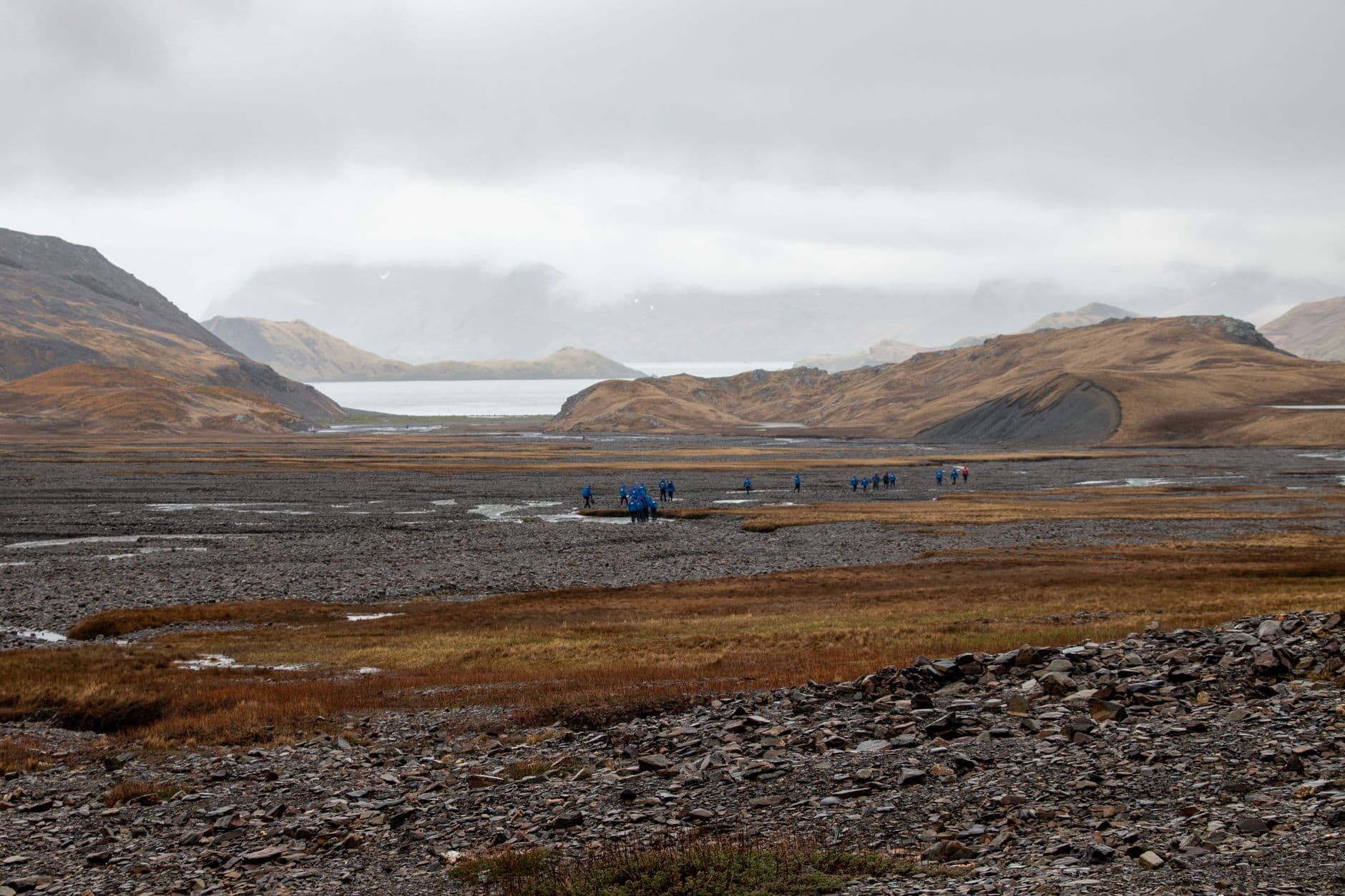
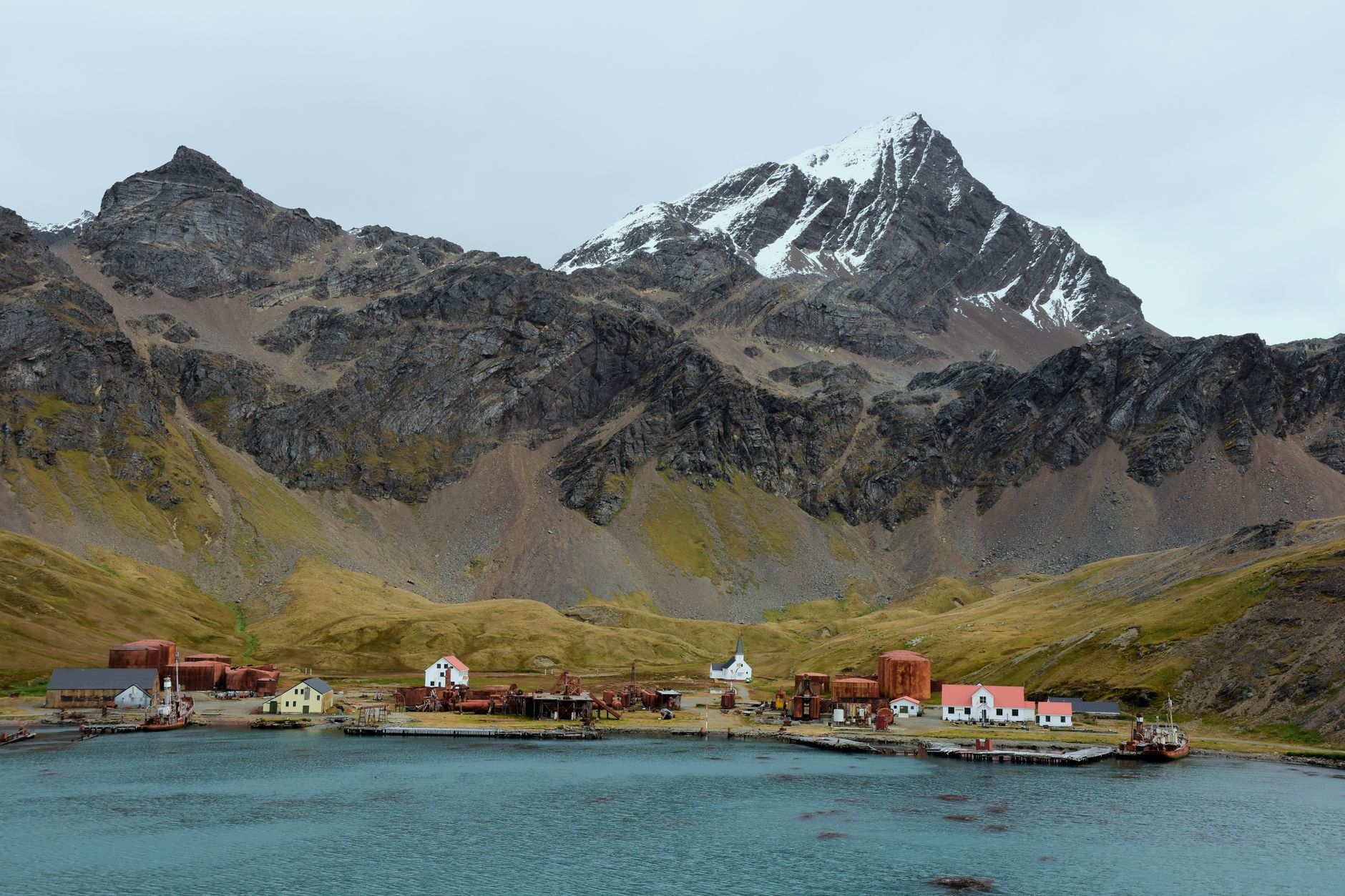
You walk the same final stretch today - not the entire 1916 crossing, which remains too glaciated and dangerous to repeat, but the authentic last leg from Fortuna Bay over Shackleton Gap and down into the bay itself. The whaling station ruins still stand, fenced off and rusting, exactly where the three men first glimpsed smoke rising from the factory chimney. Few hikes anywhere let you stand inside a sentence from a diary written over a century ago.
South Georgia Island: Quick Facts
Reading South Georgia's Narrow Window: Spring Snowpack, Summer Green, and a Hike That Gets Called Off
The expedition season on South Georgia runs roughly late October to March, bookended by the Scotia Sea's own weather, not a calendar. In austral spring - October and November - the island is still shaking off winter. Elephant seals have mostly finished their beach battles by early October, fur seals are only beginning to haul out, and tussock grass lies flattened and pale from months of snow cover. This is the quietest, least crowded stretch of the season, but it comes with a catch: Shackleton Gap, the saddle between Fortuna Bay and Stromness Bay, can still hold enough snow in November to make the crossing a call made that same morning by the expedition leader, sometimes with crampons issued, sometimes cancelled outright for whiteout risk.
By December and January, the gap is usually clear scree and tussock, daylight stretches past 18 hours, and king penguin chicks at Fortuna Bay are fat, brown, and loudly indifferent to visitors. This is peak season, with the most ships in the Scotia Sea and the most reliable hiking conditions. February and March bring cooler air, thinning crowds, and thousands of fur seal pups testing the surf at Right Whale Bay and Salisbury Plain. Whichever month you choose, pack for all four seasons in one afternoon - a 10-degree Celsius swing and a sudden squall off the Southern Ocean are routine, not exceptional.
Cordelie travel advisors
Go with someone who knows
The right suite, the right season, the reservations that never appear online — your Cordelie advisor knows them, and holds them for you.
Plan with a Cordelie advisorFree to ask. Cordelie Travel Services · IATA/ARC 06649064
The Traverse Itself: Fortuna Bay's Penguins to the Pass They Called 'The Gap'
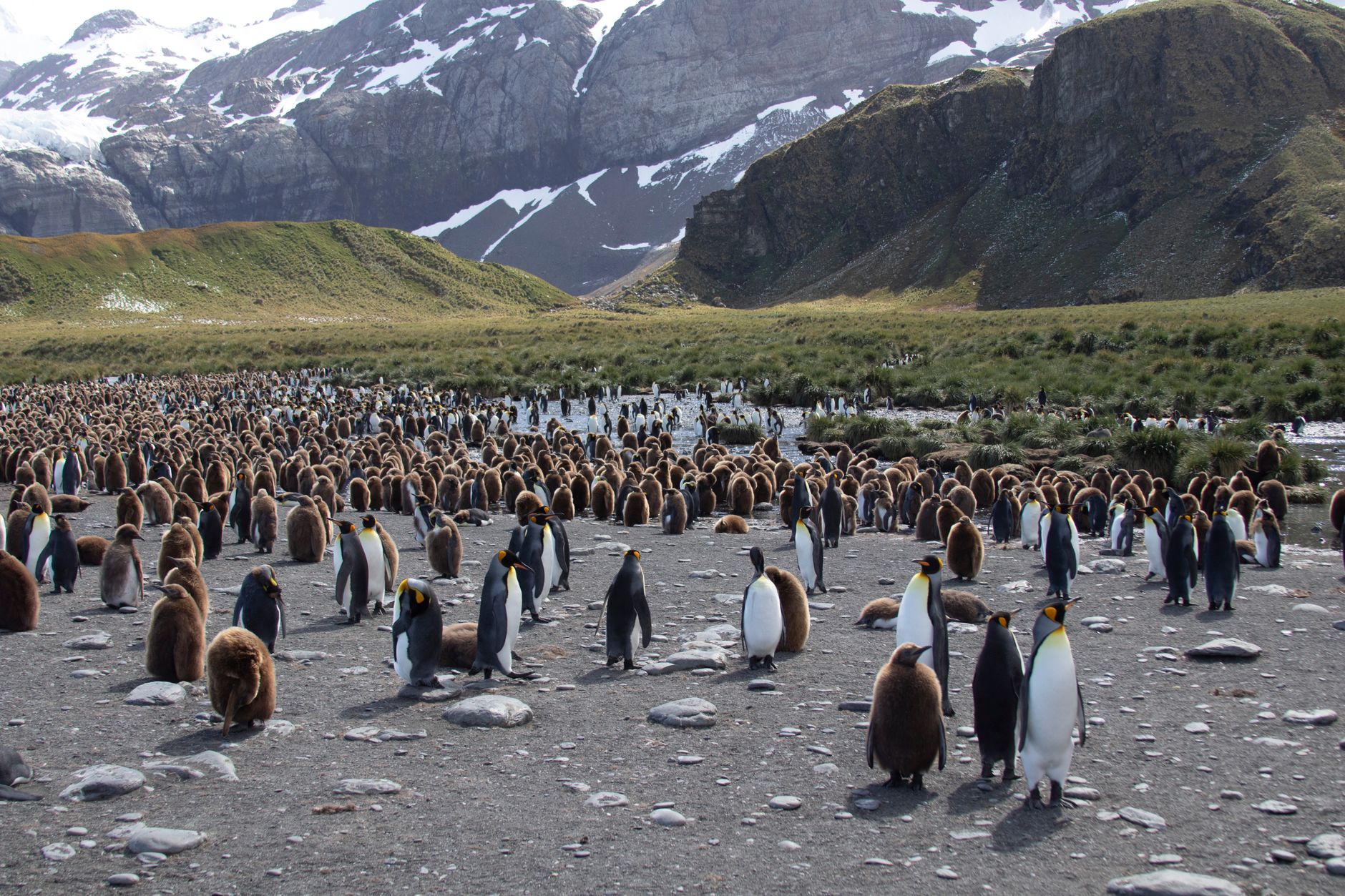
The modern Shackleton Walk begins with a 10-15 minute Zodiac shuttle to Fortuna Bay, where a king penguin colony several thousand strong occupies the flats below an old British Antarctic Survey hut. From there, the trail climbs roughly 250 meters over about 2 kilometers to Shackleton Gap - the same notch the three men squeezed through at dawn after sliding down a frozen waterfall on their rope, roped together, with Worsley later writing that they went down 'as if we were on a slippery dip.' The full walk to Stromness Bay runs close to 6.5 kilometers (about 4 miles) and takes most groups three to four hours, depending on fitness and how long you linger at the overlook.
Expect moderate-to-strenuous terrain: tussock hummocks that twist ankles if you're not watching your feet, loose scree on the descent, and wind that can gust hard enough to knock you sideways near the saddle. Operators generally ask for waterproof, ankle-supporting boots, windproof outer layers, and a reasonable baseline of fitness - this is not a stroll, and ships will sometimes ask passengers to complete a health declaration before the landing is confirmed. Trekking poles help considerably on the descent. Group sizes are kept small, usually in clusters of 15-20 with a naturalist guide front and back, both for pacing and because the whole operation runs on a strict landing-permit clock.
You will not be allowed to walk into the Stromness station itself. The buildings have been closed to visitors for decades on safety grounds - collapsing roofs, loose asbestos sheeting, rusted machinery - and the exclusion zone keeps hikers roughly 200 meters back on the hillside above the harbor. From there, though, you get the clearest possible view: the manager's villa, the flensing platform, and the try-pots where whale blubber was once rendered, all sitting exactly as they did when Shackleton's party staggered down toward the sound of a factory whistle at 6:30 in the morning on May 20, 1916 - the first man-made sound any of them had heard since December 1914.
Scenes from the Final Leg of the Endurance Crossing
Why Your Only Address on South Georgia Is a Cabin Number
There is no hotel, lodge, or guesthouse anywhere on South Georgia. Every visitor sleeps aboard an expedition ship, and the itinerary - including whether you get the Shackleton Walk at all - depends entirely on which operator you choose. Lindblad Expeditions runs the National Geographic Endurance and National Geographic Resolution on South Georgia sailings with onboard historians who lecture specifically on the 1916 crossing; Quark Expeditions' Ultramarine and Aurora Expeditions' Greg Mortimer and Sylvia Earle both schedule the hike as a flagged, weather-dependent landing rather than a guaranteed one. Hurtigruten Expeditions' MS Fram and MS Roald Amundsen also call at Stromness Bay on longer South Georgia-Antarctica combination voyages, typically 18-24 days round trip from Ushuaia.
Cabin categories range from compact window staterooms to suites with private balconies, and on most ships the price difference is substantial enough to shape which deck - and which view of the Scotia Sea - you wake up to each morning. Before boarding, most travelers spend a night or two in Ushuaia, Argentina; the Arakur Ushuaia Resort & Spa sits above the city with Beagle Channel views, while Hotel Los Cauquenes offers a quieter, more intimate base closer to the port. If your routing stops in Stanley, Falkland Islands, the Malvina House Hotel is the long-standing choice for a comfortable overnight before or after the Scotia Sea crossing.
From Hoosh to Patagonian Lamb: Eating Where Shackleton's Men Nearly Starved
Shackleton's own diary makes the contrast with modern expedition dining almost comic. On the James Caird crossing and the walk that followed, the three men survived largely on 'hoosh' - a thick stew of dried beef, fat, and biscuit crumbs boiled with snowmelt - supplemented by whatever seal and penguin meat they could carry. Worsley later recalled going three days without a proper meal before reaching Stromness. Today's ships provision heavily in Ushuaia and run dinners built around Patagonian lamb, Falklands-caught toothfish, and fresh produce stocked for the full three-week voyage, with onboard historians often timing a lecture on the crossing to land the same evening you've walked the ground yourself.
The cultural counterpart to Stromness sits across the island at Grytviken, a separate former whaling station in Cumberland East Bay reached by ship rather than on foot. The South Georgia Museum occupies the old station manager's villa there, and a small philatelic counter at nearby King Edward Point lets you post a card bearing South Georgia stamps - a genuine novelty among polar souvenirs. Grytviken's whalers' cemetery, not Stromness, is where Shackleton is actually buried: he died of a heart attack aboard the Quest on January 5, 1922, anchored just offshore, and was laid to rest there in March 1922 at his widow's request. His great friend Frank Wild's ashes were interred beside him in 2011.
“We had seen God in His splendours, heard the text that Nature renders. We had reached the naked soul of man.”
No Roads, No Return Ferry: Getting to and Across South Georgia
There is no commercial flight to South Georgia and no road network once you arrive - every arrival is by ship, and every onward movement from the ship is by Zodiac and then on foot. The Scotia Sea crossing from Ushuaia typically takes four to five days each way, sometimes extended by an optional stop in the Falkland Islands. Each landing, including the Stromness Bay hike, requires a biosecurity boot-wash and clothing check before and after - South Georgia takes invasive species seriously, and ships enforce it strictly, with the expedition team inspecting velcro straps and pockets as closely as boot soles.
Within the island itself, movement is slow by design. Zodiacs run passengers ashore in groups of 8-10, landings are rescheduled or scrapped for wind and swell with little notice, and the Shackleton Walk in particular depends on a clear weather window at both ends - Fortuna Bay for the drop-off, Stromness Bay for the pickup. Build flexibility into your expectations rather than your itinerary; the ship's expedition leader, not a printed schedule, decides each morning whether the gap is walkable.
Three Days on the Endurance Trail: A Sample Sequence Within a Longer Voyage
Fortuna Bay: Landing Among the King Penguins
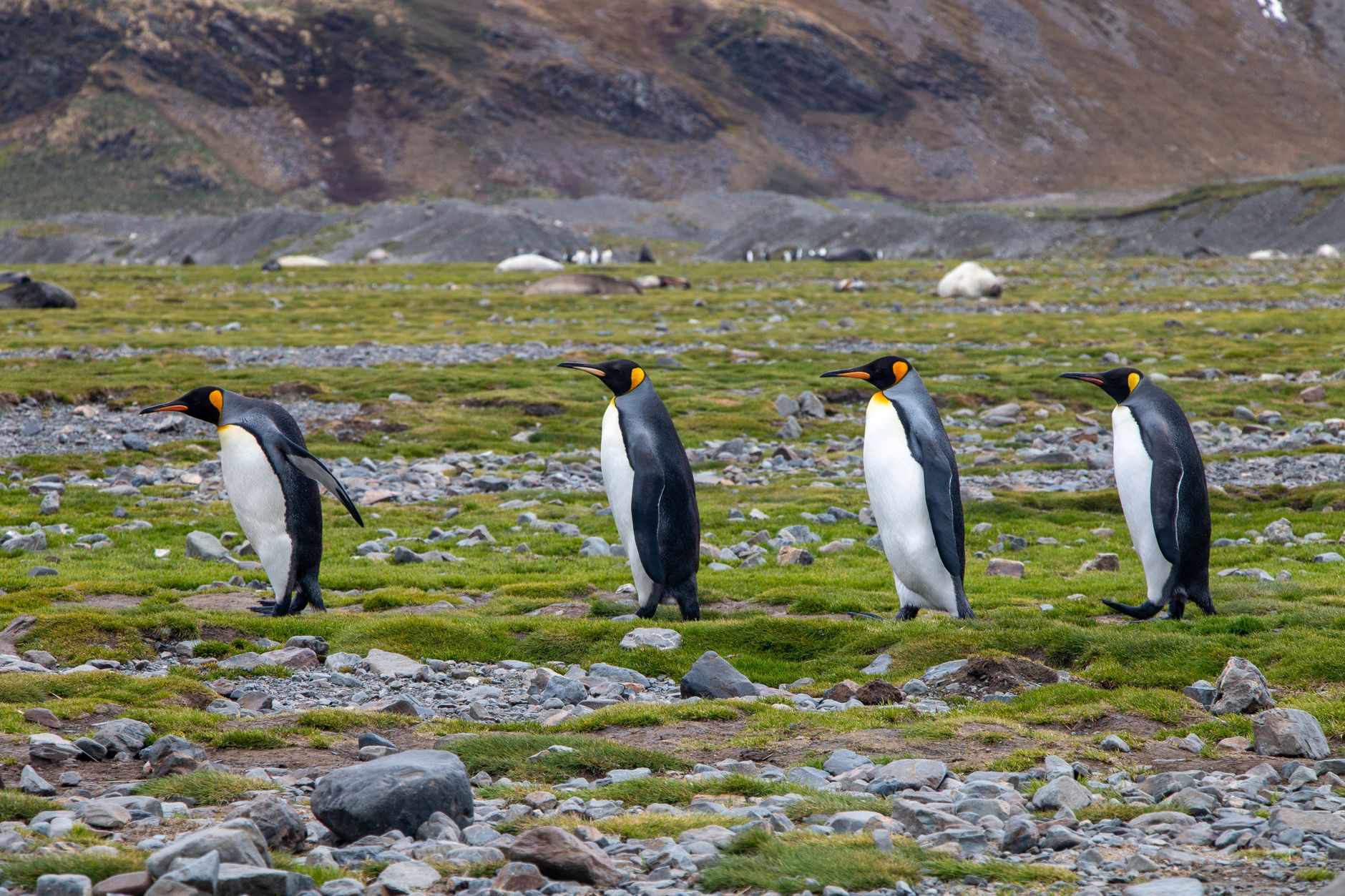
Your ship anchors off Fortuna Bay and Zodiacs ferry small groups ashore in 10-15 minute runs, weather allowing. The beach holds a sprawling king penguin colony - adults in sleek silver-and-gold plumage, chicks in their shaggy brown down - alongside the ruins of an old British Antarctic Survey hut.
Spend the afternoon on the beach rather than rushing: this is the same ground Shackleton's party crossed on their first attempt before realizing they'd dropped into the wrong bay and had to climb back up and over again.
The Traverse: Over Shackleton Gap to Stromness Bay
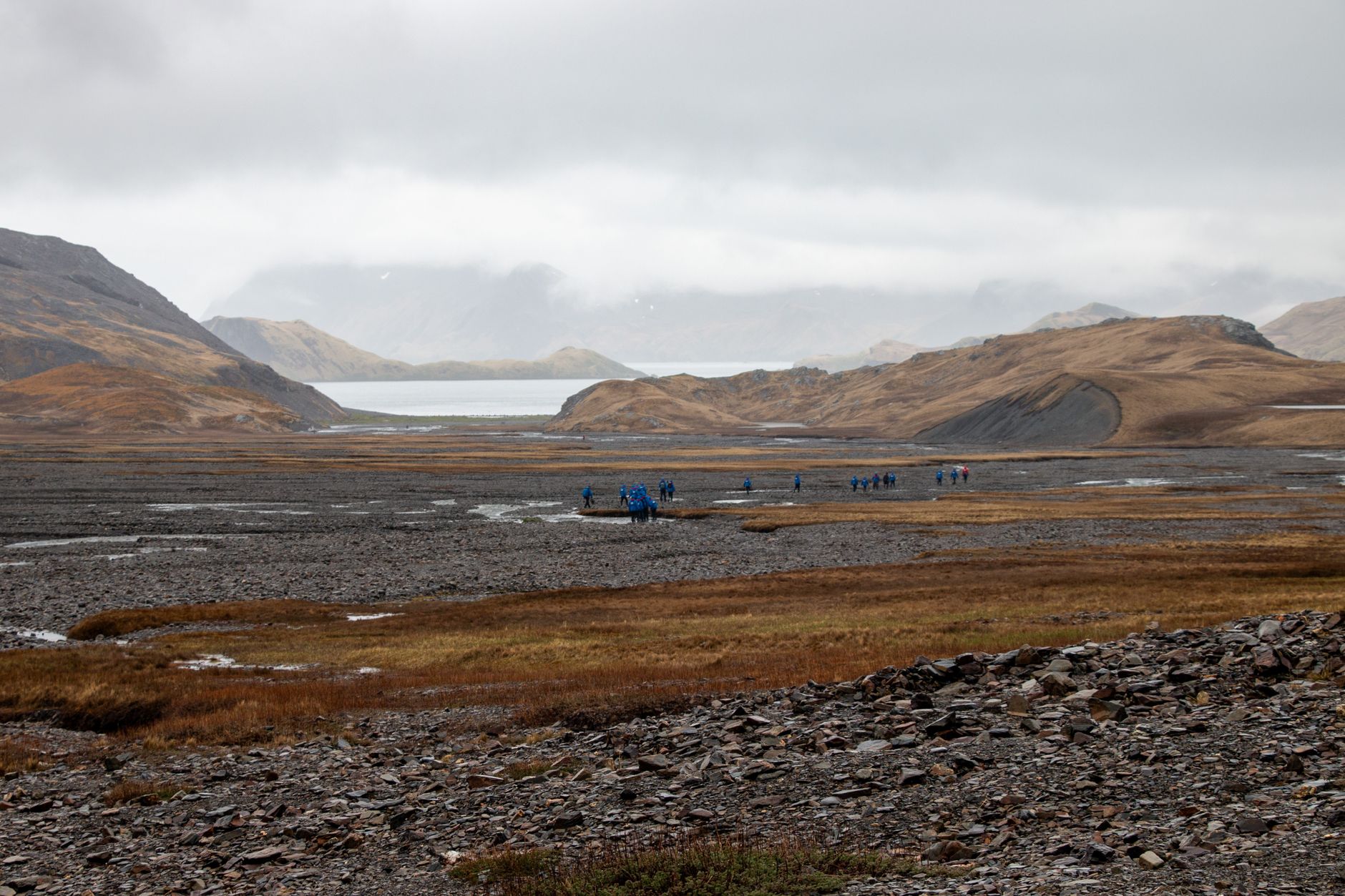
This is the walk itself - roughly 6.5 kilometers, three to four hours, climbing about 250 meters to the saddle at Shackleton Gap before dropping down the far side toward Stromness Bay.
At the top, pause where the three exhausted men first saw smoke from the whaling station's chimney after 36 hours without rest. The descent is steeper and looser underfoot; trekking poles earn their keep here. Zodiacs meet the group at the Stromness Bay shoreline for the return to the ship.
Grytviken: The Grave, the Church, and the Museum Across the Island
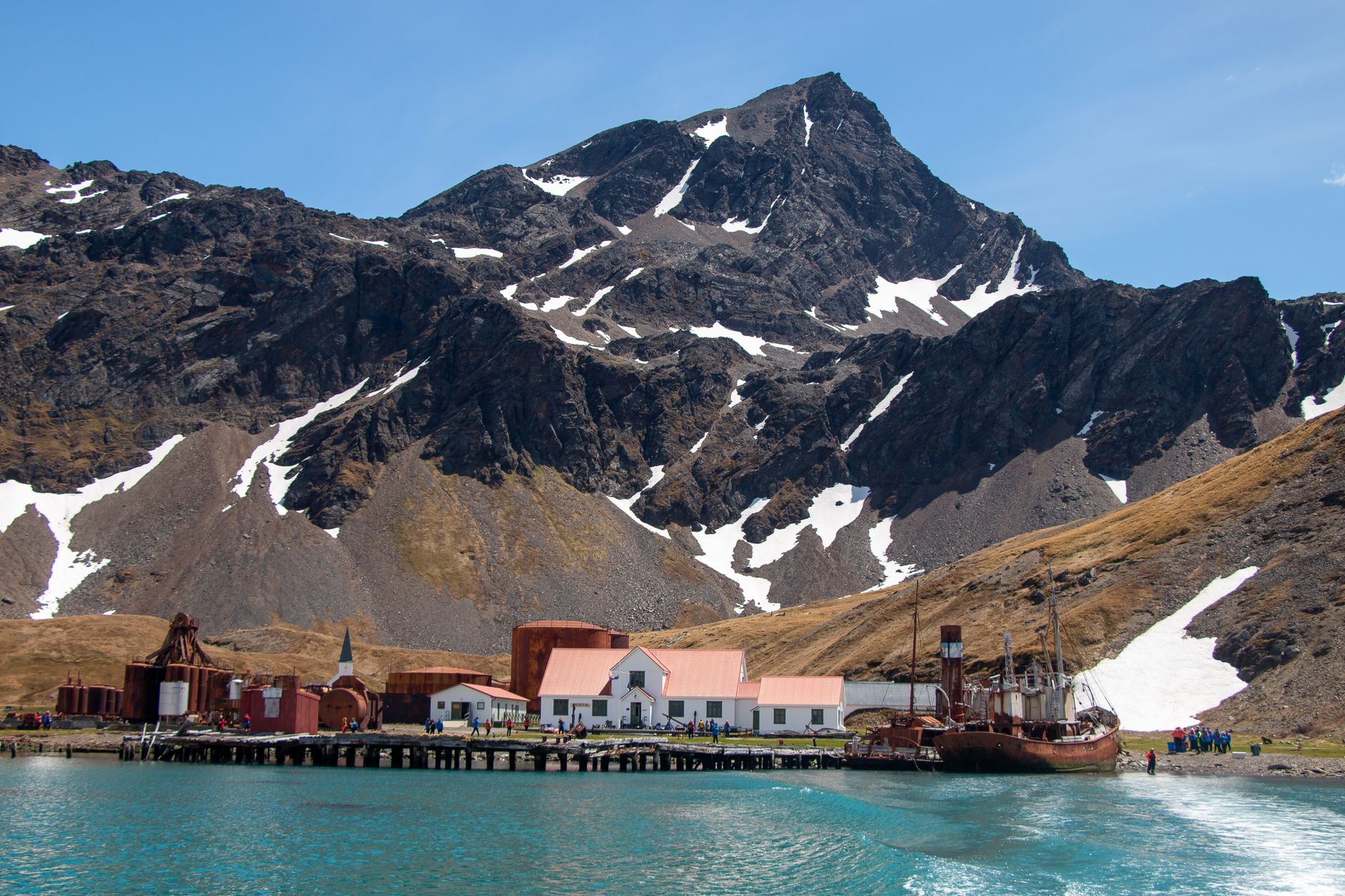
The ship repositions roughly a day's sail to Cumberland East Bay for Grytviken, a different former whaling station from Stromness and the place where Shackleton is actually buried.
Visit the small whalers' cemetery where his headstone and Frank Wild's memorial stand together, the 1913 Norwegian church used for a brief toast tradition among visiting crews, and the South Georgia Museum housed in the old manager's villa - plan on an hour or two to see both the museum and the cemetery at an unhurried pace.
The Shackleton Walk is never guaranteed on any sailing - it depends on which ship, which exact itinerary, and which week of the season you choose, since snow cover and permit scheduling shift the odds considerably between late November and March.
A Cordelie travel advisor can match you to a voyage and cabin where the traverse is genuinely likely to run, time your departure against the island's weather patterns, and layer in Ushuaia or Falklands nights that make the whole crossing feel considered rather than rushed. Reach out at https://cordelie.com/contact to start planning your own final miles of the Endurance story.
Stromness Bay & the Shackleton Traverse: At a Glance
A rare case where the hike itself, not just the scenery around it, is the destination - best suited to travelers who want their polar wildlife paired with a genuine piece of exploration history.
Go for the walk, the king penguins at Fortuna Bay, and the chance to stand above the Stromness ruins where a 36-hour crossing on a worn rope ended a nineteen-month survival story.
Expect a moderate-to-strenuous 6.5-kilometer hike dependent on weather, no land accommodation anywhere on the island, and a separate ship stop at Grytviken for Shackleton's actual grave.
Best timed for November through March aboard an expedition ship sailing from Ushuaia or the Falkland Islands, with December-January offering the clearest and most reliable crossing conditions.
Last checked for accuracy: . How we check

Sarah Chen has covered Asia for twelve years, first as a wire reporter in Jakarta and now from Singapore, where she keeps a standing list of the region's most misunderstood destinations. She writes about the distance between what a place is famous for and what it is actually like to spend a week in — and is happiest on an overnight train with a bad seat and a good view.