
Going-to-the-Sun Road: The Ultimate Americana Drive Through Glacier National Park
Key Facts
The Spine of the Rockies: Driving Going-to-the-Sun Road
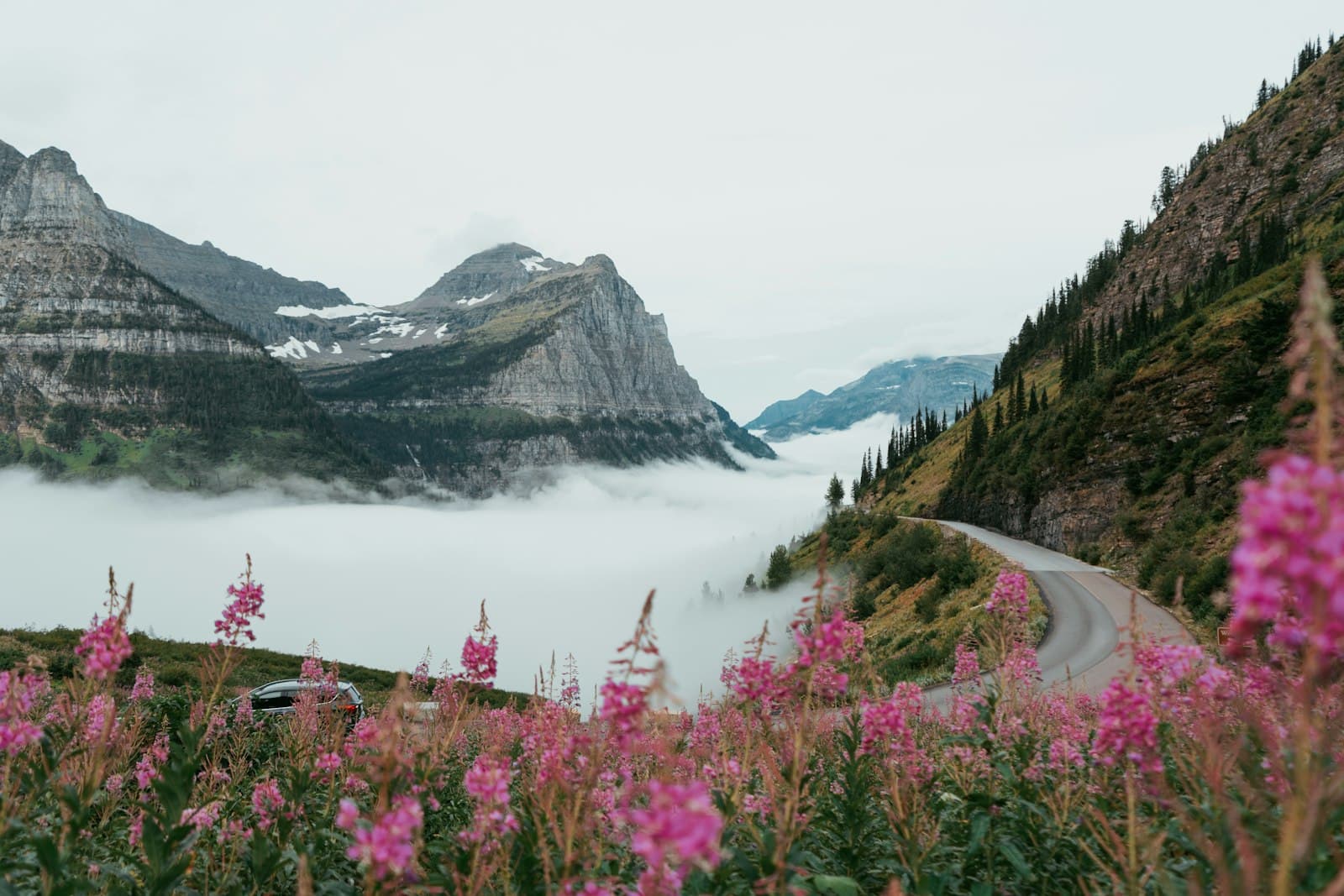
Going-to-the-Sun Road is not a scenic overlook masquerading as a drive. It is a feat of early-twentieth-century engineering that does not forgive hesitation. Built between 1921 and 1932, this 50-mile ribbon of asphalt climbs from the western lowlands of Glacier National Park to Logan Pass at 6,680 feet, then descends into the alpine east side. The road switchbacks through beargrass meadows, skirting cliff edges where the guardrails feel like suggestions, and opens onto vistas that could stop traffic—and often do. You are piloting a vehicle through the spine of the Northern Rockies, not watching it pass in a window. That physicality is the point.
Why the Road Opens and Closes: Timing Your Visit
The road's opening window is brutally short. From November through mid-June, snow and avalanche risk make it impassable. The park service clears it gradually as conditions permit, typically opening the western sections (from Lake McDonald to Siyeh Creek) by late May and pushing the final opening of Logan Pass itself to mid-July. By late September, closure creeps back down. In spring, you cannot bank on the full 50 miles being open; check the park's website and road status before driving. The narrow cuts blasted through rock and ice do not accommodate plow traffic in both directions simultaneously, so sections are occasionally closed for maintenance even during the open season.
The trade-off is winter's silence for summer's crowds. July and August see the heaviest traffic. June and September are quieter but the road may not be fully open, or patches of snow may linger in high passes. Late July through mid-August guarantees full access, though you will share it with tour buses from West Glacier and families in rental SUVs navigating the hairpins for the first time.
The road was built without power equipment. Workers chiseled much of it directly from the mountainside using hand tools and dynamite. Parts of Going-to-the-Sun Road remain less than 20 feet wide at certain hairpin turns, making it one of the most technically challenging drives in America.
How to Drive It: Road Conditions and Vehicle Requirements
Vehicles over 21 feet long or 8 feet wide are prohibited beyond Avalanche Lake trailhead on the western side and Sun Point on the eastern side. Oversized RVs and trailers end there. If you are renting a vehicle, verify its dimensions; a standard sedan or mid-size SUV is ideal. Trucks with camper shells often exceed the width limit.
The surface is paved but unforgiving. The switchbacks are tight. On the steepest grades, descending drivers experience significant brake heat and fade. Tap your brakes intermittently on long downhill stretches rather than riding them continuously. On the ascent, downshifting a manual transmission or selecting a lower gear on an automatic preserves braking. Summer afternoon traffic moves slowly through the passes; many drivers pull into scenic pullouts to let faster vehicles pass. Passing is legal only on marked sections, and most of the road does not permit it.
Weather changes rapidly at elevation. Morning sun at Lake McDonald can yield afternoon fog and possible rain at Logan Pass. Carry a light jacket and full tank of gas; the nearest fuel beyond West Glacier or East Glacier is 80-plus miles away. Cell service is spotty to nonexistent for much of the route.
The Stops That Matter: Pull-Offs and Short Hikes
Lake McDonald, the largest freshwater lake in the park, marks the western start. Stop at Lake McDonald Lodge if only for coffee; the historic timber building sits on the shoreline and rooms run roughly $150–$350 per night during peak season. The lodge has operated since 1913 and anchors the western gateway.
Sacred Dancing Cascade is a 2-mile pullout hike that rewards a brief detour. The trail drops to a narrow waterfall framed by cedars. Avoid it during midday heat; the exposed stretch bakes.
The Loop, a 1-mile trail loop near Milepost 22, winds through subalpine forest and opens to views of the Mission Mountains to the west. Crowds are lighter here than at the major turnouts.
Logan Pass itself is the visual crescendo. At 6,680 feet, the pass sits between Mount Cleveland and Mount Jackson. The parking is extensive but fills by 10:00 a.m. in mid-summer. The Hidden Lake Overlook trail starts here, a steep 3-mile round trip that climbs 700 feet in the first mile and terminates at a turquoise alpine lake where bighorn sheep often graze. The trail is snow-choked until early July; check conditions.
Jackson Glacier Overlook, on the eastern descent, offers views of a receding glacier. The 1-mile round trip to the viewpoint is gentle. Piegan Pass, further down the eastern side, accesses Piegan Pass Trail; a moderate day hike of 7.6 miles round trip rewards hikers with alpine meadows and possible encounters with mountain goats.
Historic Lodges: Planning an Overnight
Many Glacier Hotel, about 12 miles north of the road's eastern terminus at Saint Mary Lake, is Glacier's showpiece. This 1915 Swiss chalet sits on Swiftcurrent Lake with views across to Mount Wilbur. Rooms start around $200–$400 per night in summer (higher for suites and lake-view accommodations). The hotel fills quickly; book well in advance or work through a travel advisor for access. The drive from the east side of Going-to-the-Sun Road to Many Glacier adds roughly 30 minutes.
Lake McDonald Lodge, on the western approach, dates to 1913 and combines rustic charm with modern amenities. Rooms are similarly priced. Both lodges offer dining, though reservations are essential. Going-to-the-Sun Road itself has no lodging; all overnight stays require a drive to either end of the park or into nearby Kalispell (about 30 miles west from Lake McDonald) or East Glacier (about 12 miles east of Saint Mary).
Practical Driving Tips: Hour by Hour
Start early. Depart Lake McDonald before 7:00 a.m. if the full road is open. The drive to Logan Pass takes roughly 90 minutes. Traffic congestion peaks between 9:00 a.m. and noon and again in late afternoon. An early start puts you at Logan Pass by 9:00 a.m., when parking is still available and light is optimal for photographs.
Plan the descent. From Logan Pass to Saint Mary Lake, the road drops 2,000 feet in about 25 miles. Ride the brakes gently; aggressive braking generates heat and can lead to fade. Downshift and let gravity and low gears do most of the work. The descent takes 45 minutes to an hour, depending on traffic.
Fuel before the park. Gas stations inside Glacier National Park are nonexistent. Fill up in West Glacier or East Glacier before entering the park. A full tank will see you across the pass and to the other side with margin. Do not gamble on finding fuel within the park boundaries.
Bring water. Pullout areas have no facilities. Carry at least two liters per person. Summer temperatures at lower elevations can exceed 75°F; at Logan Pass, they rarely exceed 50°F even in July. Layer clothing.
A Cordelie travel advisor can orchestrate the timing of your Going-to-the-Sun Road drive to coincide with stays at Many Glacier Hotel or Lake McDonald Lodge, securing reservations months in advance. They can also arrange private-car service through the park if you prefer not to drive the switchbacks yourself—a luxury option that turns the road into pure visual experience. Your advisor can coordinate this with the rest of your Northern Rockies itinerary so logistics vanish and you simply experience the drive at its best.
What Gear to Bring
Sunscreen and a hat are non-negotiable. Alpine sun reflects off rock and water, intensifying UV exposure. Sunburn happens fast. Sunglasses with UV protection reduce glare from snow patches lingering into early summer.
A light waterproof jacket fits in a day pack and is essential. Weather can shift within 20 minutes at elevation. Rain squalls are common in July and August; they often pass quickly but can soak you on an exposed trail.
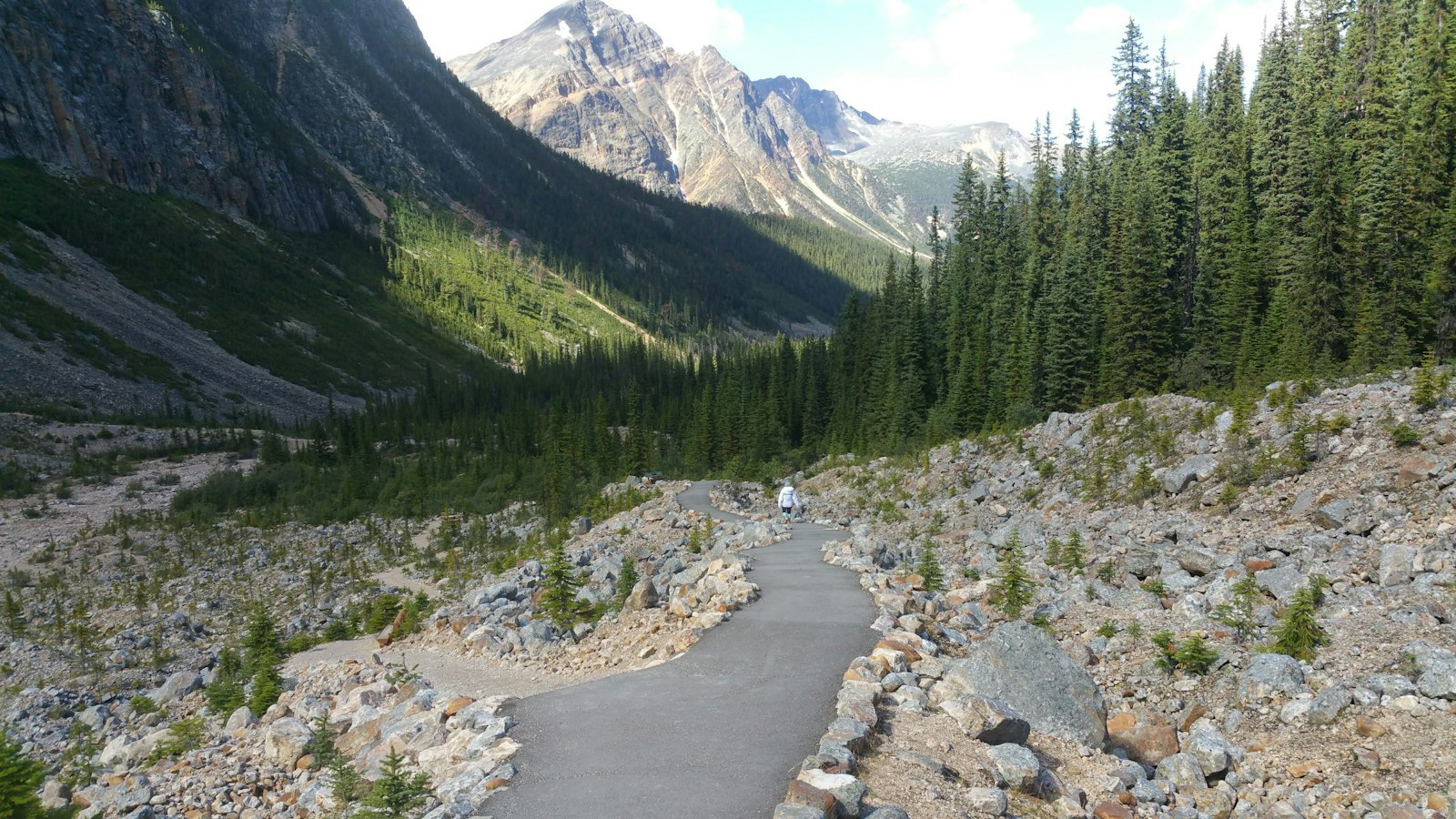
Wear proper hiking boots if you plan to do any of the short trails. Sneakers work for the flat 1-mile loops but will fail on steep, rocky terrain or scree. Many visitors are unprepared for how rocky the alpine trails are. Ankle support matters.
Binoculars enhance wildlife spotting. Bighorn sheep, mountain goats, and marmots are common at higher elevations. Bring them for the Hidden Lake Overlook and Piegan Pass areas.
Difficulty Rating and Physical Reality
The drive itself is moderately difficult. If you are comfortable navigating tight hairpin turns, sustained grades, and narrow pavement, you will manage. First-time drivers on such roads often underestimate the psychological demand; the views are constant and the exposure is real. Do not drive this route if you are fatigued or uncomfortable with heights. Rental-car collisions happen here every season. Respect the road.
The short trails—Loop, Sacred Dancing Cascade, Jackson Glacier Overlook—are easy to moderate. Hidden Lake Overlook is strenuous. The first mile is steep; the next mile is rocky and exposed. If you struggle with either steepness or altitude, skip it or turn back at any point. The view is worth the effort, but not worth injury.
Framing It as a National Parks Itinerary
Going-to-the-Sun Road fits into a Northern Rockies loop. Pair it with stays at Glacier National Park's historic lodges, then branch to Yellowstone National Park (roughly 200 miles south, a 4-hour drive) or the Beartooth Highway (100 miles south, roughly 2 hours). The road is the spine of a week-long drive through the American West. It is the one route that justifies calling a trip a "bucket-list Americana drive."
The experience is quintessentially American in the way early twentieth-century infrastructure often is: engineered boldly, with apparent disregard for comfort, and rewarding that boldness with views that modern highways never reach. You will not pass through this landscape half-asleep on cruise control. You will grip the wheel, watch the grade, and feel the elevation. That is the point.

Marcus Rivera has spent fifteen years writing about places you have to walk into. He has guided in Patagonia, reported from Kilimanjaro's quieter routes, and has strong opinions about which of them are worth the airfare. He is based in Boulder, mostly so he can leave it.