
Giant Tortoises and Blue-Footed Boobies: A Family Expedition Through the Galápagos

Where Lava Trails Meet Giant Tortoises: Our Family's Santa Cruz and North Seymour Days
My father-in-law, who complains if a hotel pillow is too firm, was flat on his stomach on a slab of black lava, phone held an inch from a sea lion pup's nose. Nobody told him to get down there. The sea lion did that on its own, ambling over to a man in his seventies as though he were simply the nearest warm rock. That was our second morning on North Seymour Island, and it set the tone for the whole trip: in the Galápagos, the wildlife does not perform for you. It just continues living its life a few feet away, and you are the one who has to adjust.
We traveled as six, spanning three generations, from a four-year-old niece in rubber boots to grandparents who had never snorkeled in their lives. We'd been warned that the Galápagos is not an easy multigenerational trip to plan. It isn't, quite. But Santa Cruz Island and its satellite North Seymour turned out to be the most forgiving corner of the archipelago for a group with that wide a spread of ages and stamina, and this is the week we actually had, timings and all.
“Grandma, he's just like E.T., but with a shell.”
Four Days Island-Hopping Between Volcanic Highlands and Seabird Cliffs
Landing at Baltra, Crossing to Puerto Ayora, First Panga Lesson
Our flight landed at Baltra airport (GPS), the small island airstrip that serves Santa Cruz, after a roughly two-hour domestic hop from Guayaquil. In spring 2025, round-trip fares between mainland Ecuador and the Galápagos ran somewhere around $250 to $600 per person, and every adult passenger pays an additional $200 Galápagos National Park entry fee in cash on arrival, so bring the right denominations.
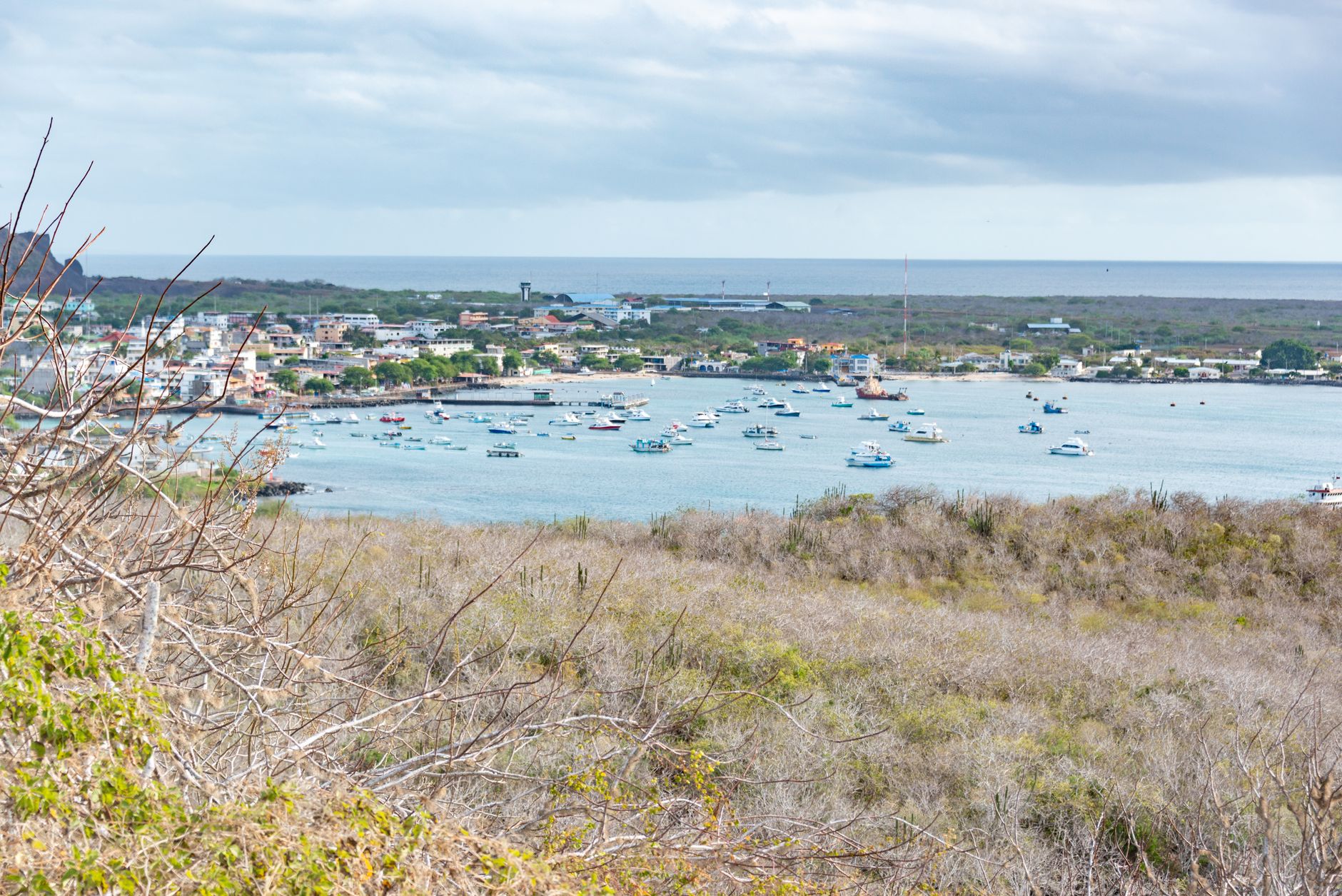
From the airstrip, a short bus ride delivers you to the Itabaca Channel, a narrow five-minute ferry crossing to Santa Cruz Island proper. From there it's about a 45-minute drive south on a paved road through the agricultural highlands into Puerto Ayora, the island's one real town. We used that drive to let the littlest kids nap, and the grandparents to start spotting their first finches through the window.
We boarded our ship, the Santa Cruz II, docked just off the Puerto Ayora pier, in the late afternoon. At roughly 90 passengers, she's larger and more stable than most Galápagos expedition boats, which matters enormously if anyone in your family gets queasy. The crew ran a mandatory panga briefing before dinner: how to time your step off the dock, how to sit low in the inflatable, how the crew will physically hand small children down the ladder rather than let them climb it alone.
Giant Tortoises and Twin Sinkholes in the Santa Cruz Highlands
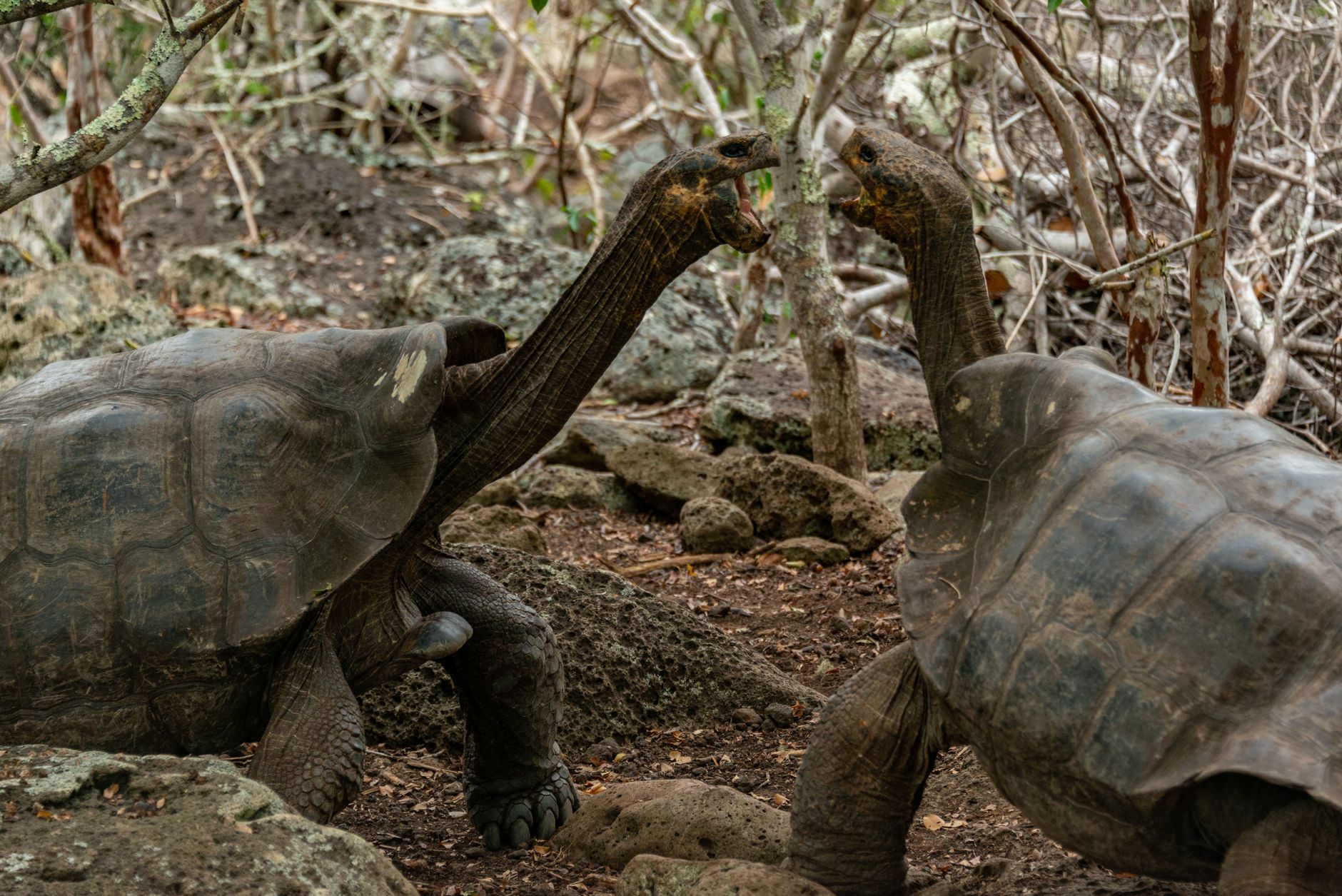
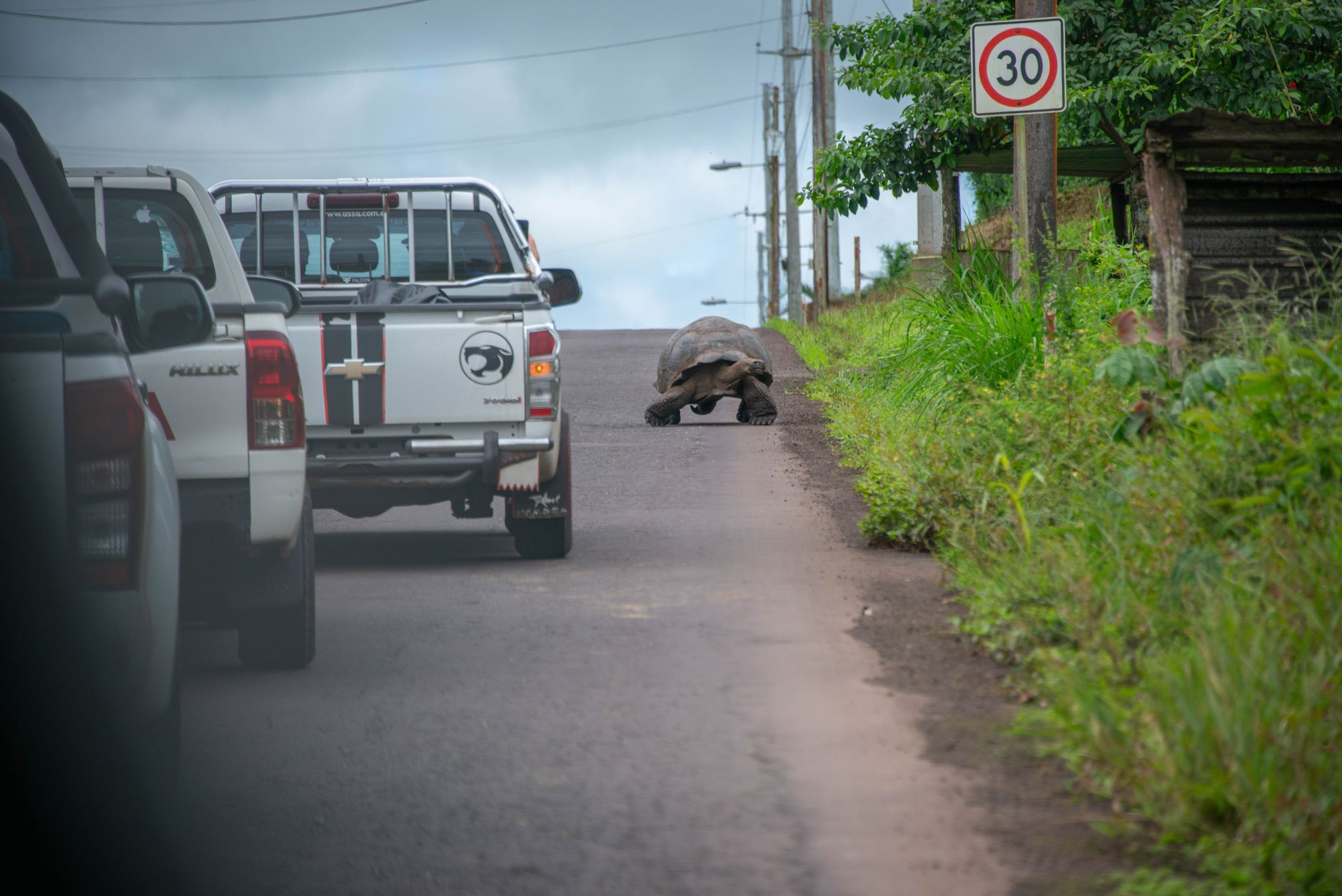
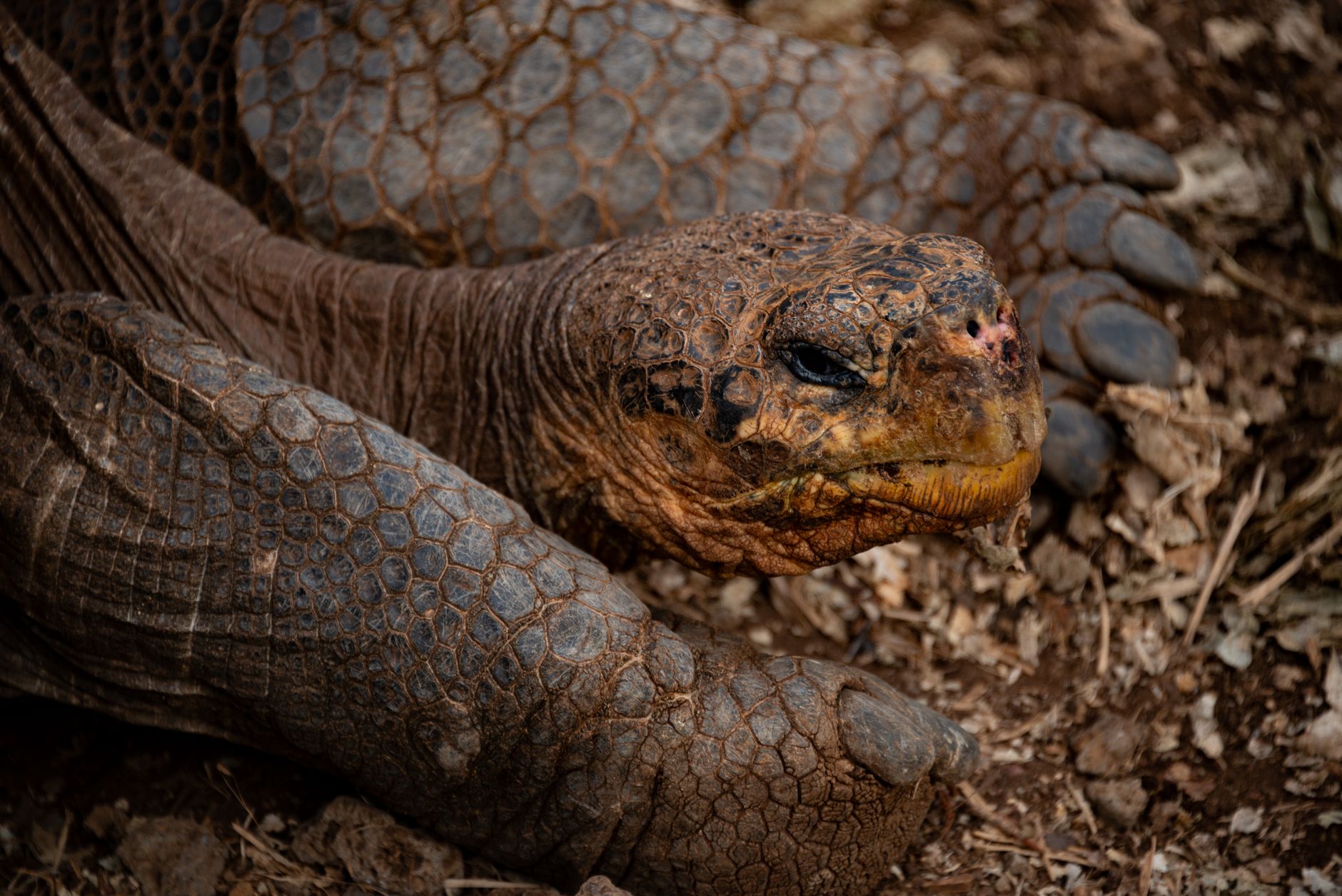
We spent our second morning inland, far from the boat, in the cool, green highlands around Santa Rosa. The El Chato Tortoise Reserve is where Santa Cruz's giant tortoises, Chelonoidis porteri, roam freely among mud wallows rather than behind any fence. We walked a flat, well-marked loop for about 40 minutes, grandparents included, stopping every few steps as another dome-shelled tortoise, some easily a meter long, crossed the path ahead of us.
Afterward we detoured to Los Gemelos, two enormous sinkholes formed when the roof of an underground lava chamber collapsed. The short walk through Scalesia forest, maybe 25 minutes round trip, is where we spotted our first vermilion flycatcher, a flash of red that had the whole group stopping mid-sentence.
This is the day I'd build in slack for. The highland roads are unpaved in patches and the reserve paths have soft, muddy stretches even in the drier spring months, so a stroller does not work here; a soft structured carrier did the job for our niece on the days she tired out.
Blue-Footed Boobies and Nesting Frigatebirds on North Seymour
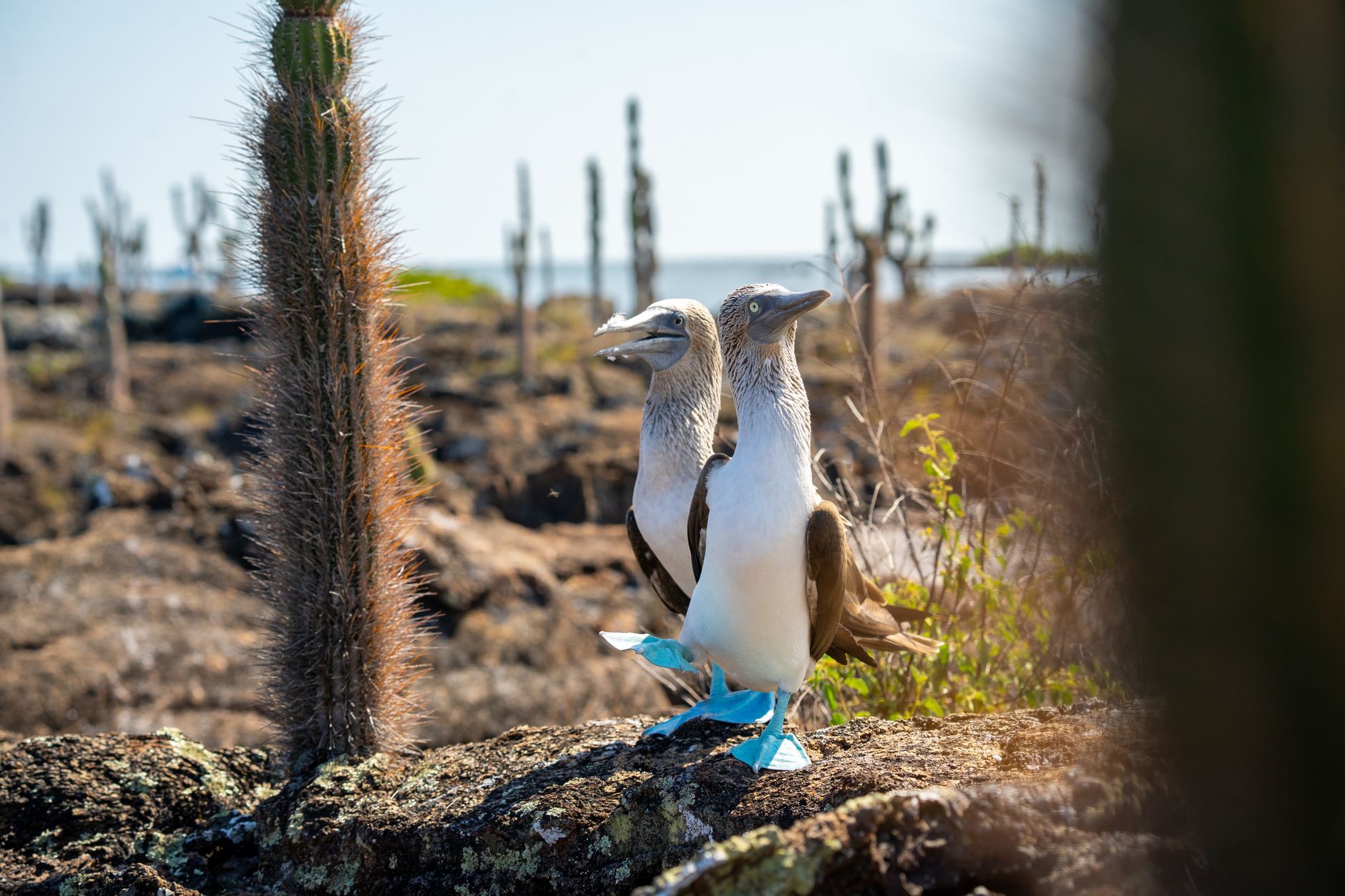
North Seymour sits roughly 45 minutes by panga north of the Itabaca Channel, a flat, scrubby islet with no beach and no shade. Landings here are dry, onto a low rock shelf, and the loop trail runs about 2.5 kilometers, taking most families 90 minutes to two hours with stops.
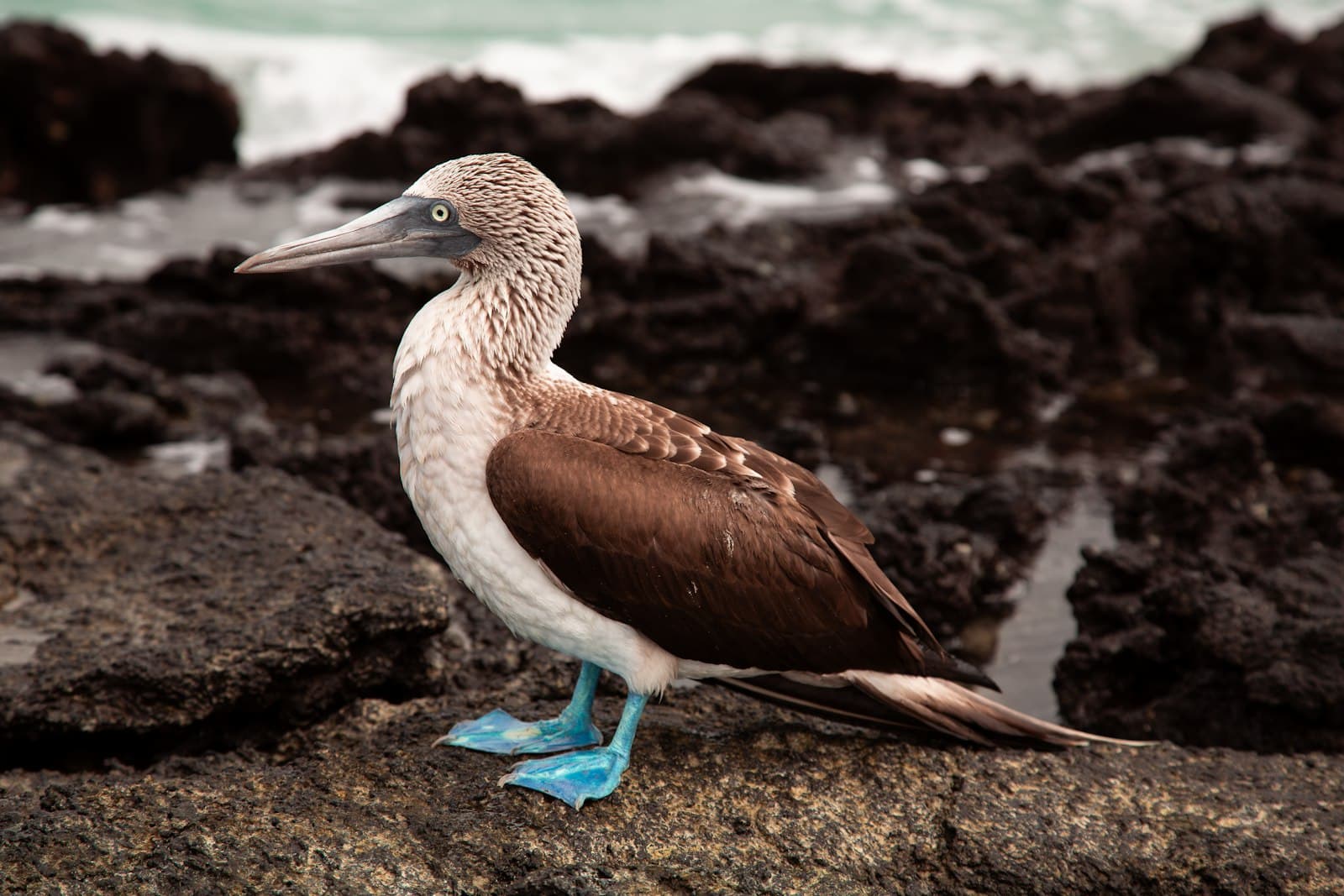
This is the island where blue-footed boobies nest right beside the trail, close enough that you lower your voice without being told to. Males were lifting one bright turquoise foot at a time in a courtship display that had our niece shrieking with laughter. Overhead, male magnificent frigatebirds inflated their red throat pouches like balloons, and land iguanas, some close to a meter long, sunned themselves on the path, seemingly unbothered by six humans stepping carefully around them.
There's no shade and no bathroom on North Seymour, so this was our water-bottle-and-sun-hat day. The crossing out can have a noticeable swell even in the calmer spring season, and this was the one leg where my mother-in-law reached for a ginger chew.
Sea Lions, a Toddler's First Snorkel, and Tortuga Bay
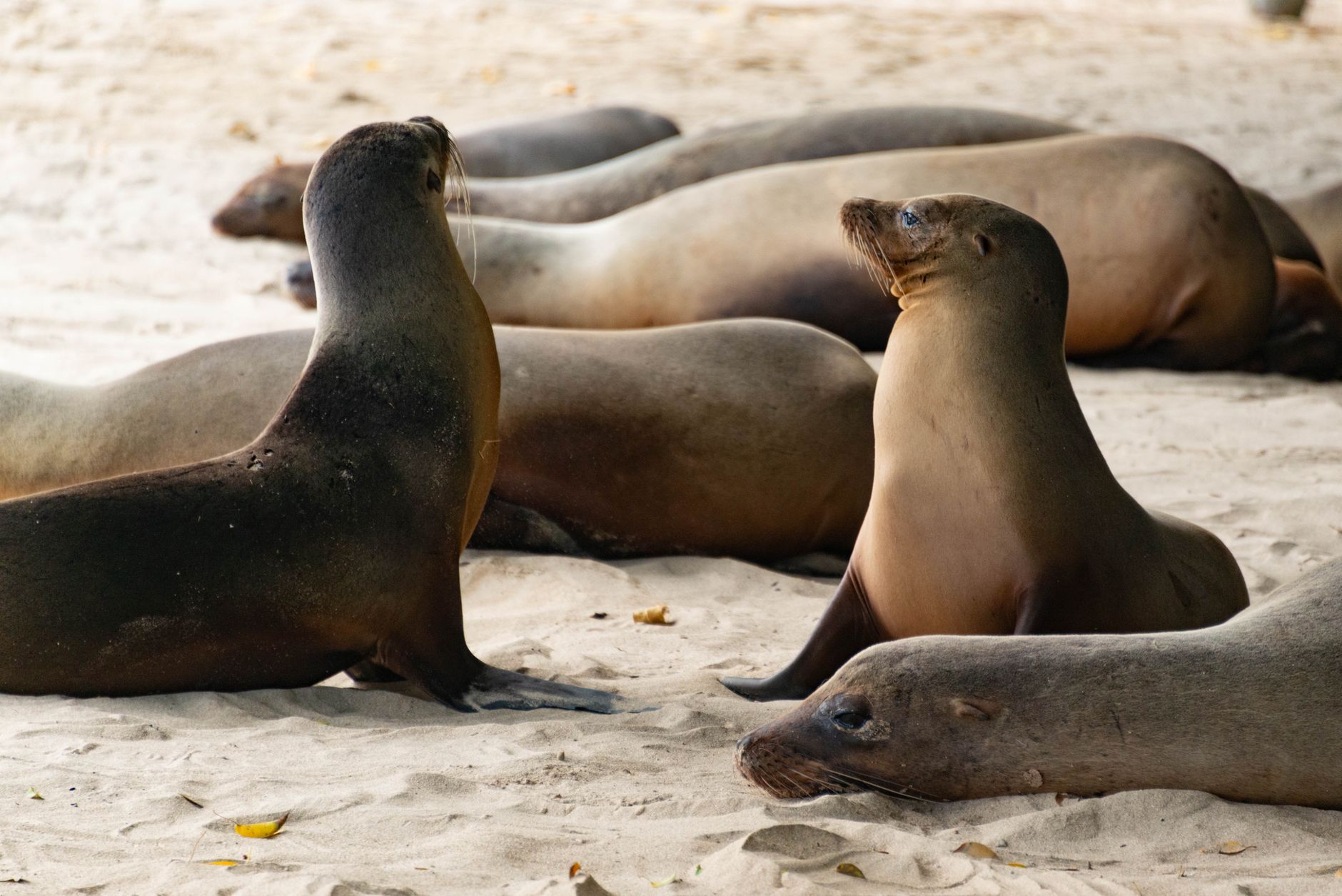
Our last full day split into a snorkel outing from the panga near Las Bachas beach on Santa Cruz's north shore, and an afternoon walk to Tortuga Bay, back near Puerto Ayora. The water off Las Bachas stays warm through the spring wet season, generally in the mid-70s Fahrenheit, which made it genuinely swimmable for the kids, not just tolerable.
Sea lion pups treated our group like playmates, circling and diving around the snorkelers while the adults floated with masks fogging from excited breathing. For the non-swimmers, the crew ran a glass-bottom panga alongside, so nobody was left on the boat.
Tortuga Bay is reached by a flat, paved 2.5-kilometer trail from Puerto Ayora, about 40 minutes each way on foot. Playa Brava, the ocean-facing stretch, has strong currents and is not for swimming; Playa Mansa, around the point, is a calm lagoon where our niece paddled alongside marine iguanas without a flicker of concern from either party.
Scenes from Santa Cruz and North Seymour
Cordelie travel advisors
Go with someone who knows
The right suite, the right season, the reservations that never appear online — your Cordelie advisor knows them, and holds them for you.
Plan with a Cordelie advisorFree to ask. Cordelie Travel Services · IATA/ARC 06649064
Blue Feet, Red Throats, and a Four-Year-Old's First Snorkel
The moment I'd replay first is the smallest one: our niece, mid-walk on North Seymour, crouching to eye level with a blue-footed booby chick and whispering, as if the bird might answer back. Nobody prompted that. The wildlife here doesn't need staging, and kids seem to understand that faster than adults do.
The second was watching my father-in-law, seventy-four and skeptical of the whole trip beforehand, get down on lava rock to photograph a sea lion pup at its own level. He'd packed hiking poles and a knee brace for a trip he expected to be mostly standing and looking. Instead he spent four days low to the ground, laughing.
What surprised us most was how little the boat itself asked of the kids. Each day had one longer excursion and one shorter, swimmable one, and the crew on the Santa Cruz II read the group well, slowing the pace on highland walks and keeping the panga rides short and dry when the littlest member of our group had reached her limit. Nobody pretended the trip was effortless. It was simply well paced for people who tire at different rates.
Ceviche by the Dock and Highland Coffee After the Tortoises
Puerto Ayora's main strip, Avenida Charles Darwin, is where we ate on our one free evening before boarding. La Garrapata, a few blocks up from the pier, does a ceviche de camarón that the grandparents still mention, bright with lime and tossed with popcorn on the side in the local style. Around the corner, the fish market at the end of the pier is less a restaurant than a daily spectacle, pelicans and sea lions crowding the fishmongers' tables for scraps while locals haggle over the day's catch.
For something sweeter, Rock Café, on the same main street, became our niece's non-negotiable stop; it's an unglamorous ice cream counter that happens to be exactly what a four-year-old wants after a long walk. Up in the highlands, a small café near the reserve entrances serves strong Ecuadorian coffee and fresh passionfruit juice, worth the short stop before or after the tortoise walk.
Onboard, meals on the Santa Cruz II run buffet-style for lunch and plated for dinner, with a kids' menu available on request, mostly grilled fish, rice, and fresh tropical fruit. It's not destination dining, and nobody expects it to be. The food exists to refuel you for the next landing, and it does that job well.
A multigenerational Galápagos trip lives or dies on cabin configuration, excursion pacing, and which vessel actually suits a four-year-old and a seventy-year-old traveling together. A Cordelie advisor can secure connecting family staterooms on the right size of ship, build in rest days around the highland walks, and pair your Santa Cruz and North Seymour days with a few nights at a highland property like Royal Palm Galapagos beforehand, so jet lag and altitude don't collide with your first tortoise encounter.
They can also time your departure against the breeding and nesting calendars for the species your family most wants to see, something that shifts year to year and is nearly impossible to track down independently from outside Ecuador.
Is a Santa Cruz and North Seymour Family Trip Right for You?
An outstanding, genuinely workable multigenerational trip, provided you choose a stable, mid-sized vessel and build slack into the highland and seabird-island days.
This itinerary suits families spanning a wide age range who want close wildlife encounters without technical hiking or long open-water crossings. It is best for travelers willing to accept early starts, no air conditioning on some land excursions, and a few hours each day without shade or bathrooms.
It is less suited to families who need stroller access everywhere or who are not willing to budget for seasickness remedies and sun protection in advance. For everyone else, four days between Santa Cruz's highlands and North Seymour's seabird cliffs delivers wildlife encounters no zoo or safari can match, at a pace that even a four-year-old and a seventy-four-year-old could keep.
Last checked for accuracy: . How we check

Priya Raman has spent eleven years testing whether a destination works with a four-year-old, a teenager and a grandparent in the same party. She writes the version of the guide that accounts for nap times and still gets you to the good stuff, and travels from Toronto with a carry-on she can pack in nine minutes.