
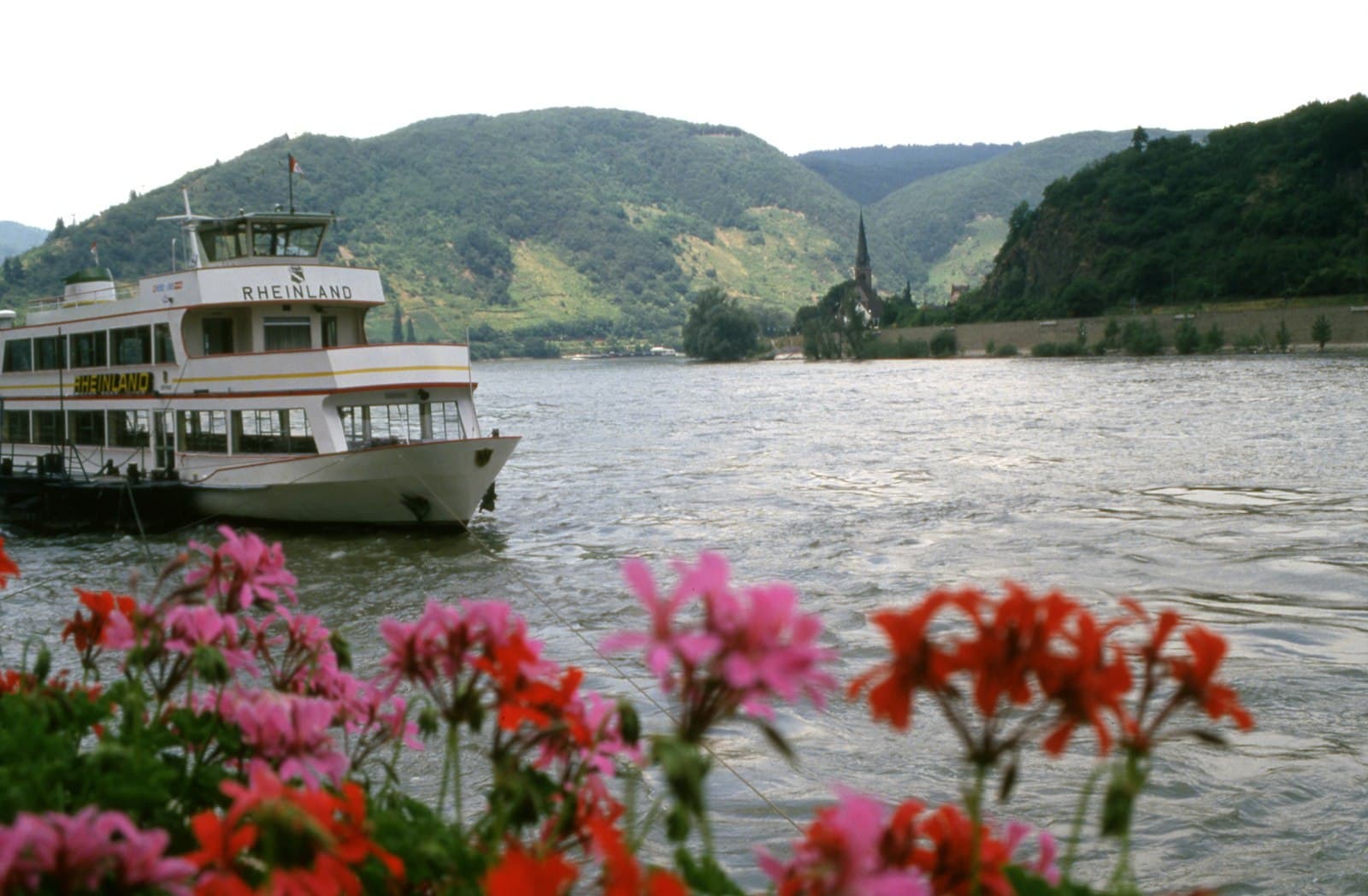
Castle-Hopping the Rhine Gorge: A River Journey Through Medieval Germany

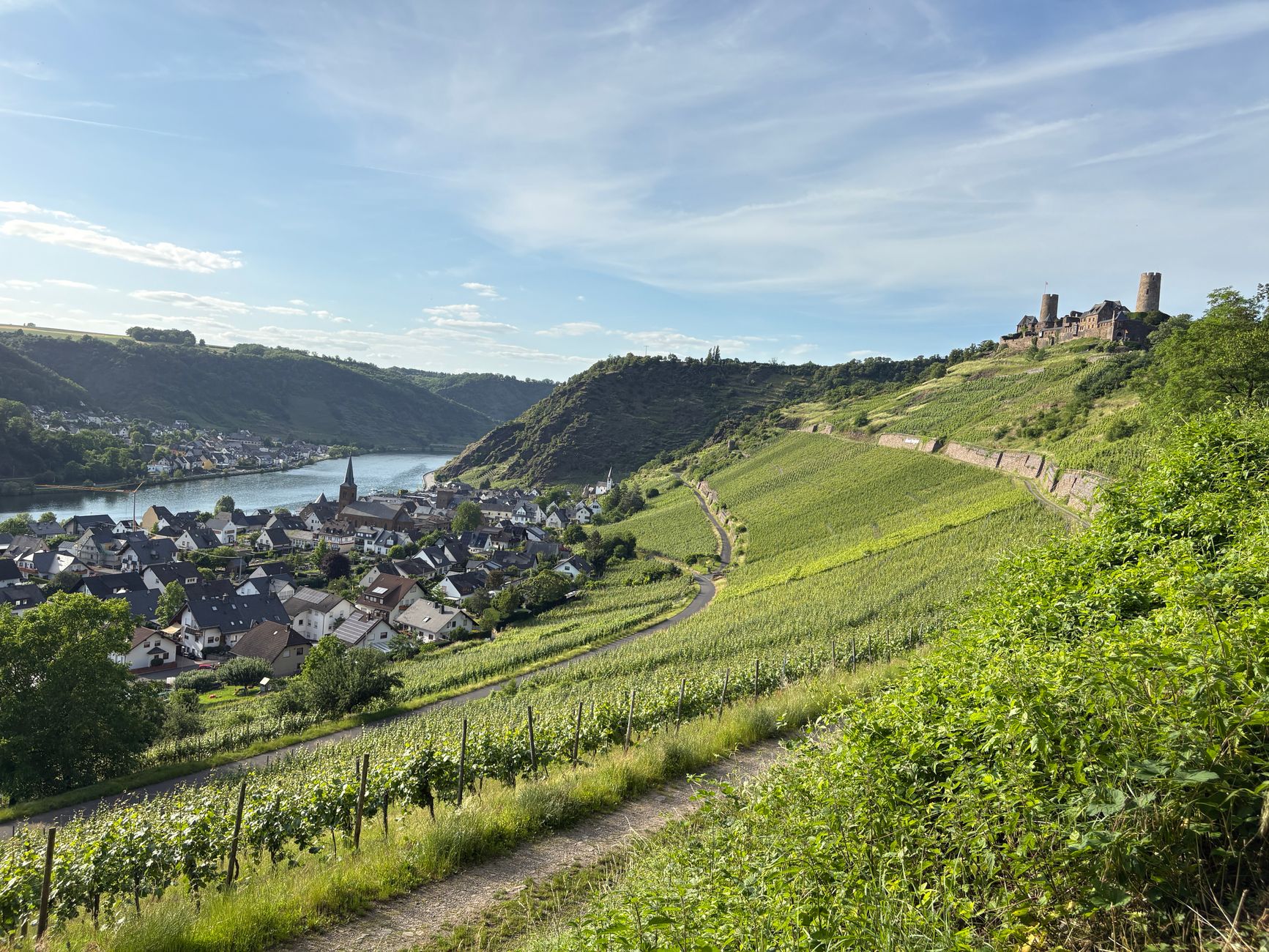
Where the Rhine Narrows and the Castles Begin
I picked up the rental car in Koblenz on a cool April morning, the kind where mist still clung to the confluence of the Rhine and Mosel at Deutsches Eck. Within twenty minutes of leaving the city, the valley had already closed in around me, slate cliffs rising on both banks and vineyard rows just starting to green along the terraces. This is the Mittelrhein, the stretch between Koblenz and Bingen that UNESCO listed as a World Heritage cultural landscape in 2002, and it does not ease you into its drama. The first castle appeared before I had finished my coffee.
“For sixty-five kilometers the river never widens enough to let you forget the castles are watching. There is one, or its ruin, almost every time the road bends.”
Four Days, One River, a Dozen Fortresses Between Koblenz and Bingen
Koblenz to Braubach: The Castle That Was Never Destroyed
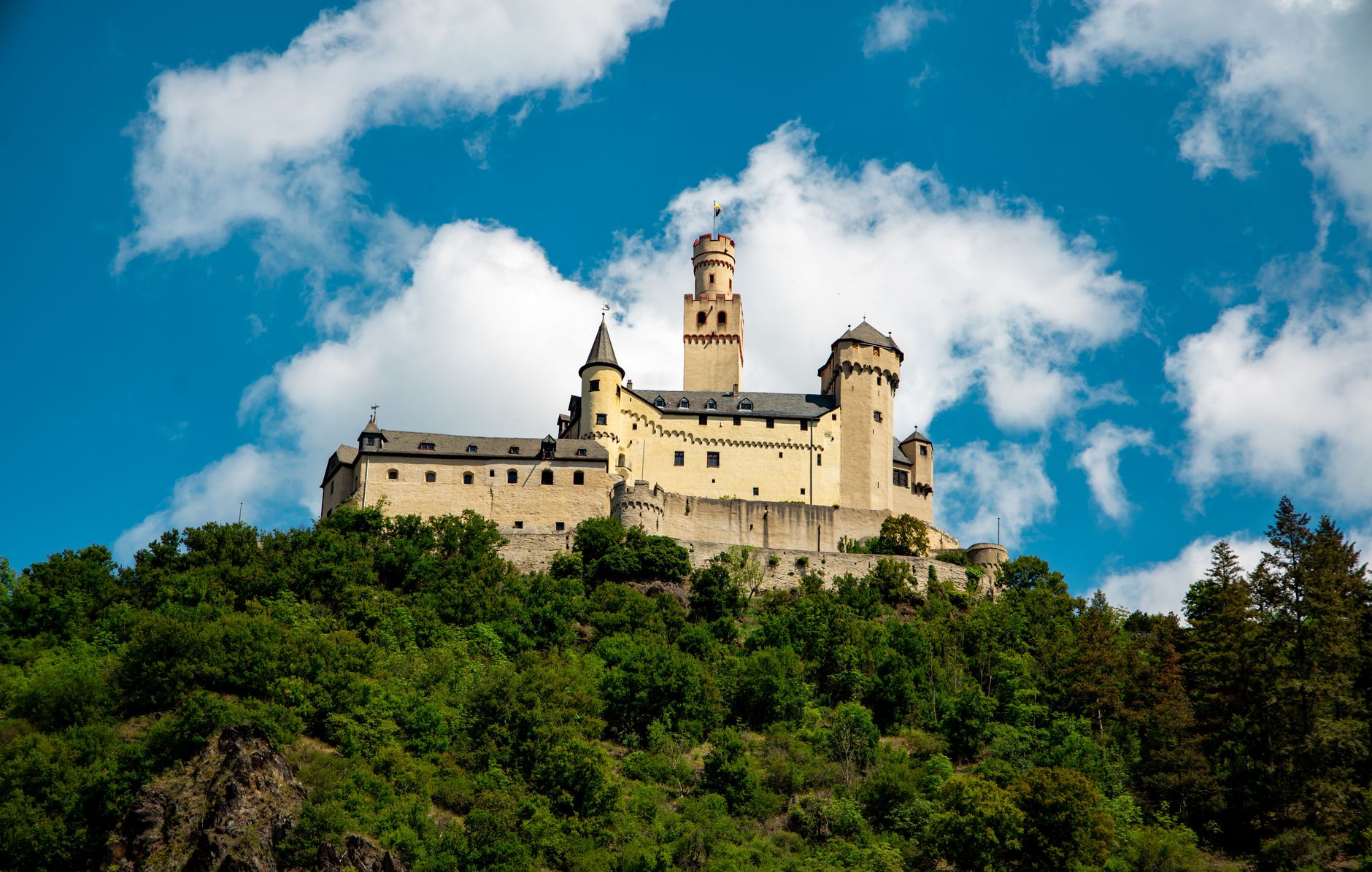
I started at the Deutsches Eck, the spit of land where the Mosel meets the Rhine, before driving the B42 south along the river's right bank. The road hugs the water closely enough that you can watch barges pass within a stone's throw. Fifteen kilometers on, above the half-timbered town of Braubach, Marksburg Castle comes into view on its wooded hill, and it looks the part because it is the part: this is the only fortress in the gorge that was never destroyed or rebuilt from ruin.
Marksburg's keep dates to the 12th century, with later Gothic and Renaissance additions layered on by successive owners, including the Landgraves of Hesse. You can only see the interior on a guided tour, roughly 45 minutes, departing every 30 to 60 minutes through the day; entry runs about EUR 9-10 for adults as of 2025, with the castle generally open 10:00-17:00 in the warmer months and shorter hours in winter. The herb garden and the gaunt figure of the knight's armor hall stayed with me longer than I expected.
Boppard's Vineyard Bend to the Lorelei's Narrow Water
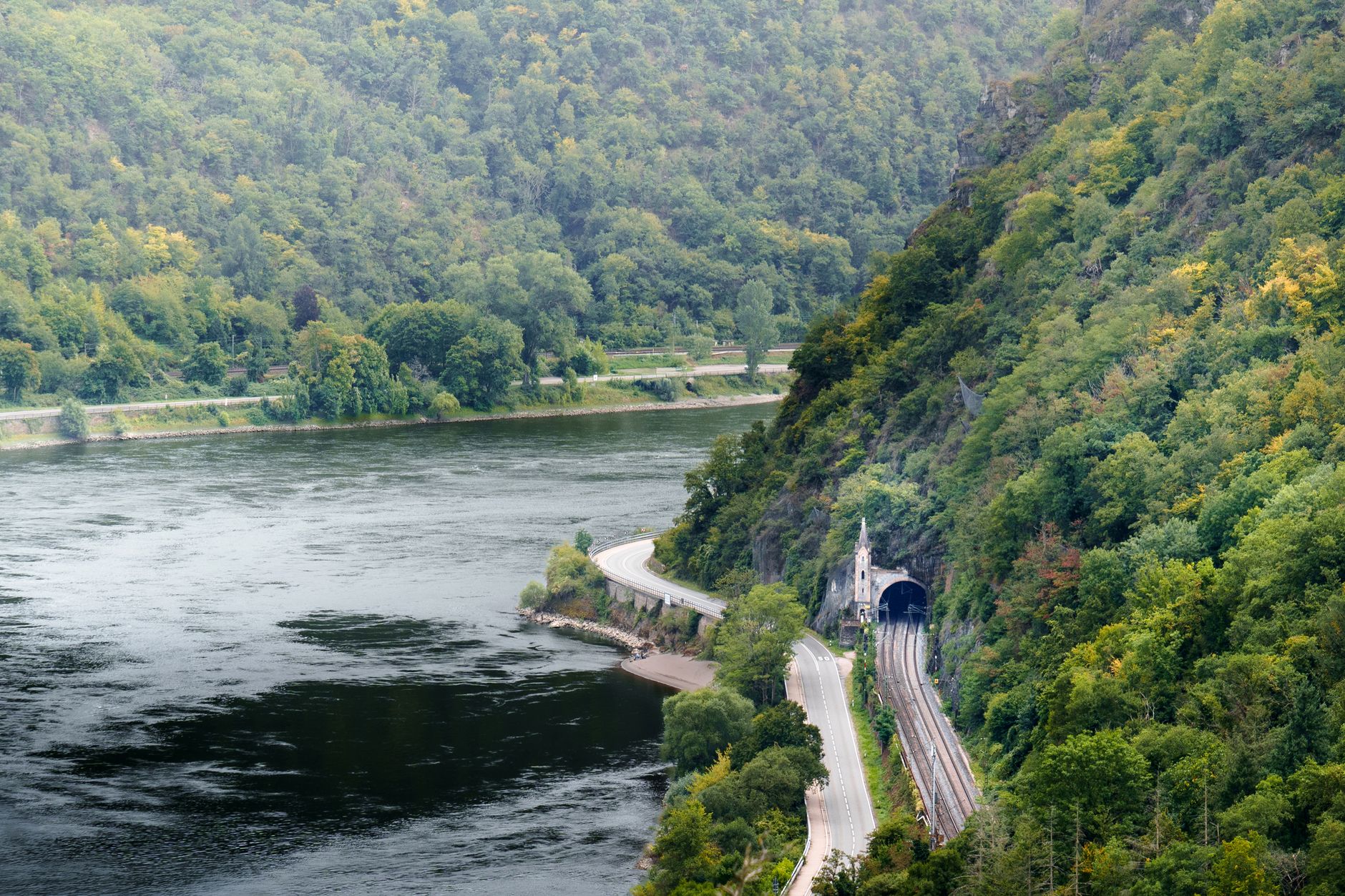
South of Braubach the river performs the Bopparder Hamm, a series of sharp bends around the largest contiguous vineyard on the Rhine. I stopped in Boppard itself, a town with Roman roots, for coffee at a terrace café on the Rheinallee before continuing toward St. Goar. There, the ruins of Rheinfels Castle sprawl across a hilltop above the town, the largest fortress ruin on the Rhine, begun in 1245 by Count Diether V of Katzenelnbogen. Entry costs roughly EUR 6-7, and the siege tunnels beneath the walls are worth a flashlight if you brought one.
A short drive on, near St. Goarshausen, the river squeezes to its narrowest and deepest point beneath the Lorelei, a 132-meter slate outcrop. This is where the legend of the siren who lured boatmen onto the rocks is set, and standing at the viewing platform above, watching the current actually quicken below, the story stopped feeling like folklore and started feeling like a sensible warning to pilots.
Bacharach's Walled Lanes and the Toll Castle Stranded Midriver
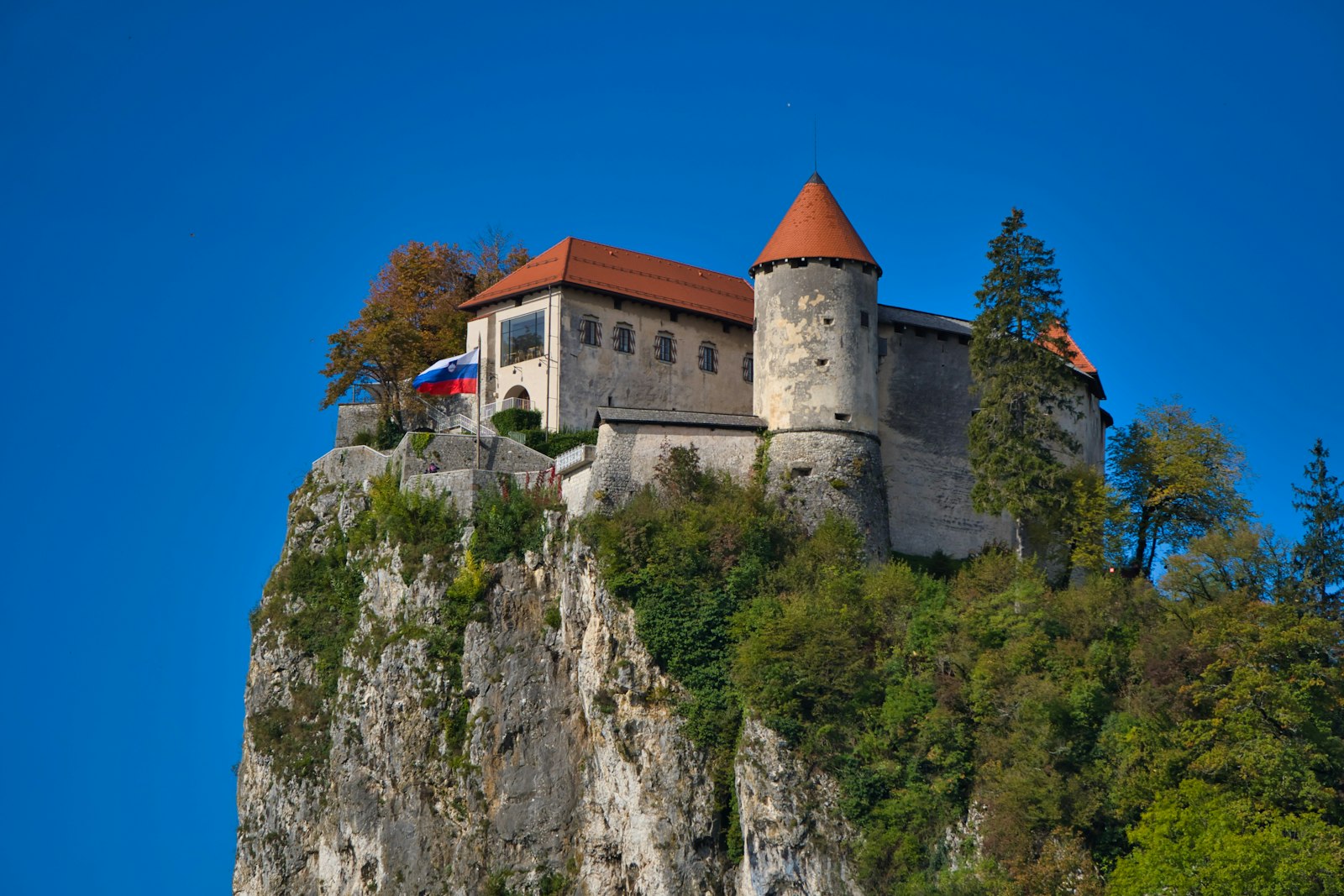
Bacharach is the kind of town that makes you park the car and just walk. Its medieval walls and watchtowers still ring the old quarter, and Burg Stahleck, a 12th-century castle on the hill above, now operates as a youth hostel with one of the best free views in the gorge. I wandered the Oberstrasse past timber-framed houses leaning at angles that would alarm a surveyor, then stopped for a glass of Riesling at a Weinstube near the Markt.
A short drive south brought me to Kaub, where Pfalzgrafenstein Castle sits on its own island in the middle of the Rhine, a toll castle built in stages from the 14th century onward. You reach it only by a small ferry from the Kaub riverbank, round trip roughly EUR 4-5 including the small entry fee; boats run frequently in season but check the posted timetable, since they stop for the day by early evening.
Oberwesel's Towers to the Niederwald Above Rüdesheim
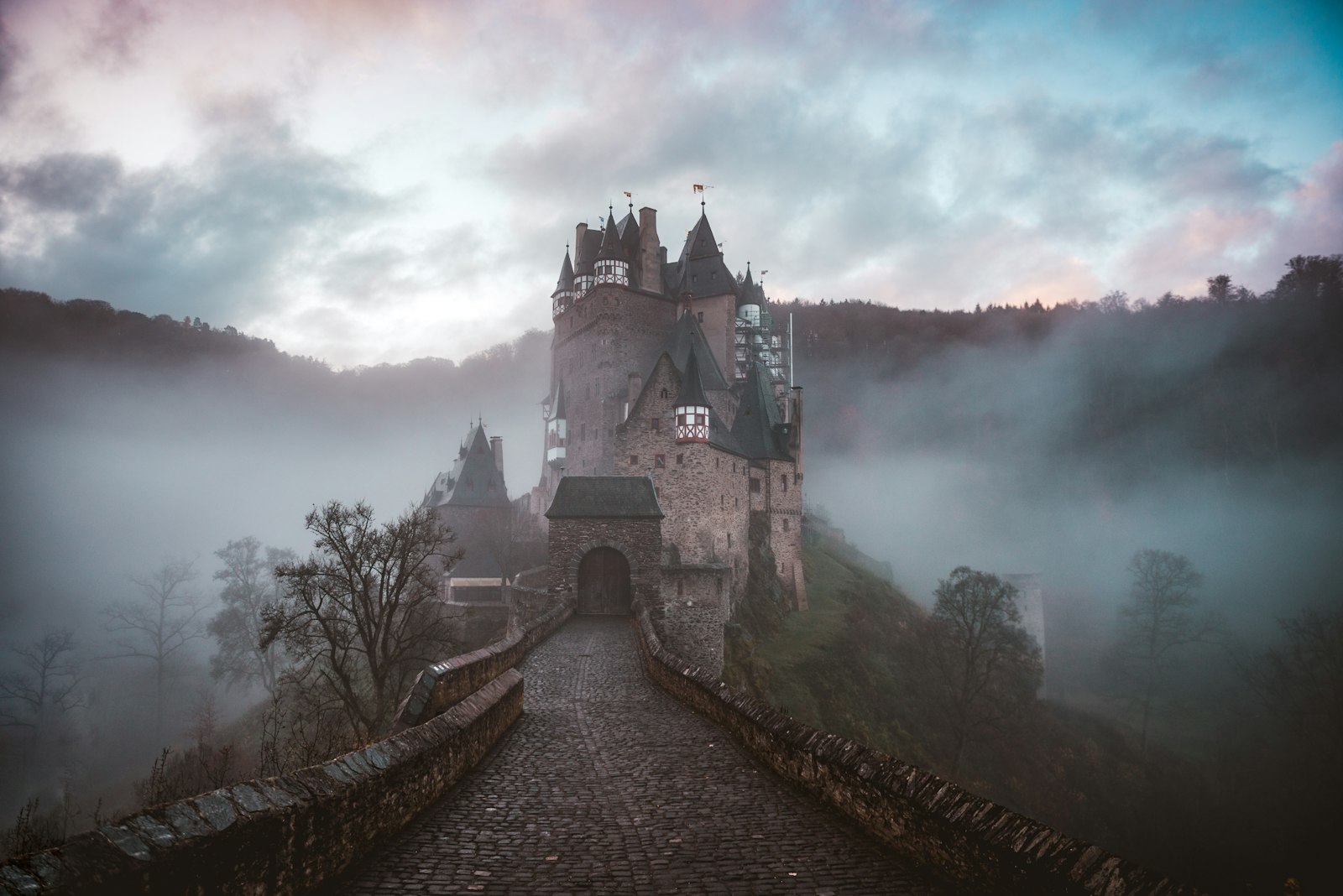
The last stretch toward Bingen is thick with castles even by the gorge's own standards. Oberwesel's town walls, still studded with 16 surviving medieval towers, sit below Schönburg Castle, now a hotel. Further south, near Trechtingshausen, three more hilltop castles, Rheinstein, Reichenstein and Sooneck, were rebuilt in the 19th-century Romantic revival and are visible from the road in close succession, almost close enough to photograph in a single frame.
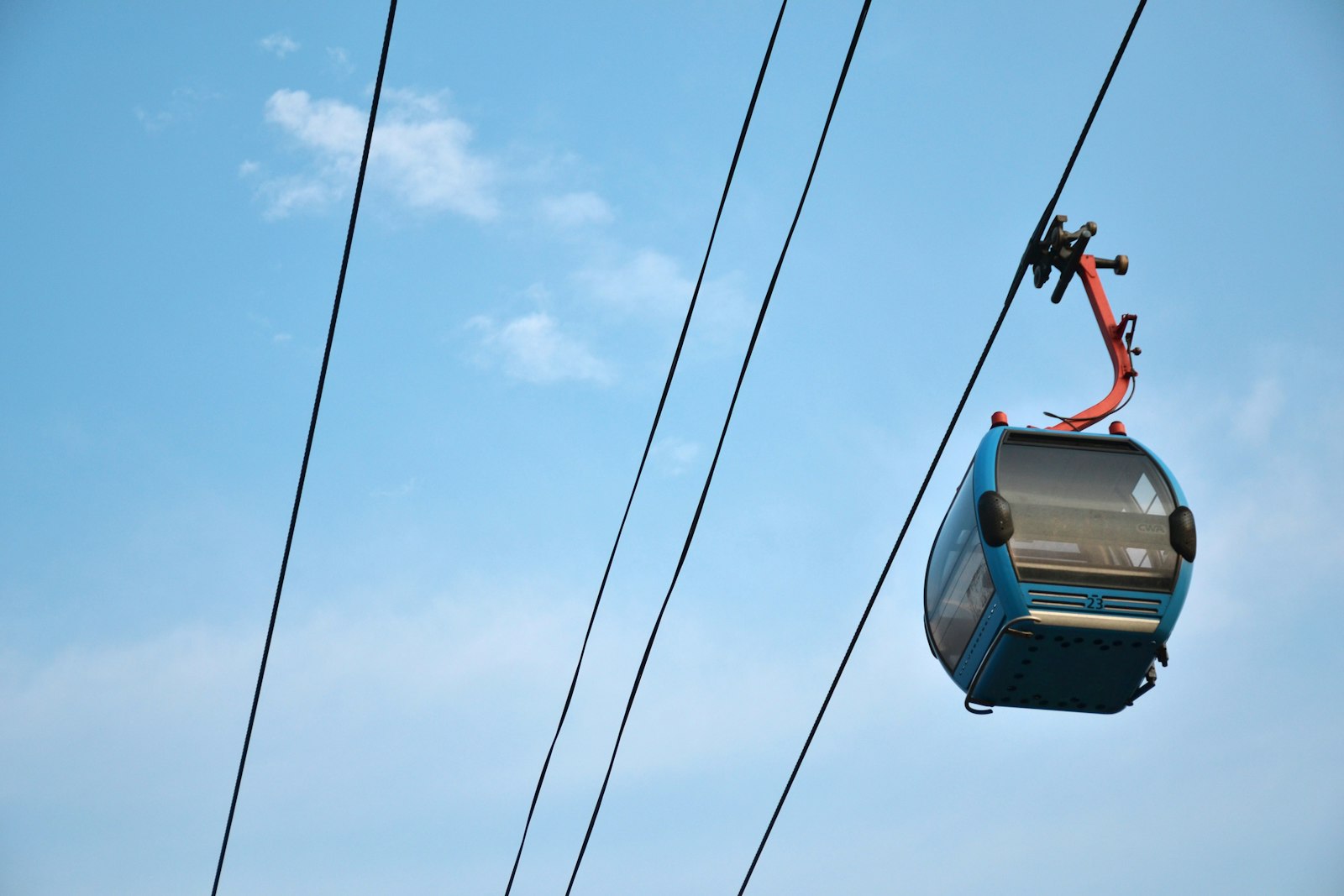
I crossed to Rüdesheim am Rhein for the afternoon, riding the Seilbahn cable car (about EUR 11-13 round trip, roughly 10 minutes each way) up to the Niederwalddenkmal, a monument completed in 1883. From the terrace there, the whole gorge opens out below, and you can finally see where it ends: at Bingen, where the Rhine meets the Nahe and the valley loosens its grip for the first time in four days.
Scenes from Koblenz to Bingen
Cordelie travel advisors
Go with someone who knows
The right suite, the right season, the reservations that never appear online — your Cordelie advisor knows them, and holds them for you.
Plan with a Cordelie advisorFree to ask. Cordelie Travel Services · IATA/ARC 06649064
The Three Moments the Gorge Earned Its Reputation
The density is what no photograph prepares you for. Between Braubach and Bingen you pass something like a dozen castles, ruins, or fortified towns, often with two or three visible from a single pullout. Standing on the ferry dock below Pfalzgrafenstein, I could see Gutenfels Castle on the hillside above Kaub in one direction and the vineyard rows of the Bacharach valley in the other, the whole scene framed by slate cliffs that drop almost straight into the water.
The Lorelei stop surprised me most. I expected a tourist overlook and a gift shop, and got that, but I also got genuine quiet once the midday coach groups moved on, just the sound of the current working against the narrows below. Late afternoon, with low sun flattening against the rock face, is the best time to go if you can manage it; the car park off the B42 fills early on weekends in good weather.
And then there was the sheer luck of timing a visit to Pfalzgrafenstein with a near-empty afternoon ferry. Having that strange little island castle almost to myself, with barges still passing close enough to feel their wake against the mooring, is the kind of thing you remember longer than any single interior room.
Riesling, Slate Soil, and a Flammkuchen Worth the Detour
The Mittelrhein is a small wine region by German standards, but what it lacks in scale it makes up for in the drama of its vineyards, many of them worked on terraces too steep for machinery, with Riesling grown on the Rhine's famous blue-grey slate. I tasted my way through a flight at a Weinstube just off the Markt in Bacharach, a half-timbered house with a cellar that predates the building above it, and left with a bottle from a small Boppard producer I had never heard of and have not been able to find since outside Germany.
For food, the gorge towns run heavily to Flammkuchen, a thin, crisp Alsatian-style flatbread with crème fraîche, onion and bacon that pairs well with a crisp Riesling, and Handkäse mit Musik, a tangy marinated cheese plate that is more an acquired taste than a crowd-pleaser but worth trying once. In St. Goar, a straightforward riverside Gasthaus serving Rhine valley staples, schnitzel, Spätzle, local sausages, made for an easy lunch between castle visits. Portions run generous and prices modest by Western European standards, typically EUR 14-20 for a main course as of 2025.
Several of the gorge's most striking interiors, Rheinstein's furnished rooms, Schönburg's private chapel, Marksburg's armory, are easiest to see properly with a guide who knows which hour avoids the coach groups and which cellar door is worth asking to open.
A Cordelie advisor can arrange a private driver and guide for a day through the Mittelrhein, timed around the river light and the ferry schedule to Pfalzgrafenstein, with a reserved table at a Bacharach Weinstube to close the day. It is the version of this trip you plan once and remember for years.
Castle-Hopping the Rhine Gorge: The Verdict
An essential detour for anyone drawn to medieval Europe, best done slowly, by car or riverboat, over three to four days.
This is the trip for travelers who want history they can touch rather than history behind glass: siege tunnels, toll castles stranded on islands, vineyard terraces older than the countries farming them. Spring works especially well, with the vineyards budding green and the coach tours thinner than midsummer.
It suits a self-drive itinerary or a short river cruise equally well, and rewards anyone willing to get out of the car or off the boat at the smaller towns, Bacharach and Kaub above all, rather than racing straight between the famous names.
Last checked for accuracy: . How we check

Sarah Chen has covered Asia for twelve years, first as a wire reporter in Jakarta and now from Singapore, where she keeps a standing list of the region's most misunderstood destinations. She writes about the distance between what a place is famous for and what it is actually like to spend a week in — and is happiest on an overnight train with a bad seat and a good view.