
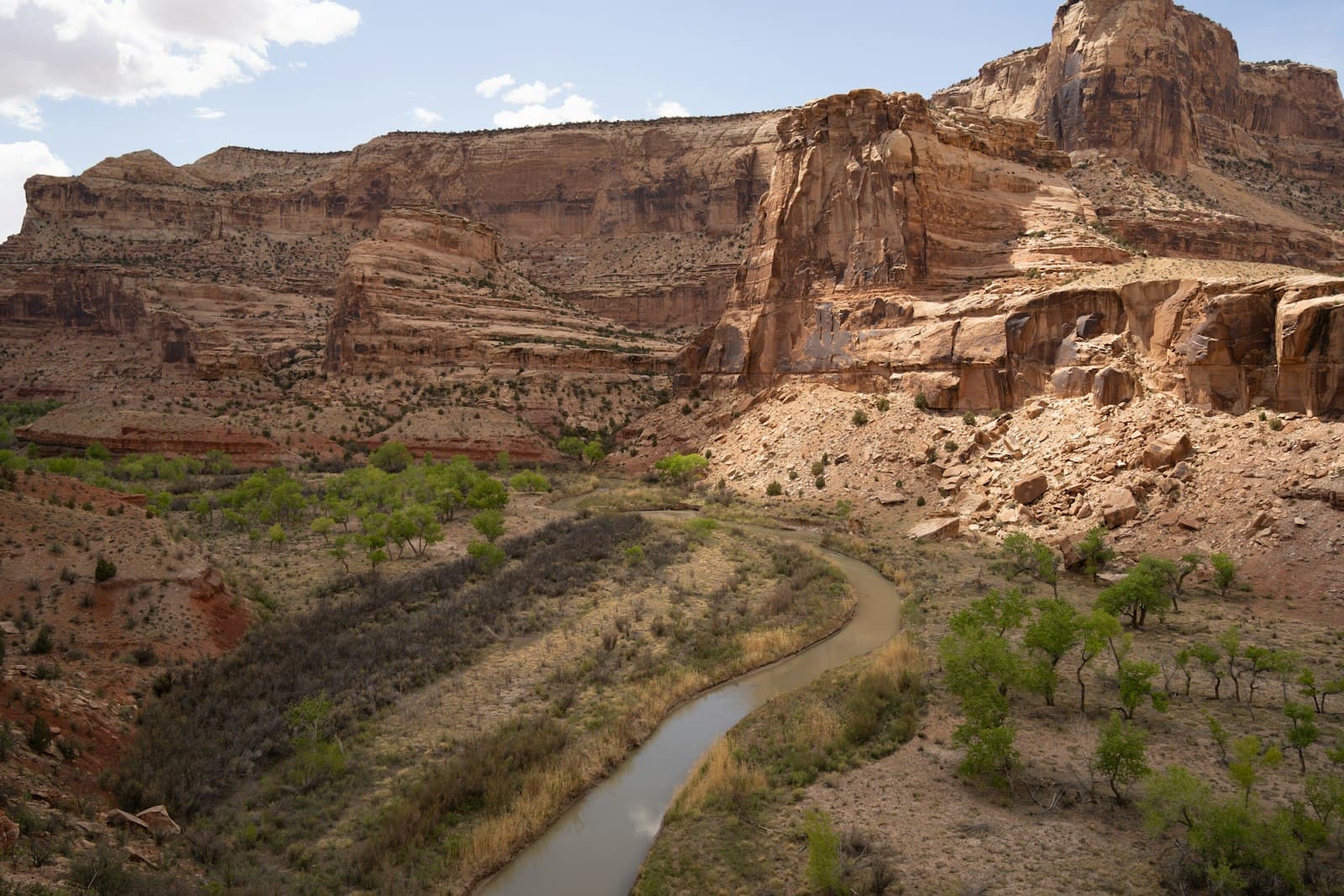
Beyond Zion: The Best Canyoneering Routes in Utah's San Rafael Swell

Why the San Rafael Swell Asks More of You Than Zion Ever Did
There is no permit lottery here, no shuttle bus, and no ranger checking your rope bag at a trailhead kiosk. The San Rafael Swell, a 75-mile-wide dome of folded sandstone in south-central Utah between Green River and Salina, is BLM land run on the honor system, and that changes everything about how you plan a canyon day. Cell service disappears past the I-70 exit ramps, the dirt access roads turn to soup after rain, and April's snowmelt keeps some canyons running cold and fast well into the season. This list ranks the Swell's defining canyoneering routes by technical demand, remoteness, and how badly the weather can wreck your plans, so you know exactly what you are signing up for before you rig the first rappel.
Every route on this list was judged on four things: technical difficulty (rappel count and maximum drop height), remoteness and road access, exposure to cold water and flash-flood risk, and the honesty of what a spring trip actually demands versus what guidebooks imply.
Routes that require wetsuits, multi-vehicle shuttles, or overnight commitment rank above scenic walk-through slots, even when the walk-through slots are more photogenic. This is a ranking for people carrying rope, not a ranking of Instagram frames.

The Ranked Routes: From Little Wild Horse's Easy Loop to the Black Box's Cold Swims
The eight routes below run the full range of the Swell's canyoneering, from a non-technical family scramble to a two-day committing descent that has turned back parties in high water. Read the road access notes as carefully as the rappel counts; a 2WD sedan will strand you on several of these approaches long before you reach a rope.
The Chute of Muddy Creek
The Swell's marquee technical canyon, and the reason serious canyoneers make the drive

This is the route that separates the Swell from every other beginner-friendly slot canyon in Utah. The Chute runs roughly 15 miles through Muddy Creek's inner gorge south of the main Swell, with several rappels up to 80-100 feet and long stretches of waist-to-chest wading between towering walls. Most parties do it as an overnight, camping mid-canyon, or push it as a very long single day starting before dawn from the trailhead near Tomsich Butte.
There's no permit required, just a self-register box at the trailhead, but you need a second vehicle staged at the Hidden Splendor takeout or a pre-arranged shuttle, since this is a one-way descent with no reasonable way back upstream. Spring runoff keeps the water moving fast and cold through April; most experienced groups wait until May, when flows drop and the wading turns manageable instead of dangerous.
The Black Box of the San Rafael River
The Swell's coldest, wettest, and least forgiving descent

The Black Box is two distinct narrows sections on the lower San Rafael River, reached via the Wedge Overlook and Buckhorn Draw dirt roads, roughly 20-25 miles of graded and then rough track from I-70 near the Ranch Exit. High-clearance is the minimum; 4WD is the sensible answer after any rain.
The canyon itself has eight to ten rappels and repeated swims through water that sits in the 45-55°F range even into June, so a wetsuit isn't optional gear here, it's the whole trip. Spring runoff typically keeps flows too high and cold to attempt safely until late May, and this is the one canyon on this list where checking the USGS gauge for the San Rafael River near Green River before you drive out is not a suggestion.
Ding and Dang Canyons
Two technical slots in one loop, and the best introduction to rappelling in the Swell

Ding and Dang sit off the same Wild Horse Road corridor as Little Wild Horse, but they demand real gear: six to ten rappels between the two canyons, none over 30 feet, threaded through narrow, twisting sandstone that stays shaded and cool most of the day.
You can link both into a five-mile loop, which is what most groups do, finishing in under a full day if you move efficiently between anchors. Snowmelt pools can linger cold and thigh-deep through April, so a lightweight wetsuit or drysuit top is worth the extra bag weight even when the forecast looks warm.
Crack Canyon
A quieter, sandier alternative near Goblin Valley for parties who want fewer people on rope

Crack Canyon runs off the Behind the Reef Road system near Goblin Valley State Park, about six miles of hiking and downclimbing through tight, sandy narrows with a handful of rappels topping out around 40 feet.
It draws far fewer groups than Wild Horse or Ding and Dang, partly because the drive in is slower and rougher, and partly because it lacks the loop convenience of its neighbors. That's precisely its appeal in spring, when the popular canyons fill their trailhead parking by mid-morning on clear weekends.
Bell Canyon
Little Wild Horse's technical cousin, and the better half of the classic loop

Most visitors do the Wild Horse and Bell loop as one non-technical hike, but Bell Canyon on its own has a genuinely narrow, twisting middle section that rewards taking it slow, with pour-offs that require careful downclimbing rather than a rope.
The full loop with Little Wild Horse runs about eight miles and gains only modest elevation, but the sandy wash sections eat time and energy, especially once the afternoon sun hits the open stretches. Start early; the trailhead lot off Goblin Valley Road fills fast on spring weekends and there's no overflow parking to speak of.
Little Wild Horse Canyon
The Swell's easiest, most crowded, and still worthwhile entry point

This is the canyon that gets photographed for every Utah roadtrip listicle, and it earns the attention: a walk-through slot with narrow, sculpted walls and zero technical rappelling required, making it the one route here you can do in sneakers with kids in tow.
The trade-off is company. On a clear spring Saturday the small dirt lot off Goblin Valley Road fills before mid-morning and stays that way until late afternoon. Come on a weekday, or start at first light, if solitude matters more to you than convenience.
Cordelie travel advisors
Planning San Rafael Swell? Go with someone who knows
The right suite, the right season, the reservations that never appear online — your Cordelie advisor knows them, and holds them for you.
Plan with a Cordelie advisorFree to ask. Cordelie Travel Services · IATA/ARC 06649064
Ram's Horn Canyon
A lightly trafficked technical slot in the northern Swell, near Buckhorn Draw

Ram's Horn sits off the network of roads near Buckhorn Wash in the Swell's northern reaches, with five to six rappels including one drop that approaches 80 feet. It sees a fraction of the traffic Wild Horse and Ding/Dang get, largely because the approach roads are rougher and the canyon is less documented online.
That obscurity is the draw for canyoneers who've already done the popular routes. Bring redundant rope-pull backup gear; anchors here get less maintenance than the busier canyons, and a stuck rope 25 miles from pavement is a genuinely bad afternoon.
Eardley Canyon
A short, technical slot near the Buckhorn Wash pictographs, best paired with a cultural stop

Eardley is compact, roughly four miles with around eight rappels packed into a tight canyon near Buckhorn Wash, home to one of the Swell's best-preserved Barrier Canyon-style pictograph panels. Most groups climb, rope, and swim their way through in half a day, then walk the short interpretive trail to the rock art on the way out.
Spring pools here can sit cold and deeper than they look after a wet winter, so test depth before committing weight to a jump or slide. It's a smaller-scale trip than the Chute or the Black Box, but a satisfying one if you're building a multi-canyon spring itinerary and want variety in a single day.
Three More Swell Canyons Worth the Detour If Time Allows
Fence Canyon, tucked near the Wild Horse Road corridor, offers a short technical warm-up with three or four rappels under 30 feet, ideal for a group testing gear before committing to Ding and Dang the same day. Baptist Draw connects into the Wild Horse system as a non-technical approach hike with striking domed rock formations, worth walking even without rope in hand. Cistern Canyon, smaller and less visited than nearly everything on this list, rewards groups willing to add an extra hour of rough driving for a slot that sees almost no other footprints in spring.
Spring conditions in the San Rafael Swell change week to week: a warm March means the Black Box opens early, a wet April means the Chute of Muddy Creek stays closed for weeks longer than the calendar suggests. Getting the sequencing right, and lining up permits, shuttle vehicles, and guide bookings around that moving window, is exactly the kind of planning a Cordelie advisor does well.
A Cordelie advisor can secure you a private guide for the technical descents, arrange the shuttle logistics the Chute and Black Box both require, and build the rest of your Utah trip, from a night in Green River to a stop at Goblin Valley, around the days the canyons are actually running clear. Start the conversation at https://cordelie.com/contact.
Top Pick: The Chute of Muddy Creek
The Swell's most complete canyoneering experience, and the route worth building a whole trip around.
Nothing else on this list combines scale, technical demand, and true wilderness remoteness the way the Chute does. Fifteen miles of narrows, rappels up to 100 feet, and a full day or overnight commitment make it a serious undertaking, not a scenic detour.
Wait for late May or June once spring runoff drops, stage a shuttle vehicle at Hidden Splendor before you start, and treat the self-register box at the trailhead as your only official checkpoint. Do it right and you'll understand immediately why canyoneers drive past Zion to get here.
Last checked for accuracy: . How we check

Isaac Reid has spent fourteen years on ships and on foot in the places weather still decides. He sailed his first Drake Passage as an expedition assistant and has since made the crossing more than thirty times, between seasons trekking in Nepal and Patagonia. He writes about what these trips actually ask of a traveller — the days that get cancelled, the kit that matters, the difference between a landing and a cruise-by — and thinks the honest version sells them better than the brochure does.