
Beyond the Pyramids: A Historian's Guide to Giza and Saqqara

Where the Pyramid Age Was Born, and Where It Peaked
Most visitors fly into Cairo, race to Giza for a single, sun-blasted hour with the Great Pyramid, and leave believing they have seen ancient Egypt. They have seen its climax, not its story. Fifteen kilometers south, at Saqqara, lie the mastabas and the Step Pyramid of Djoser that made Giza possible in the first place. Walk both sites in the right order and you watch a civilization teach itself, over roughly five centuries, how to build in stone rather than mud brick, how to carve a face rather than a symbol, and how to raise a mountain that would still be standing four and a half thousand years later.
This is a guide for the reader who wants the sequence, not just the postcard: Saqqara's tentative first steps around 2670 BCE, then Giza's confident, almost reckless ambition a century and a half on. Along the way there are quieter tombs with better reliefs than anything at the Great Pyramid, a solar boat with a stranger afterlife than you'd expect, and a handful of scheduling tricks that keep you ahead of the tour-bus tide.
Giza & Saqqara: Quick Facts
Spring on the Plateau: Warm Days, Thin Haze, and the Gap Before the Heat
March and April give you the sweet spot between winter's chill mornings and the punishing dry heat that arrives by late May. Expect daytime highs around 26-32°C (79-90°F) with low humidity, cool enough by 8am to walk the plateau in comfort and warm enough by noon that you'll be glad of shade at the Mena House terrace or the palm grove near the Saqqara rest house. Dust haze, the khamsin wind that occasionally sweeps in from the Sahara in March, can soften the horizon and mute photographs for a day or two, so build a spare afternoon into your plan if photography matters to you.
Spring also coincides with heavier cruise and school-group traffic than deep summer, so the crowd math still favors an early start. Gates at Giza typically open around 8am and close by 5pm in these months; Saqqara keeps similar hours, roughly 8am to 4-5pm. Arrive at either site within the first thirty minutes of opening, or return after 3pm when the day-trip buses have peeled off toward the airport, and you will often have entire tomb chapels to yourself.
Cordelie travel advisors
Go with someone who knows
The right suite, the right season, the reservations that never appear online — your Cordelie advisor knows them, and holds them for you.
Plan with a Cordelie advisorFree to ask. Cordelie Travel Services · IATA/ARC 06649064
From Imhotep's First Pyramid to Khufu's Great Pyramid
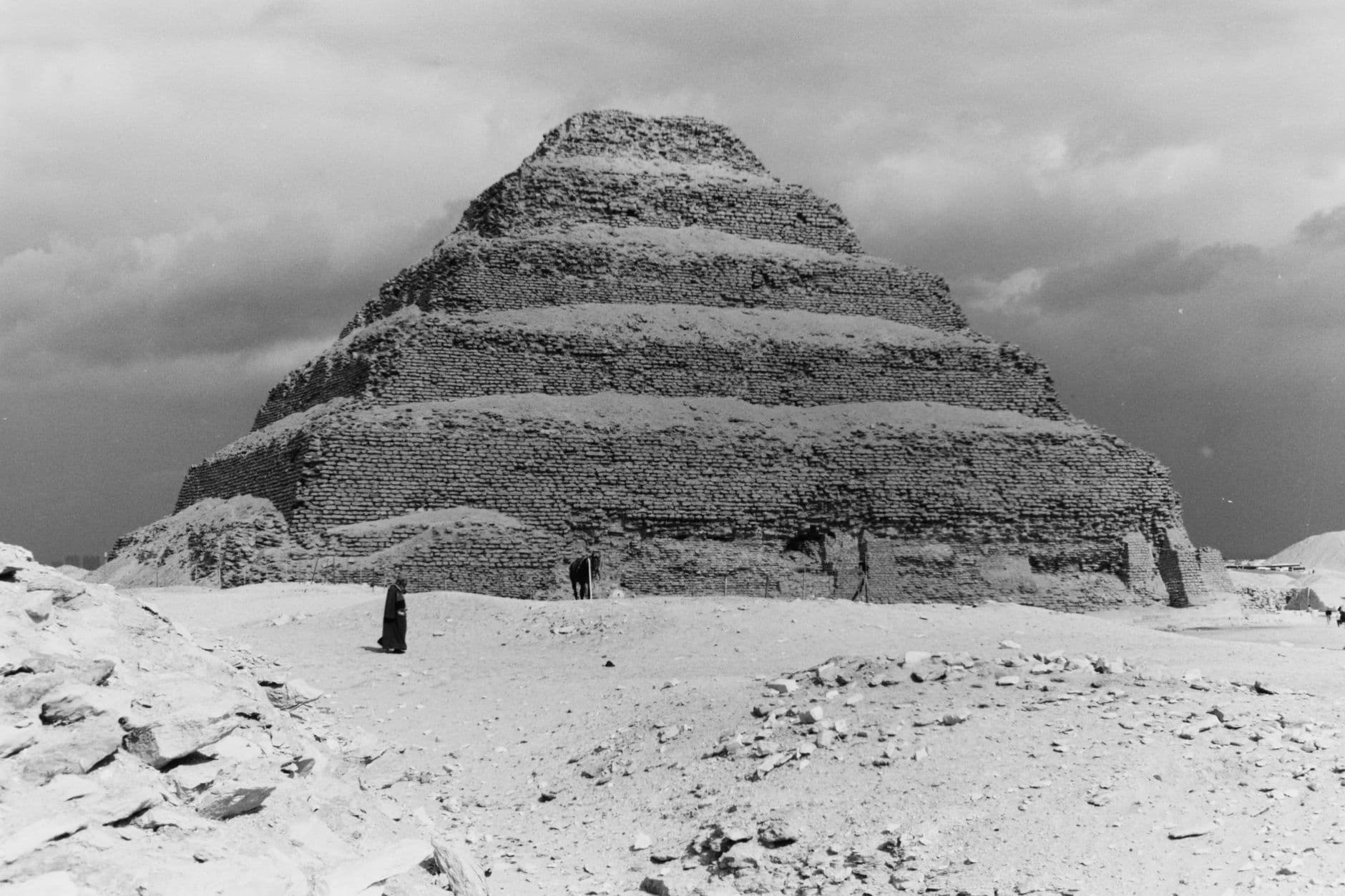
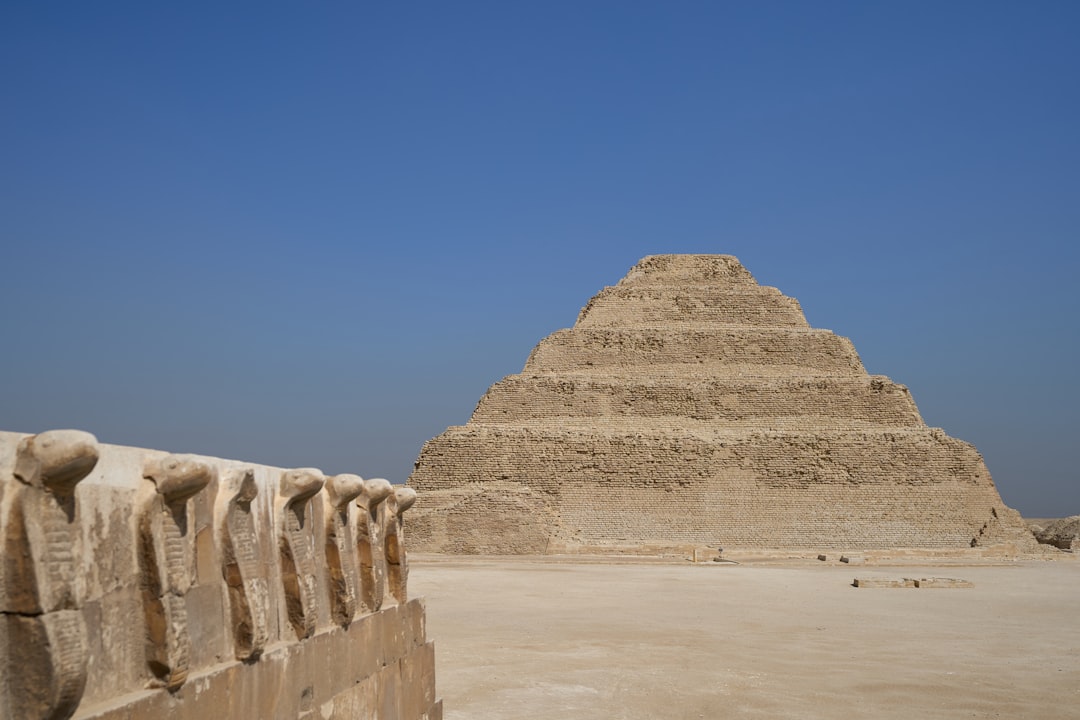
Start at Saqqara, chronologically and practically, since it explains everything at Giza. The Step Pyramid of Djoser, designed by the architect-priest Imhotep around 2670 BCE, is the oldest large-scale cut-stone monument on earth, six stacked mastabas rising in diminishing tiers above a limestone enclosure wall. A restoration completed in the last decade reopened part of the pyramid's interior on a timed-ticket basis, so ask your guide whether entry is running the day you visit; when it is, the descent into Djoser's burial chamber is far less crowded than anything comparable at Giza.
Around Djoser's pyramid, seek out the Mastaba of Mereruka and the Tomb of Ti, two Fifth and Sixth Dynasty noble tombs whose painted limestone reliefs of daily life, cattle fording a river, bakers at work, dwarfs tending pet dogs, are sharper and better preserved than most tomb art you'll see at Giza itself. The Serapeum, the vast underground galleries where mummified Apis bulls were interred in granite sarcophagi weighing an estimated 60-80 tons apiece, sits a short walk further west and rarely holds more than a handful of visitors at a time.
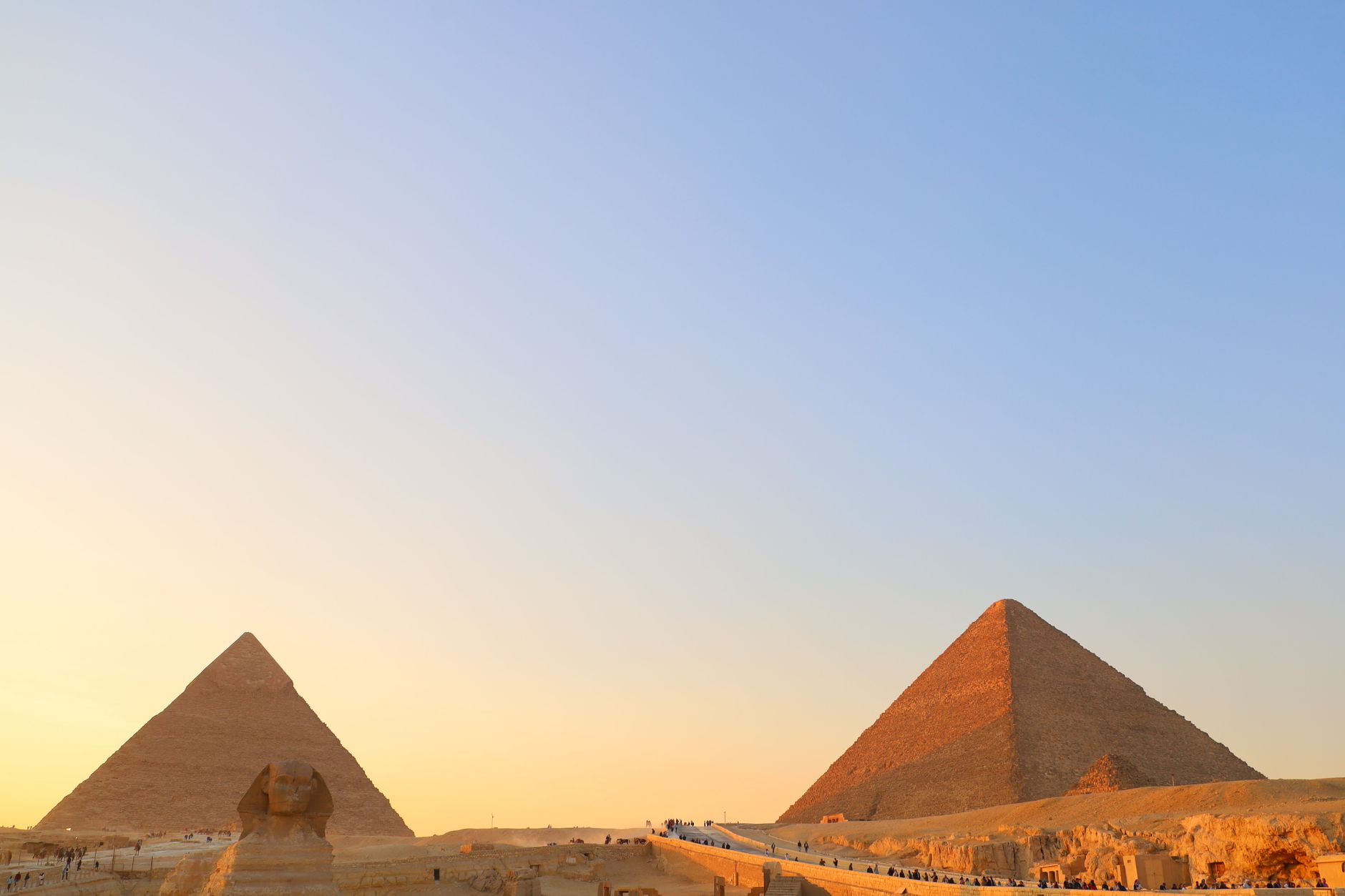
Then drive north to Giza, where Khufu, Khafre, and Menkaure built the three pyramids that define the skyline within roughly a century and a half of Djoser's experiment, around 2560-2510 BCE. The Great Pyramid remains the tallest, at about 146 meters originally (now closer to 138 meters with its capstone gone); climbing inside the narrow Grand Gallery to the King's Chamber costs an extra ticket beyond general admission and is worth the claustrophobic ten minutes. The Great Sphinx, carved from a single limestone outcrop, faces east toward the sunrise and is best photographed from the small viewing terrace near its enclosure rather than the crowded panorama point above.
Don't skip the Grand Egyptian Museum (GEM), a short drive from the plateau, where Khufu's disassembled cedar solar boat, discovered sealed in a pit beside the Great Pyramid in 1954 and painstakingly reassembled, now has a dedicated gallery after the original Solar Boat Museum beside the pyramid closed for the move. Seeing the 4,600-year-old vessel at close range, its wood joints lashed rather than nailed, is one of the more quietly astonishing hours you can spend on the plateau.
Faces of the Necropolis
Basing Yourself Close Enough to Watch the Pyramids from Bed
The single best reason to stay near the plateau rather than downtown Cairo is the light. Marriott Mena House, a former royal hunting lodge dating to 1869, sits directly against the Giza perimeter wall; request a Pyramid View room (roughly $250-450 a night depending on season) and you'll watch the Great Pyramid change color at both sunrise and sunset without moving from your balcony. The hotel's gardens and its Mena House Restaurant, which serves a respectable koshari and grilled kofta, make a good base for early starts.
For a mid-range option with plateau views at a lower price, the Cairo Pyramids View hotels clustered along Sphinx and Al Remaya streets run roughly $60-120 a night, though quality varies block by block, so book one with recent reviews rather than the cheapest listing. If you'd rather split your nights between the pyramids and the Nile, the Four Seasons Hotel Cairo at Nile Plaza and the Kempinski Nile Hotel both put you within a 30-45 minute drive of Giza and closer to central Cairo's restaurants and the Egyptian Museum in Tahrir Square.
Sugarcane Juice, Slow-Cooked Fuul, and the Village Rhythm Around the Sites
The villages around both sites still run on an older clock than Cairo's. Breakfast in Nazlet El Semman, the town pressed against the Giza wall, means fuul medames, stewed fava beans with cumin, garlic, and olive oil, scooped up with fresh baladi bread and eaten standing at a counter for the equivalent of a couple of dollars. Koshari, Egypt's national comfort dish of rice, lentils, and macaroni under a spiced tomato sauce and crisp fried onions, is sold everywhere from street carts to sit-down restaurants; a generous plate rarely runs more than EGP 60-90.
Between sites, stop for fresh sugarcane juice (asab), pressed on the spot at roadside stalls along the Saqqara road, or mint tea poured with theatrical height by a vendor near the Saqqara rest house. Dress modestly, shoulders and knees covered, especially inside tomb chapels where you'll be crouching near local guardians. Tipping in small notes, roughly EGP 20-50, for a guardian who unlocks a gated tomb or points out a hidden relief is customary and genuinely welcomed rather than expected as extortion.
“At Saqqara you feel Egypt figuring itself out. At Giza you feel it having already decided.”
Getting Between the Desert Road and the Plateau Without a Guide
Most visitors hire a private driver or car-and-guide package for the Giza-Saqqara day, and it's the right call: taxis rarely wait reliably at Saqqara, and the two sites are connected by a fast desert road rather than public transit. A private car with driver for a full day, covering Giza, Saqqara, and often the Memphis open-air museum near Mit Rahina, typically runs $50-90 depending on your hotel and season, arranged through your hotel concierge or a reputable local operator.
Hire a licensed Egyptologist guide, not a freelance tout, for either site; look for the laminated Ministry of Tourism card and, ideally, book through the Egyptian Tourist Guides Syndicate or your hotel in advance. Expect to pay roughly $40-70 for a half-day private guide, more for someone with a specialty in Old Kingdom epigraphy who can actually read the hieroglyphs on the walls at Mereruka or Ti. Ride-hailing apps like Uber and Careem work well within Cairo and to the Giza gates, but coverage thins out on the Saqqara road, so don't count on a return ride without a driver waiting.
A Three-Day Route from the First Pyramid to the Last
Saqqara and Memphis: Where the Idea Began
Arrive at Saqqara by 8am, before the desert heat builds, and head first to the Step Pyramid of Djoser and its enclosure wall, allowing 60-90 minutes to walk the causeway and colonnades that Imhotep designed to look like they were still built in reeds and rope, even though they're carved from limestone.
Spend the mid-morning at the Mastaba of Mereruka and the nearby Tomb of Kagemni, both a short walk from the pyramid, for the finest painted reliefs on the necropolis, then continue to the Serapeum galleries if you have another 45 minutes to spare underground.
In the early afternoon, drive 15-20 minutes to Memphis (Mit Rahina), ancient Egypt's first capital, to see the fallen colossus of Ramesses II and the calcite alabaster sphinx before the light gets harsh.
The Giza Plateau: Three Pyramids and a Sphinx
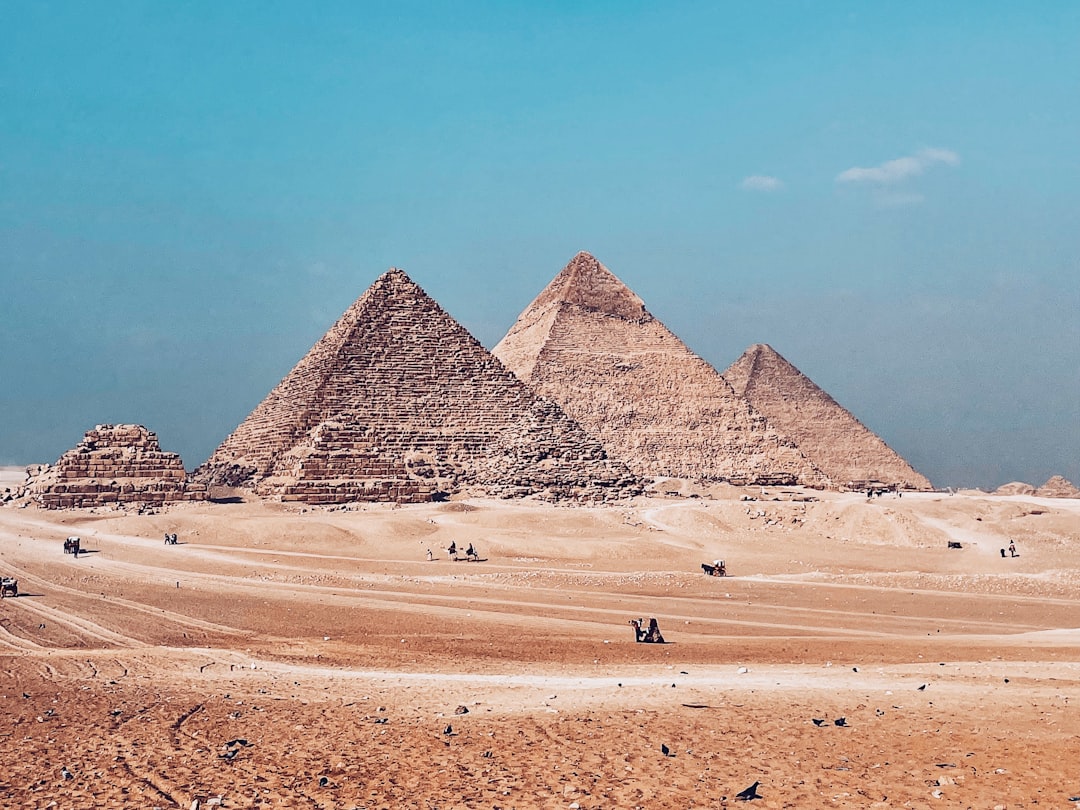
Be at the Giza gates for opening, roughly 8am, and head straight to the Great Pyramid of Khufu before the plaza fills; buy the interior-entry ticket separately if you want the Grand Gallery climb, and go early since only a limited number of interior tickets are sold each morning.
Walk or take a short camel or horse ride across to the Pyramid of Khafre and the smaller Pyramid of Menkaure, then descend to the Great Sphinx enclosure by mid-morning, before the crowd at the main viewing terrace thickens.
Break for lunch on the Mena House terrace or at a nearby rooftop restaurant with plateau views, then use the cooler late afternoon for the Panorama viewpoint on the desert ridge south of the pyramids, the classic shot with all three pyramids in one frame.
The Grand Egyptian Museum and the Tombs Most Visitors Miss
Spend the morning at the Grand Egyptian Museum, allowing at least three hours, to see Khufu's reassembled solar boat and the museum's growing Old Kingdom galleries, which contextualize everything seen on the previous two days.
Return briefly to Giza in the early afternoon for the Tombs of the Nobles on the plateau's western edge, quieter mastabas belonging to Khufu's officials that most tour groups skip entirely for lack of time.
Close the trip with an early dinner back toward Cairo, ideally timed to watch the sound-and-light show illuminate the pyramids after dark if it's running that evening, checking current showtimes locally since the schedule shifts by season.
Several of Saqqara's finest tombs, and the interior of the Step Pyramid on the days it's open, run on limited timed tickets that sell out or simply aren't offered to walk-in visitors without the right arrangement made in advance.
A Cordelie advisor builds your Giza and Saqqara days around a private Egyptologist with real excavation experience, priority interior access where it exists, and a route timed to the light and the crowd rather than a coach schedule, so the pyramids you've read about your whole life are the ones you actually get to stand inside.
Giza & Saqqara At a Glance
An essential, doable-in-days pairing that turns Egypt's most photographed monument into the end of a story rather than the whole of it.
Two sites, fifteen kilometers and roughly five centuries apart, that together explain how ancient Egypt learned to build in stone.
Best visited across two to three days in spring or winter, gates open early, private guide booked ahead, and the midday hours reserved for lunch rather than the ticket line.
Ideal for the traveler who wants Khufu's Great Pyramid and Imhotep's Step Pyramid to make sense together, not as separate bucket-list checkmarks.
Last checked for accuracy: . How we check

Sarah Chen has covered Asia for twelve years, first as a wire reporter in Jakarta and now from Singapore, where she keeps a standing list of the region's most misunderstood destinations. She writes about the distance between what a place is famous for and what it is actually like to spend a week in — and is happiest on an overnight train with a bad seat and a good view.